Set aside, for a moment, what you think of any of these institutions. Look only at the method, the way you would study a competitor's balance sheet. Over the last thousand years, the organisations that held on to purchasing power the longest were not the ones with the cleverest traders. They were the ones that believed they were holding something on behalf of someone else, and behaved accordingly.
The pattern repeats with almost no variation. Income arrives as a gift — a tithe, an offering, a bequest, an endowment. It is not spent, and it is not left sitting in the currency of the day. It is converted into things that exist: land, buildings, farmland, water rights, art, libraries, metal. Those things are then maintained, insured, catalogued and improved, generation after generation, by people who expect to be accountable for them.
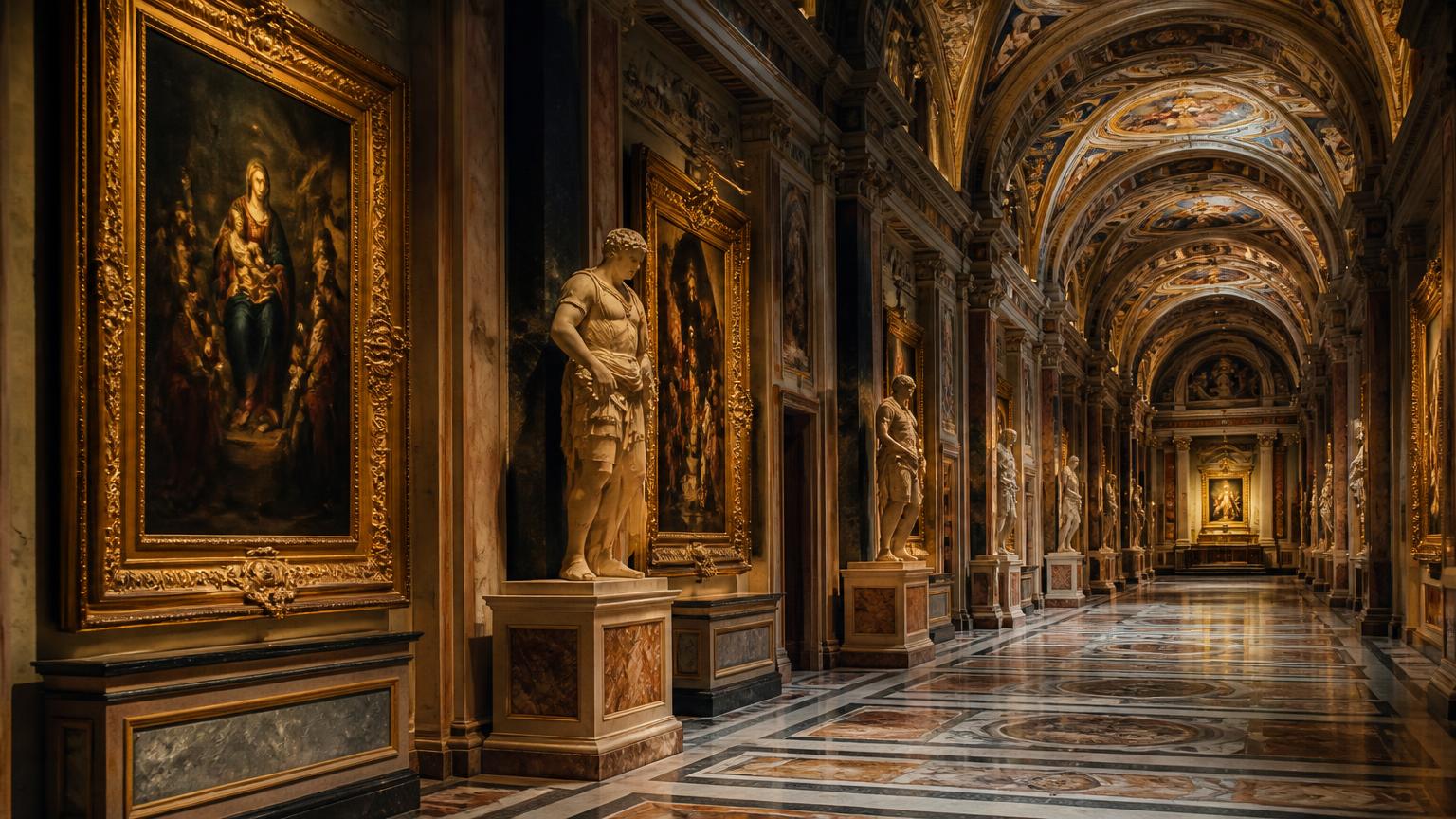
Currencies came and went underneath that method. The papal scudo, the lira, the florin, the mark, the reichsmark, the pound of 1300 and the pound of today — all redefined, replaced or debased. The vineyard, the wheat land, the gold chalice and the marble gallery did not care. That is not a spiritual claim. It is what happens to an asset with no counterparty when the unit of account is rewritten around it.
None of this makes any of these institutions holy, competent or above criticism, and several of them have humiliating financial failures on the record — we print those too, further down. The point is narrower and far more useful to a family: stewardship, practised as a discipline rather than a mood, measurably preserves wealth across time, and almost nobody is taught how it is done.
01
Keep the corpus. Spend the yield.
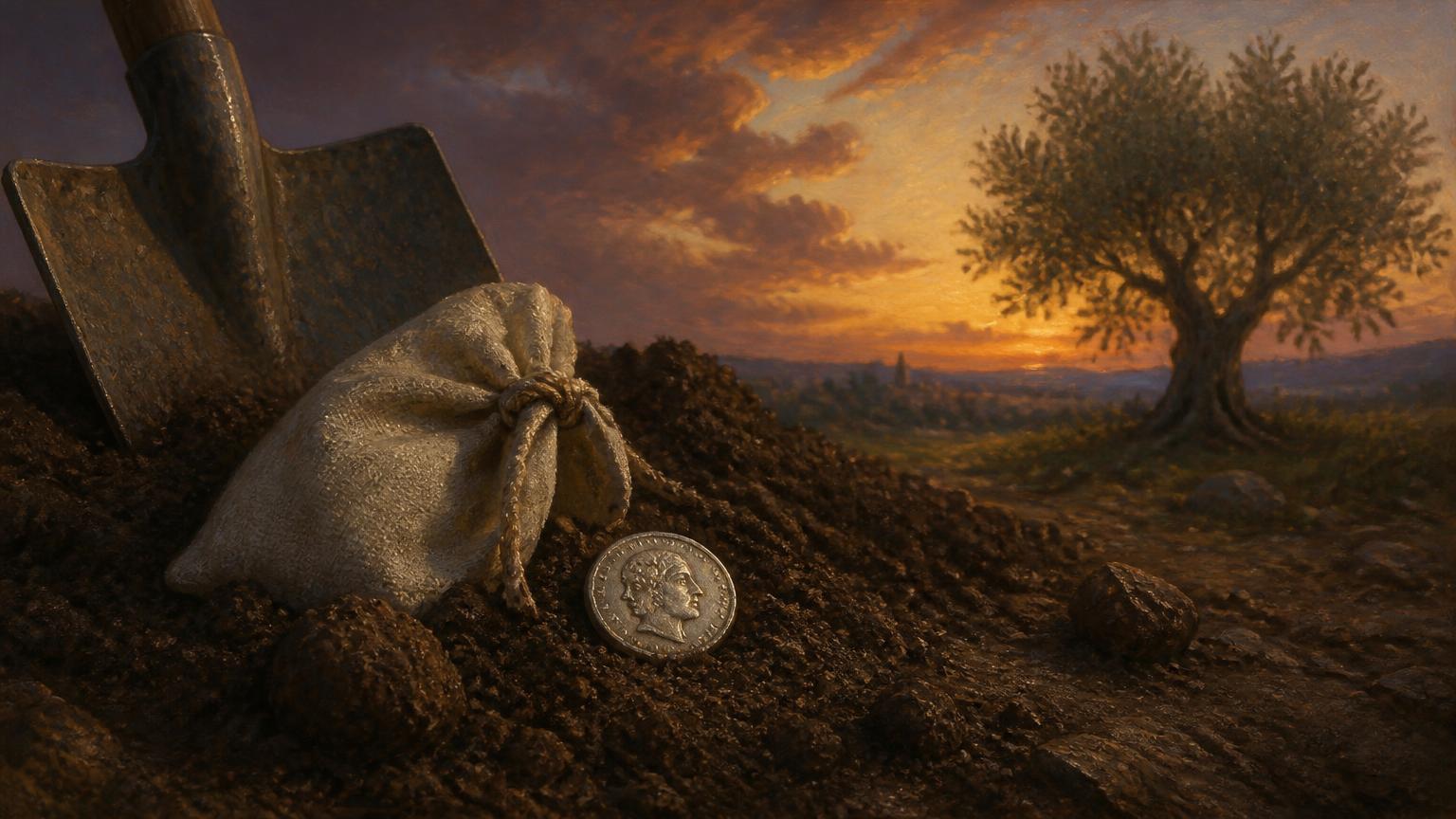
The defining rule of every surviving endowment: the gift itself is not available for spending. Only what it produces — rent, harvest, interest, admission fees — may be used, and often only a fixed percentage of it. A household version is simple to state and hard to do: the seed is not the grocery money.
02
Convert income into things that exist.
Offerings arrive as currency and are converted, deliberately and quickly, into land, buildings, farmland, art and metal. Not because currency is evil, but because a promise denominated in a unit somebody else controls is not a store of value across two hundred years. Real property has been the default holding of long-horizon institutions for a thousand years.
03
Maintain and improve what you hold.
Roofs, restorations, irrigation, conservation, cataloguing. Long-lived institutions spend continuously on upkeep, which is why their assets appreciate rather than rot. Deferred maintenance is the most common way an inheritance is quietly consumed without a single sale.
04
Diversify across kinds, not just names.
Land in different regions, buildings with different uses, farmland, financial assets, precious metal and art. Not eight versions of the same risk. Ecclesiastes puts the same instruction in one line: give a portion to seven, and also to eight, for you do not know what evil shall be upon the earth.
05
Write it down, and let someone check it.
Cartularies, inventories, chapter accounts, audited statements. The oldest continuously kept financial records in Europe are ecclesiastical, and where the record-keeping collapsed, so did the assets. Transparency is not a modern compliance chore; it is how a steward proves he did not treat the trust as his own.
06
Hold a horizon nobody in the room will live to see.
Decisions are made for the institution in two hundred years, which rules out most of what wrecks portfolios: chasing a hot market, panic selling, and borrowing against an asset to buy a fashionable one. Proverbs frames the same horizon domestically — a good man leaves an inheritance to his children's children.