- Why is silver's premium higher than gold's?
- Fabrication, shipping and insurance cost roughly the same per item, but silver's value per item is far lower — so those fixed costs are a bigger percentage.
- How does buying physical silver work?
- You agree a product and total price, the price is locked briefly because the market moves continuously, you fund the order, and the metal ships to you or into a depository account in your name.
- What is the silver spot price?
- The wholesale reference price for immediate delivery of exchange-grade silver. The COMEX silver contract requires delivered silver to assay to a minimum of 999 fineness.
- What is a silver premium and why does it exist?
- It is the charge above spot for a fabricated product. Minting, packaging, insured freight and dealer inventory all cost roughly the same per coin regardless of whether the coin is silver or gold — which makes that cost a much larger percentage of a silver coin's value.
- Why do silver premiums vary so much between products?
- Small units cost more to fabricate per ounce than large ones, sovereign mints charge more than private mints, and retail demand for specific items moves independently of spot. In tight markets, sovereign coin premiums can widen sharply while bar premiums barely move.
- What is silver purity, and what does 999 fine mean?
- Fineness is parts of silver per thousand. 999 fine is 99.9% silver, the standard for modern bullion coins and bars. Pre-1965 U.S. circulating coinage is 900 fine.
- What is the difference between silver coins, rounds and bars?
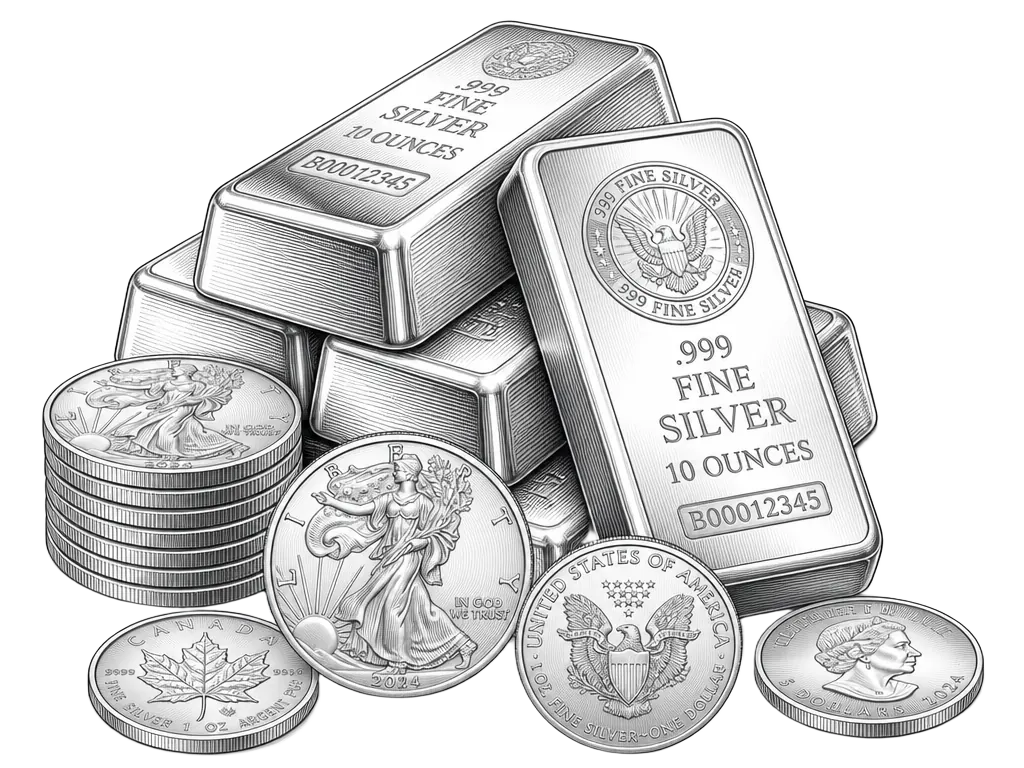
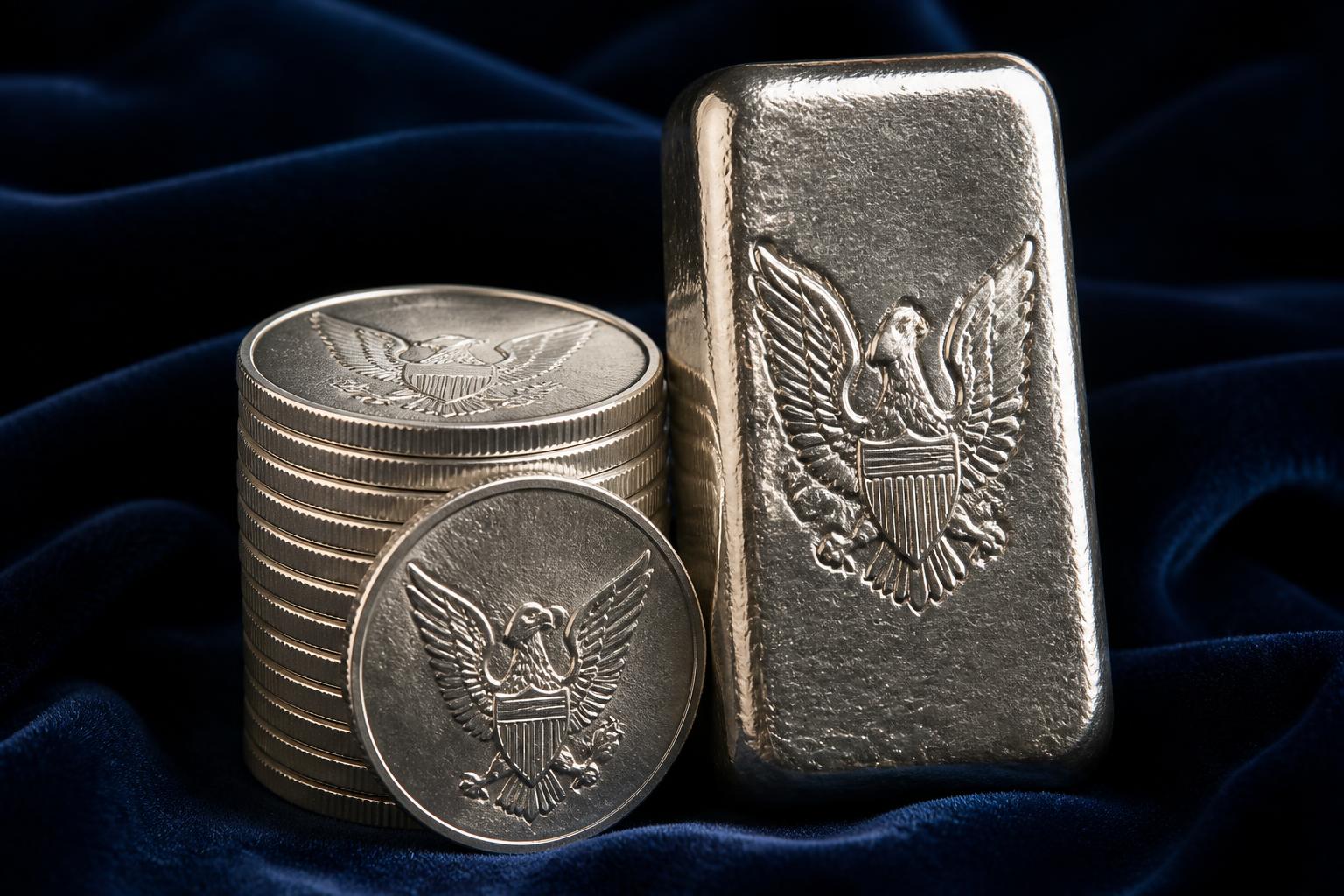
- Coins are legal tender from a sovereign mint with the highest recognition and premium. Rounds are privately minted discs with the same metal at a lower premium and less universal recognition. Bars offer the lowest premium per ounce, especially in large sizes, but must be sold whole.
- What are bullion coins?
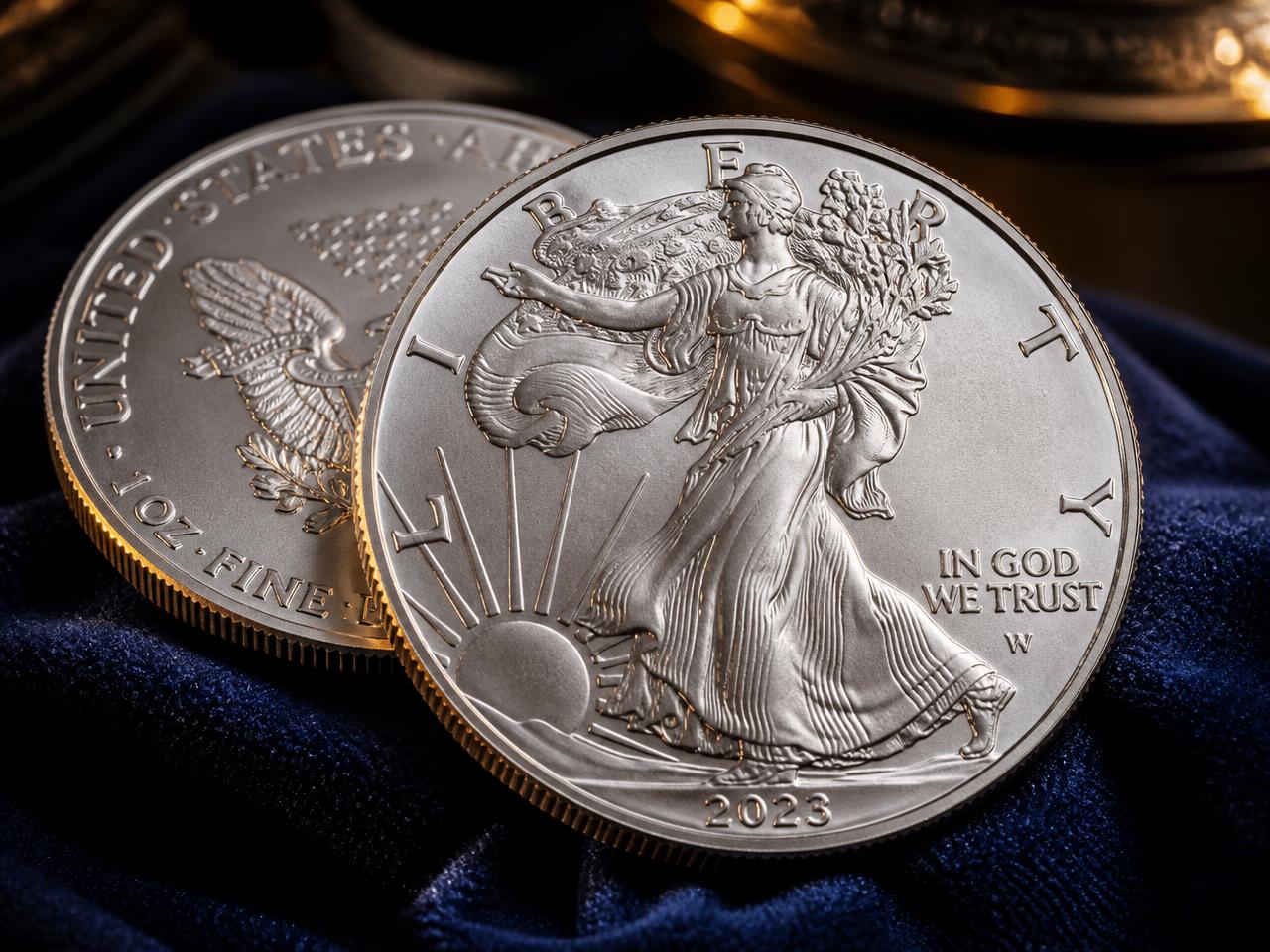
- Coins valued on their metal content rather than rarity or condition, minted specifically for investors and produced in quantities that track demand rather than being limited for collectors.
- How is physical silver stored?
- At home or in a depository. Because silver is bulky, storage logistics matter more than with gold: a position worth the same as a handful of gold coins can fill several sizeable boxes and weigh a great deal.
- Can silver be held in an IRA?
- Yes. Silver reaches an IRA either as a coin named through §408(m)(3)(A) or as bullion meeting the contract-market fineness standard under §408(m)(3)(B), and in either case only in the physical possession of a qualifying trustee.
- Which silver products may be IRA eligible?
- The silver coin specified in 31 U.S.C. §5112(e) — 31.103 grams, .999 fine — reaches eligibility as a named coin, and 999-fine bars and rounds can qualify under the bullion route. Pre-1965 90% silver does not. Your custodian confirms the specific item.
- What should a first-time silver buyer compare?
- Premium in both dollars and percentage terms, the buy-back price on the same product, whether you need sovereign recognition or maximum ounces, and the practical weight and volume of what you are buying.
- Is silver better than gold?
- Neither is better. Silver is more volatile, has a large industrial demand component, carries higher percentage premiums and takes far more space per dollar. Gold is steadier, cheaper to hold per dollar and more purely monetary. They answer different questions.