


Transfer vs rollover
A direct transfer moves money custodian-to-custodian; you never touch it and there is no reporting deadline. An indirect rollover pays you first and gives you 60 days to redeposit — miss it and the full amount becomes taxable, plus a 10% penalty under 59½. We use direct transfers by default.

Describe this illustration: Physical gold coins in a wooden tray beside a retirement ledger, glasses and fountain pen on a deskHide description: Physical gold coins in a wooden tray beside a retirement ledger, glasses and fountain pen on a desk
A self-directed Gold IRA lets you hold physical gold — real coins in a custodian's vault — inside a tax-advantaged retirement account, not an ETF that merely tracks the price. The ledger, glasses and fountain pen in this scene are the paperwork that proves the metal is titled in your name and held by an IRS-approved custodian such as Preferred Trust Company or GoldStar Trust Company. Capstone Metals coordinates the custodian, the depository and the purchase end to end, so a 401(k) or IRA rollover into physical gold moves as a direct trustee-to-trustee transfer with no distribution and no tax event — the protected, step-by-step path this page walks you through.
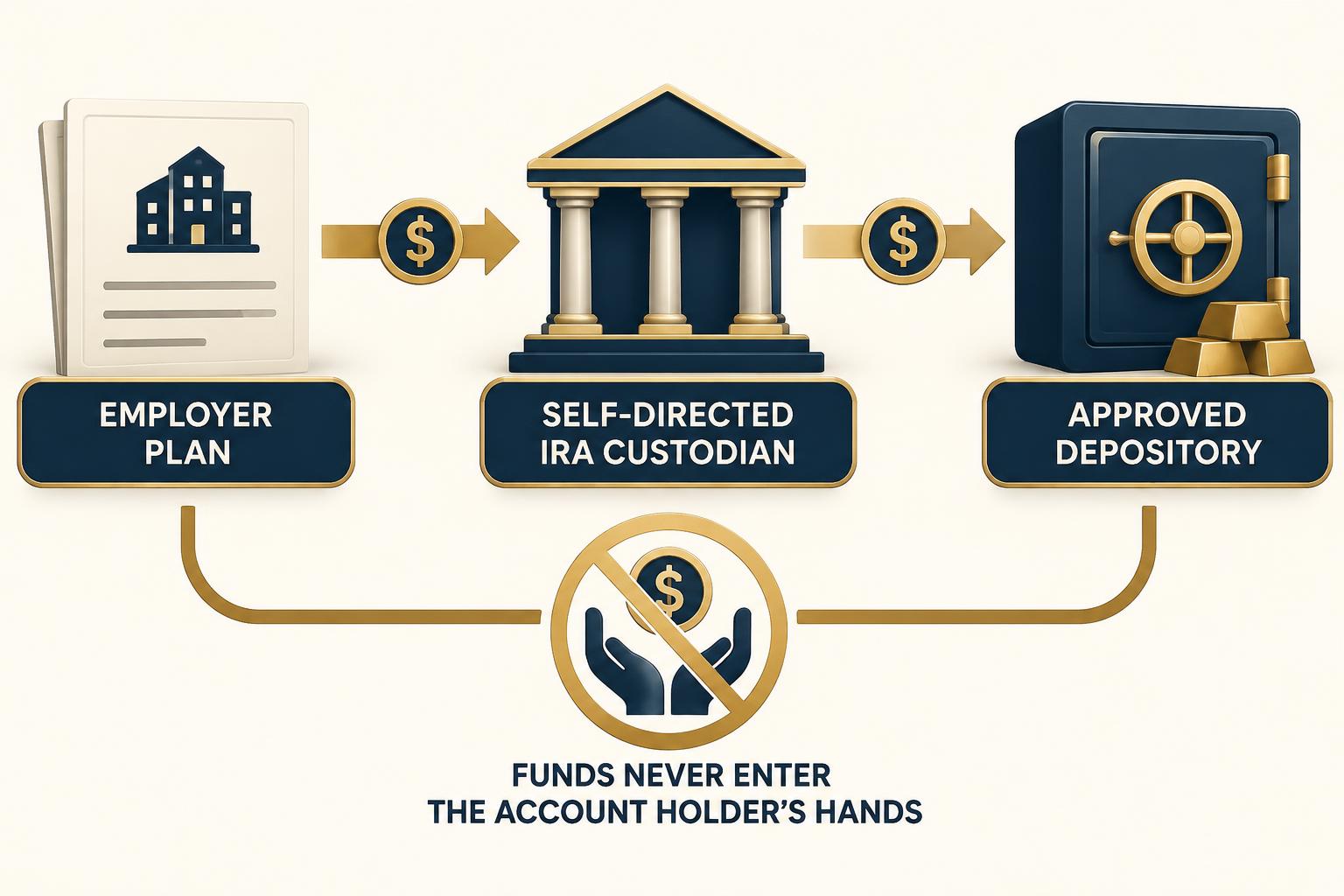
Describe this illustration: Numbered flow diagram from plan administrator to self-directed IRA custodian to depository, with the funds never passing through the account holderHide description: Numbered flow diagram from plan administrator to self-directed IRA custodian to depository, with the funds never passing through the account holder
A direct rollover moves funds custodian to custodian. That is what keeps it out of tax. This original Capstone Metals diagram illustrates numbered flow diagram from plan administrator to self-directed ira custodian to depository, with the funds never passing through the account holder. It is educational artwork, not a price forecast, performance record or recommendation.