- Is the purchase reported?
- Most retail bullion purchases carry no reporting requirement. Certain cash payments and specific products trigger dealer reporting on sale.
- How does buying physical gold actually work, step by step?
- You agree a product and a total price, the price is locked for a defined window, you fund the order, and the metal is either shipped to you or delivered into a depository account in your name. Because metal prices move continuously, the price is confirmed at the moment you commit rather than quoted open-endedly.
- What is the spot price of gold?
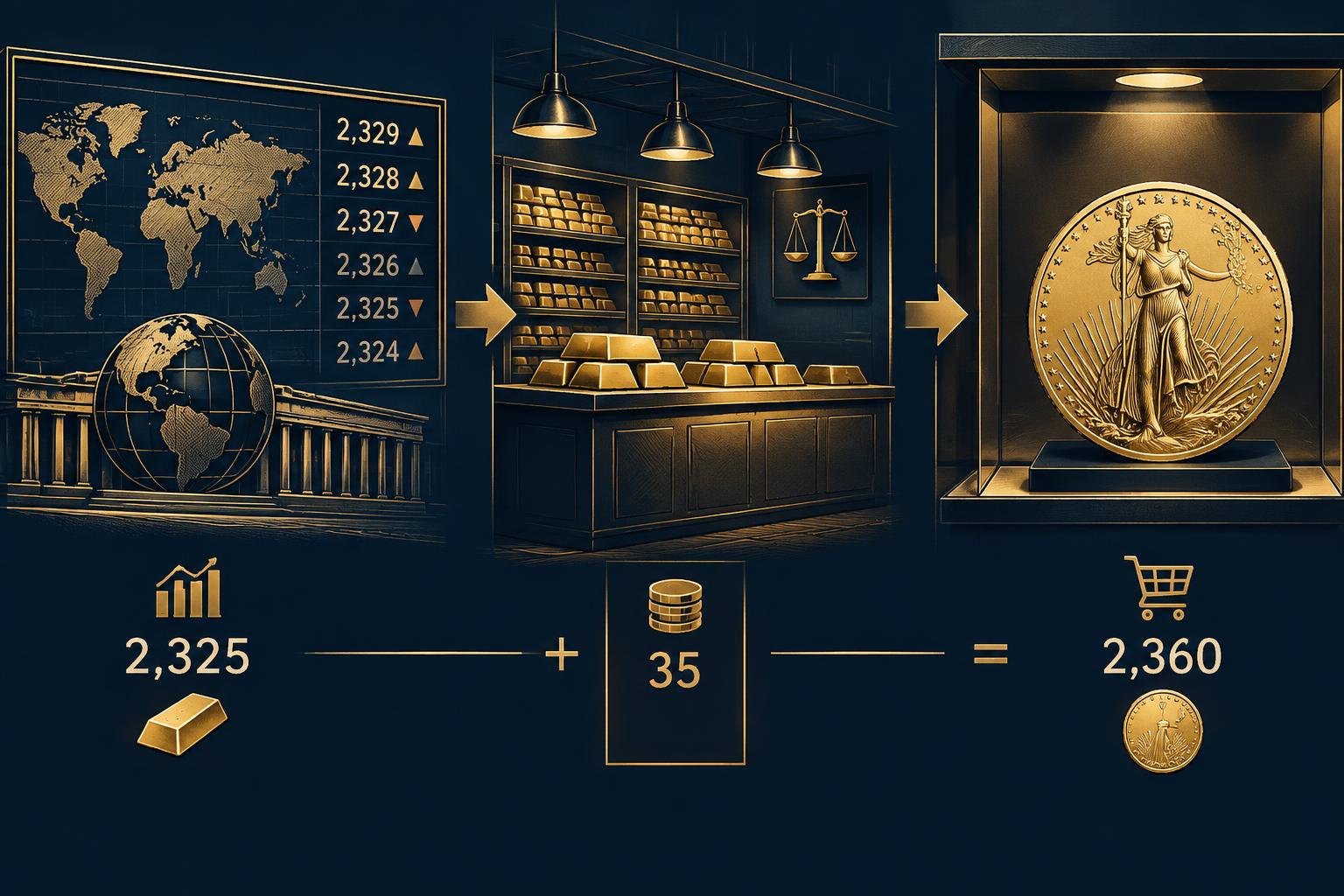
- The prevailing price for immediate wholesale delivery of exchange-grade gold. The COMEX gold futures contract, for instance, requires delivered gold to assay to a minimum of 995 fineness. Spot is the reference every retail price is built from, not a price you can buy a single coin at.
- Why does physical gold cost more than the spot price?
- Because a coin is a manufactured object, not a wholesale bar. Refining, minting, packaging, insured distribution, dealer inventory and the ability to sell one unit at a time all cost money. That cost appears as a premium over spot.
- What is a gold premium?
- The amount above spot charged for a particular product. It varies with the product's size, mint, and current supply and demand for that specific item — not only with the dealer.
- What does gold purity mean, and what is fineness?
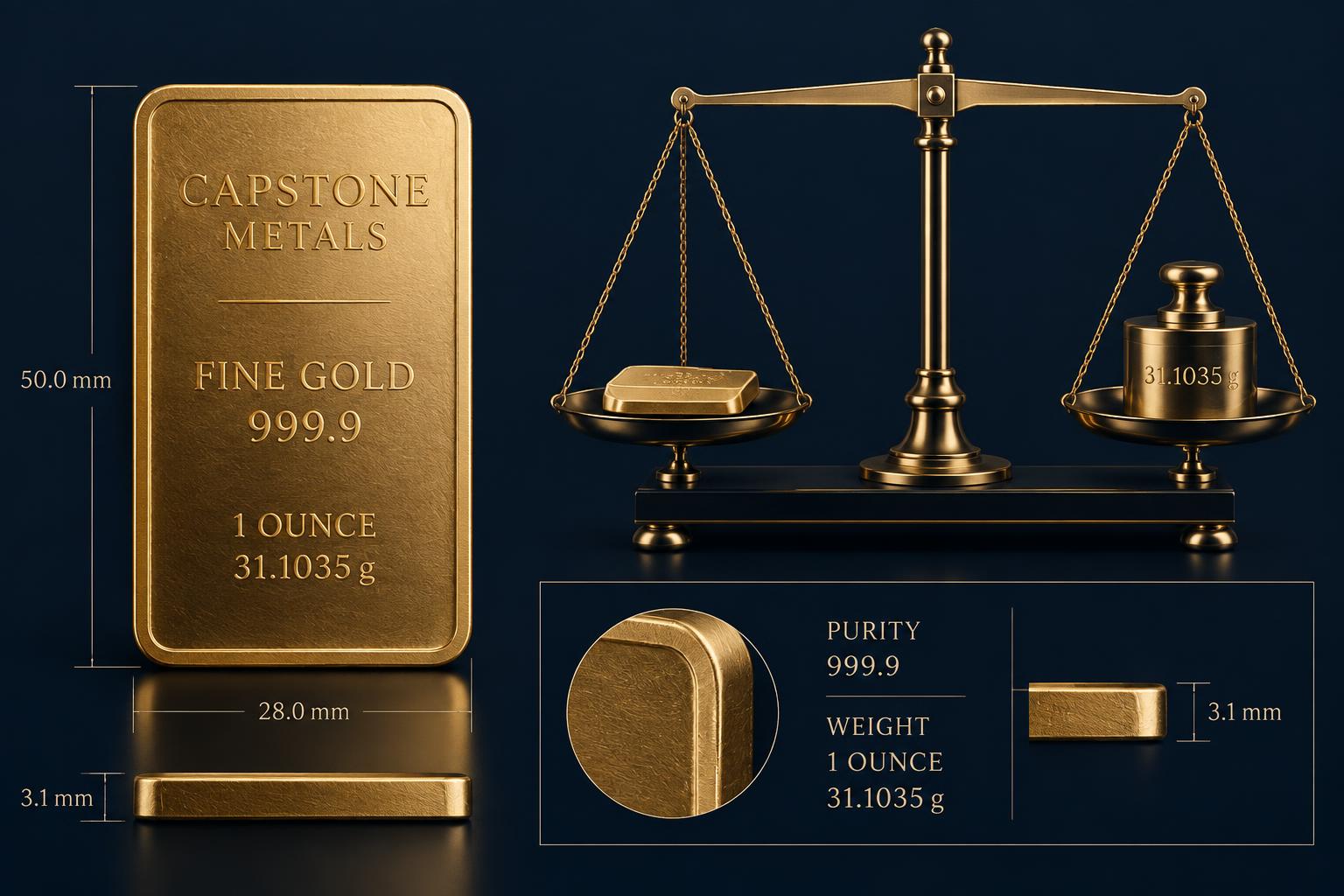
- Fineness expresses purity as parts of gold per thousand parts of metal. 995 fine is 99.5% gold; .9999 fine is 99.99%. Karat is the older scale, where 24 karat is nominally pure and 22 karat corresponds to about 916.7 fine.
- What is the difference between gold coins and gold bars?
- Coins carry higher premiums per ounce but are divisible and instantly recognisable, which makes partial selling easy. Bars cost less per ounce as size increases but must be sold whole, and resale is smoothest when the refiner is LBMA-accredited with the assay intact.
- What determines the retail price of a gold product?
- Spot at the moment of pricing, the product's fabrication cost, its size, the mint's standing, current retail demand for that item, and the dealer's margin. Two dealers quoting the same coin differ mainly in the last of these.
- How is physical gold stored?
- Either at home or in a depository. Home storage has no fee and no counterparty but leaves theft and insurance risk with you. Depository storage costs an annual fee and provides segregated, insured, audited custody with a documented chain of possession.
- What should a first-time gold buyer compare?
- The all-in delivered price per ounce, the dealer's current buy-back price for the identical product, whether the product suits how you may need to sell, and the annual cost of wherever it will be kept.
- Can physical gold be held in an IRA?
- Yes, but only products meeting 26 U.S.C. §408(m)(3) and only where the metal is in the physical possession of a qualifying trustee. Ordinary purchases you take home are not IRA assets.
- Which gold products may be IRA eligible?
- Two routes exist in the statute: specified U.S. coins named in §408(m)(3)(A), and gold bullion at a fineness at least equal to the contract-market delivery minimum under §408(m)(3)(B) — which for COMEX gold is 995 fineness. Your custodian confirms eligibility for the specific item before purchase.
- Is gold a good investment right now?
- We won't answer that, and you should be cautious of anyone who does. Gold pays no income, its price can fall for extended periods, and whether an allocation makes sense depends on what you already own and what you are trying to protect. We can explain the mechanics and the costs precisely; the allocation decision belongs with you and your adviser.