Capstone Metals — gold and silver IRA dealer
Speak with a specialist: (800) 200-9553Monday – Friday, 7am – 4pm Pacific

Retirement

One account. Four metals.

A precious metals IRA is a single self-directed account that can hold any combination of the four IRS-eligible metals. Most clients build a gold core with a silver satellite, and add platinum or palladium selectively.

Monday – Friday, 7am – 4pm Pacific

  • Licensed and insured since 2014
  • Fiduciary advisory — licensed since 1970
  • Preferred Trust & GoldStar custodians
  • No card payments, no pressure, no commissions-first pitch

Eligible metals

Au, Ag, Pt, Pd

Platinum fineness

.9995

Palladium fineness

.9995

Accounts

Traditional, Roth, SEP

Building the allocation

Gold provides the stability and the deepest liquidity. Silver adds torque. Platinum and palladium are industrially driven and behave differently again — useful in small weightings, rarely as a core.

Physical gold coins in a wooden tray beside a retirement ledger, glasses and fountain pen on a desk
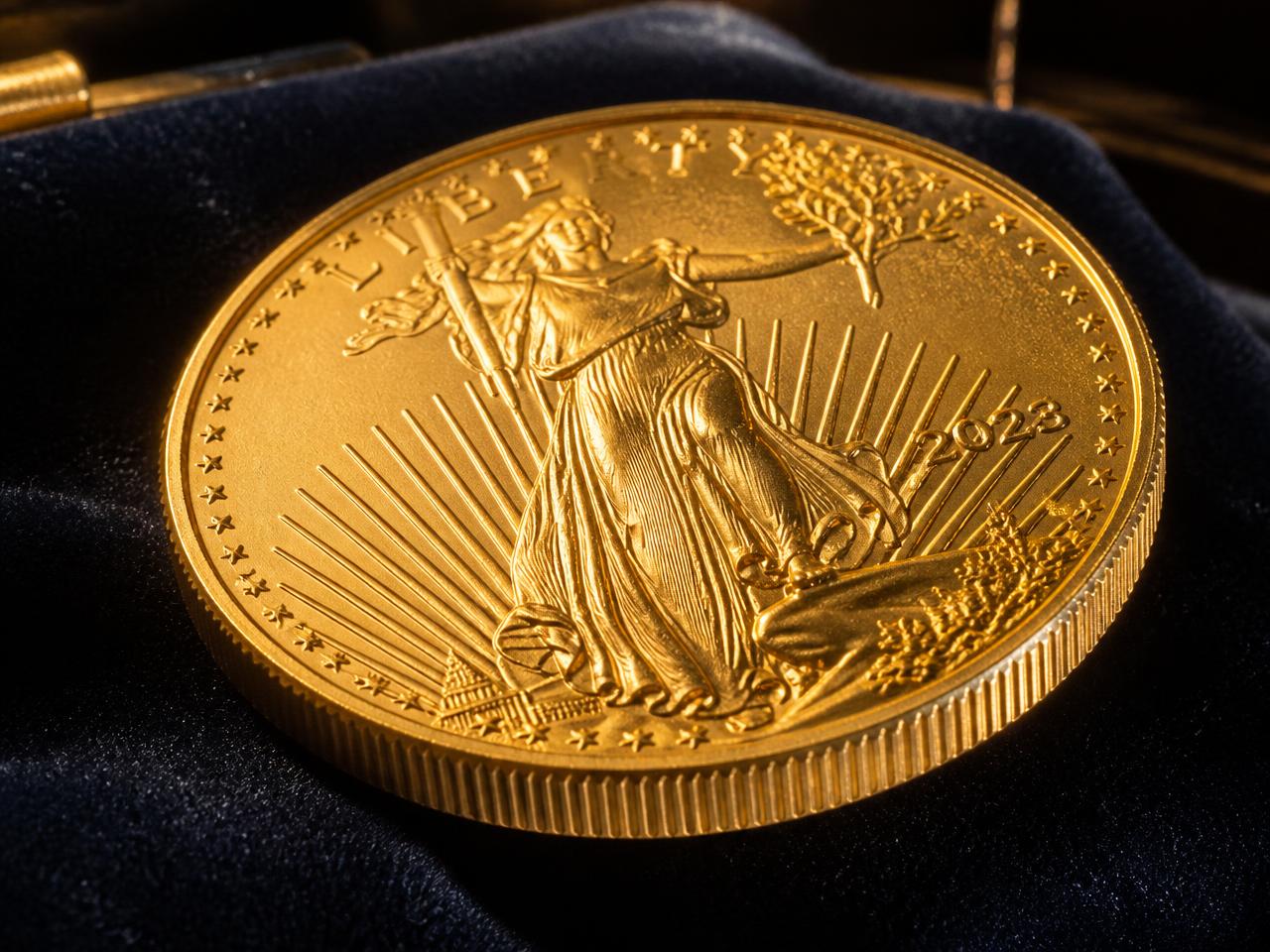
A self-directed Gold IRA holds the real thing — physical coins recorded in the account ledger and held by a qualified custodian, not a fund share that tracks a price.
Describe this illustration: Physical gold coins in a wooden tray beside a retirement ledger, glasses and fountain pen on a desk

A self-directed Gold IRA lets you hold physical gold — real coins in a custodian's vault — inside a tax-advantaged retirement account, not an ETF that merely tracks the price. The ledger, glasses and fountain pen in this scene are the paperwork that proves the metal is titled in your name and held by an IRS-approved custodian such as Preferred Trust Company or GoldStar Trust Company. Capstone Metals coordinates the custodian, the depository and the purchase end to end, so a 401(k) or IRA rollover into physical gold moves as a direct trustee-to-trustee transfer with no distribution and no tax event — the protected, step-by-step path this page walks you through.

Account types

Traditional, Roth, SEP and SIMPLE IRAs can all be self-directed into metals. The contribution and distribution rules of the underlying account type still apply.

Rather just ask someone?

A specialist can answer this in two minutes. Monday – Friday, 7am – 4pm Pacific.

The short answer

A Precious Metals IRA is a self-directed individual retirement account holding physical gold, silver, platinum or palladium that satisfies 26 U.S.C. §408(m)(3), purchased by the account and held in the physical possession of a qualifying trustee. Its tax treatment is that of an ordinary traditional or Roth IRA.

Key facts

Each fact below is tied to a numbered source at the foot of this page. Follow the numbers and check us.

  1. 01

    Four metals are named in the statute: gold, silver, platinum and palladium.5,8,9,10,11

    §408(m)(3)(B) covers bullion in all four, each measured against the fineness a contract market requires for futures delivery. The corresponding COMEX and NYMEX delivery minimums are 995 for gold, 999 for silver, and 99.95% for both platinum and palladium.

  2. 02

    The account's tax character does not change because it holds metal.3,4

    A traditional precious-metals IRA is a traditional IRA; a Roth one is a Roth. Contribution limits, deduction rules, distribution treatment and required minimum distributions are governed by the ordinary IRA provisions the IRS sets out in Publications 590-A and 590-B.

  3. 03

    Physical metal in an IRA is a three-party arrangement by design.5

    A dealer supplies the metal, a custodian holds the account and executes your instruction, and a depository vaults the metal under the trustee's possession. No single party does all three, and the separation is what makes the structure work.

  4. 04

    Default collectible treatment is the rule; eligibility is the exception.5

    §408(m)(2) treats any metal and any coin as a collectible, and §408(m)(1) treats an IRA's acquisition of a collectible as a distribution equal to its cost. Everything about product eligibility flows from having to land inside the §408(m)(3) exceptions.

  5. 05

    Funding routes differ in their risk, and the direct route is usually simpler.1,2,6

    A trustee-to-trustee transfer moves funds between institutions without passing through you, with no 60-day deadline and no annual limit. A 60-day rollover has both: §408(d)(3)(B) permits only one in any one-year period, applied in aggregate across all your IRAs.

  6. 06

    Costs arrive from three parties, and the largest is usually invisible.3

    Custodian setup and annual administration, depository storage and insurance, and the dealer's margin inside the metal price. The first two are invoiced and easy to compare. The third is embedded in the quote and is frequently the biggest single cost in the arrangement.

  7. 07

    Distributions can be taken in cash or in kind.4

    You can direct a sale and take cash, or take physical delivery of the bullion as a distribution. Both are distributions under the ordinary rules in Publication 590-B, and required minimum distributions apply to a traditional account regardless of the asset being illiquid metal.

  8. 08

    Trustee possession is a statutory condition, which is why home storage does not work.5

    §408(m)(3)(B) applies only where the bullion is in the physical possession of a trustee described under §408(a). Structures marketed to keep IRA metal at home are built around that language, not within it.

  9. 09

    Metal produces no income, which interacts with required minimum distributions.4

    There is no dividend or interest inside the account to fund a distribution, so meeting a required minimum distribution from a metals-only traditional IRA generally means selling metal or taking it in kind. That is a planning consideration worth raising with your own adviser before the account is your main retirement asset.

The vocabulary

Precious Metals IRA
A self-directed IRA holding physical gold, silver, platinum or palladium that satisfies §408(m)(3).
Self-directed
The account holder selects investments; the custodian executes rather than advises.
Trustee
The bank or trust company required by §408(a)(2) to hold the account, and to physically possess qualifying bullion.
Depository
The insured, audited vault that physically holds the metal under the trustee's possession.
Trustee-to-trustee transfer
A direct movement of IRA funds between institutions. Not a rollover; no 60-day clock, no annual limit.
60-day rollover
A distribution you receive and redeposit within 60 days. One permitted per one-year period across all your IRAs.
In-kind distribution
Taking the physical metal out of the account as a distribution rather than selling it.
Required minimum distribution
The amount a traditional IRA owner must begin withdrawing under the ordinary IRA rules, irrespective of what the account holds.
Segregated storage
Specific, identifiable items held apart from other holdings.

The three parties, and which is which

RoleWhat it doesWho this is
DealerSells and buys the physical metal. Quotes the price, sources the product, ships to the depository.Capstone Metals is a dealer. We are not a custodian, trustee or depository.
Custodian / trusteeHolds the IRA itself. Opens the account, accepts funds, executes your purchase instruction, files the account reporting.A bank or a trust company qualified under 26 U.S.C. §408(a) — for example Preferred Trust Company or GoldStar Trust Company.
DepositoryHolds the physical bars and coins in a vault, insured and audited, under the trustee's possession.An independent vault operator. Not the dealer, and usually not the custodian either.

How a Precious Metals IRA is set up and run

  1. 1

    Choose the account type

    Traditional or Roth, matching your existing retirement structure. Holding metal does not alter the account's tax character.

  2. 2

    Select a custodian

    A qualifying trustee under §408(a)(2). Compare the complete fee schedule and the approved-product list before signing.

  3. 3

    Fund the account

    Trustee-to-trustee transfer, direct rollover from an employer plan, a 60-day rollover, or a cash contribution within the annual limit. The direct routes avoid the deadline and the one-per-year limit.

  4. 4

    Choose eligible metals

    Gold, silver, platinum or palladium satisfying §408(m)(3) and accepted by your custodian. Compare on all-in cost per ounce of fine metal.

  5. 5

    Instruct the purchase

    The custodian pays the dealer from account funds on your instruction, at a price locked at confirmation because the market moves continuously.

  6. 6

    Depository delivery

    The metal ships to the depository, which takes it into the trustee's possession for your account's benefit and confirms receipt by weight and serial number.

  7. 7

    Administration and exit

    Annual valuations, statements and fees; sales back to a dealer or in-kind distributions when you choose; required minimum distributions where applicable.

What to weigh before opening one

  • What proportion of your retirement assets this represents, discussed with your own adviser rather than a dealer.
  • Whether flat annual fees are proportionate to your intended balance.
  • Which metals, and in what mix — gold for steadiness, silver for volatility and bulk, platinum and palladium for narrower industrial exposure.
  • Whether the funds are in an IRA or an employer plan, which determines the funding mechanics.
  • How required minimum distributions will be met from an account that generates no income.
  • Whether you want segregated storage, and what it costs.
  • The dealer's buy-back commitment, since exit liquidity is part of the product.

Risks and limitations

Anyone who only tells you the upside is selling, not explaining.

  • No income, and price risk in both directions.

    Metals pay nothing and can decline for extended periods. This is a diversification allocation, not a growth engine.

  • Layered costs.

    Premium, custodian administration, storage and insurance all recur or compound. On a small balance, flat fees are a large percentage.

  • The dealer margin is the least visible cost.

    Ask for it explicitly, in dollars per ounce, and compare buy-back prices.

  • Illiquidity relative to securities.

    Metal can be sold, but settlement takes days and the bid-ask spread applies.

  • An ineligible purchase is treated as a distribution.

    §408(m)(1) measures it at cost to the account, with the ordinary tax consequences.

  • Required minimum distributions from an illiquid, income-free account.

    Meeting them generally requires selling metal or taking it in kind, possibly at an inconvenient moment.

Common misconceptions

A Precious Metals IRA has special tax advantages.

It has the same tax treatment as any traditional or Roth IRA. What differs is the asset and its eligibility and storage rules.

One firm can be dealer, custodian and depository.

The structure separates these roles, and the statute requires a qualifying trustee to possess the bullion. Where one brand appears to do everything, ask precisely which legal entity holds what.

Only gold is allowed.

§408(m)(3)(B) names gold, silver, platinum and palladium, each against its own contract-market fineness minimum.

You can keep the metal at home if it is titled correctly.

The exception is conditioned on the trustee's physical possession.

Metals in an IRA avoid required minimum distributions.

The ordinary distribution rules apply regardless of the asset held.

Mistakes worth avoiding

  • Comparing custodians on setup fees while never asking the dealer's margin.
  • Funding first and confirming product eligibility second.
  • Taking a distribution personally when a trustee-to-trustee transfer was available.
  • Sizing the allocation on a sales conversation rather than a planning conversation.
  • Assuming a dealer's description of tax rules is tax advice for your circumstances. It is not, including ours.

Take this with you

Precious Metals IRA due-diligence checklist

Twelve questions covering all three parties. If any party will not answer in writing, that is information too.

  1. 1.Which legal entity is the trustee of record for my account?
  2. 2.What is the complete custodian fee schedule, including termination?
  3. 3.Which depository, segregated or commingled, and at what annual cost?
  4. 4.Who insures the metal, for how much, and against what?
  5. 5.What is the dealer's all-in price per troy ounce of fine metal?
  6. 6.What is the dealer's buy-back price for that same product today?
  7. 7.Which statutory route makes each product eligible?
  8. 8.Has the custodian confirmed each product in writing?
  9. 9.Am I funding by transfer or rollover, and have I done a 60-day rollover in the past twelve months?
  10. 10.How long does funding, then settlement, then depository confirmation take?
  11. 11.How will required minimum distributions be met from this account?
  12. 12.What does it cost to close the account and take metal or cash out?

What people ask next

Sources and references

Everything factual on this page traces to one of the following. Law and government publications come first, then exchange specifications and standards bodies.

  1. 1.
    Rollovers of retirement plan and IRA distributions

    Internal Revenue Service · Tier 1 Primary / government · checked 2026-09-02

    The IRS describes the 60-day deadline for depositing a distribution into another plan or IRA, and separately describes having the institution directly transfer the payment — a trustee-to-trustee transfer — as an alternative route.

  2. 2.
    Announcement 2014-32 — Application of One-Per-Year Limit on IRA Rollovers

    Internal Revenue Service · Tier 1 Primary / government · checked 2026-09-02

    Following Bobrow v. Commissioner, the IRS applies the §408(d)(3)(B) one-rollover-per-year limit on an aggregate basis across all of an individual's IRAs, rather than IRA-by-IRA. The Announcement also confirms trustee-to-trustee transfers are not subject to the limit.

  3. 3.
    Publication 590-A — Contributions to Individual Retirement Arrangements (IRAs)

    Internal Revenue Service · Tier 1 Primary / government · checked 2026-09-02

    The IRS's own annual guide to IRA contribution limits, eligibility, deduction phase-outs, transfers and rollover mechanics.

  4. 4.
    Publication 590-B — Distributions from Individual Retirement Arrangements (IRAs)

    Internal Revenue Service · Tier 1 Primary / government · checked 2026-09-02

    The IRS's own annual guide to IRA distributions, required minimum distributions, the additional tax on early distributions and in-kind distribution treatment.

  5. 5.
    26 U.S.C. § 408(m) — Investment in collectibles treated as distributions

    Legal Information Institute, Cornell Law School · Tier 1 Primary / government · checked 2026-09-02

    §408(m)(1) treats an IRA's acquisition of a collectible as a distribution equal to its cost. §408(m)(2) lists 'any metal or gem' and 'any stamp or coin' as collectibles. §408(m)(3) carves out specific U.S. coins and gold, silver, platinum or palladium bullion meeting a contract-market delivery fineness, and only where that bullion is in the physical possession of a trustee described in §408(a).

  6. 6.
    26 U.S.C. § 408(d)(3) — Rollover contributions and the one-year limitation

    Legal Information Institute, Cornell Law School · Tier 1 Primary / government · checked 2026-09-02

    §408(d)(3)(A)(i) excludes a distribution from income where it is paid into an IRA within 60 days. §408(d)(3)(B) permits only one such non-taxable 60-day rollover between IRAs in any one-year period.

  7. 7.
    31 U.S.C. § 5112 — Denominations, specifications, and design of coins

    Legal Information Institute, Cornell Law School · Tier 1 Primary / government · checked 2026-09-02

    §5112(a)(7) specifies a fifty dollar gold coin 32.7 mm in diameter weighing 33.931 grams and containing one troy ounce of fine gold; (a)(8)–(a)(10) specify the half-ounce, quarter-ounce and tenth-ounce sizes. §5112(e) specifies a silver coin 40.6 mm in diameter weighing 31.103 grams containing .999 fine silver. §5112(k) authorises the platinum bullion coin.

  8. 8.
    Gold futures contract specifications (COMEX)

    CME Group · Tier 2 Industry / authoritative · checked 2026-09-02

    Under 'Grade and Quality': gold delivered under the COMEX gold futures contract must assay to a minimum of 995 fineness. This is the contract-market delivery standard that §408(m)(3)(B) points to for gold bullion.

  9. 9.
    Silver futures contract specifications (COMEX)

    CME Group · Tier 2 Industry / authoritative · checked 2026-09-02

    Under 'Grade and Quality': silver delivered under the COMEX silver futures contract must assay to a minimum of 999 fineness.

  10. 10.
    Platinum futures contract specifications (NYMEX)

    CME Group · Tier 2 Industry / authoritative · checked 2026-09-02

    Platinum delivered under the contract must be a minimum of 99.95% pure.

  11. 11.
    Palladium futures contract specifications (NYMEX)

    CME Group · Tier 2 Industry / authoritative · checked 2026-09-02

    Palladium delivered under the contract must be a minimum of 99.95% pure.

Who wrote and reviewed this

Written by
Travis Bugli
Chief Executive Officer and licensed agent, Capstone Metals
Reviewed by
Mark Bugli
Senior Advisory Partner, licensed since 1970
First published
2026-09-02
Last reviewed
2026-09-02
Change log (1)
  • 2026-09-02

    Rebuilt as the pillar page: four-metal fineness table sourced to exchange specifications, seven-step process, three-party comparison, twelve-question due-diligence checklist and fourteen additional questions.

    Why: This page carries the broadest search intent on the site and previously had two sections and one FAQ.

This page explains general rules and mechanics. It is not individualised tax, legal or investment advice, and Capstone Metals is a precious-metals dealer rather than a custodian, trustee or depository. Confirm eligibility for any specific product with your IRA custodian, and discuss suitability with your own advisers.

Would a short, no-pressure conversation help?

Leave your name and number. A Capstone specialist will answer your questions during business hours.

Most gold and silver firms can only talk to you about gold and silver. We have licensed advisors on staff, so the same conversation can cover your retirement accounts, your market holdings, insurance and estate structure alongside a completely private metals purchase — one fiduciary review of everything you own, not a sales call about one product.

What would you like help understanding? (optional)

By submitting your name and phone number you are asking us to follow up, and you agree that Capstone Metals may contact you by phone, text, or email to clarify what you are looking for and make sure you receive it. Message and data rates may apply. You can ask us to stop at any time by replying STOP or telling us on the phone, and we never sell or share your information. This is a request for information and a conversation — not a purchase, an application, or advice. SMS Opt-In Policy · Privacy Policy · Terms & Conditions · How pricing works · Disclosures · Due diligence & financial risks

Licensed and insuredFiduciary advisory since 1970Independent IRA custodiansPrices quoted, never card-charged

Common questions

Can I change metals later?
Yes. Within the IRA you can sell one eligible metal and buy another with no personal tax event.
What is a Precious Metals IRA?
A self-directed IRA holding physical gold, silver, platinum or palladium that satisfies §408(m)(3), bought by the account and held in the physical possession of a qualifying trustee. The tax treatment is that of an ordinary traditional or Roth IRA.
How does it work in practice?
You open an account with a qualifying custodian, fund it by transfer, rollover or contribution, instruct the custodian to buy specific eligible metal from a dealer, and the dealer ships it to a depository that holds it under the trustee's possession for your account.
Which metals can it hold?
Gold, silver, platinum and palladium. Each must meet the fineness a contract market requires for futures delivery — 995 for COMEX gold, 999 for COMEX silver, and 99.95% for both platinum and palladium — or qualify as a coin named in §408(m)(3)(A).
Is platinum or palladium eligible?
Yes, as bullion under §408(m)(3)(B) at a minimum of 99.95% purity, and platinum coins authorised under 31 U.S.C. §5112(k) are also named in the coin exception. Custodian acceptance of specific platinum and palladium products varies more than for gold and silver.
What is the difference between this and a Gold IRA?
None structurally. A Gold IRA is a Precious Metals IRA that happens to hold gold. The account type, rules and parties are identical.
Who holds the metal?
A depository, physically, under the trustee's possession, for the benefit of your account. Not you, and not the dealer.
How do I fund one?
By trustee-to-trustee transfer from an existing IRA, a direct rollover from an employer plan, a 60-day rollover, or a cash contribution within the annual limit. The direct routes avoid the 60-day deadline and the one-rollover-per-year limit.
What does it cost?
Custodian setup and annual administration, depository storage and insurance, and the dealer's margin inside the metal price. The last is usually the largest and the least visible — ask for it in dollars per ounce.
What are the risks?
No income, real price risk, layered recurring costs, slower liquidity than securities, and the tax consequence of buying an ineligible product. A metals allocation is ballast, and sized as a majority of retirement assets it becomes the risk rather than the hedge.
Can I take the metal out?
Yes, as an in-kind distribution, or you can sell it and take cash. Either is a distribution under the ordinary IRA rules and is taxable accordingly, with any additional tax that applies to your circumstances.
Do required minimum distributions apply?
The ordinary IRA distribution rules apply regardless of what the account holds. Because metal produces no income, meeting a required minimum distribution generally means selling metal or taking it in kind — worth planning for in advance.
How much of my retirement should be in metals?
We will not answer that. It depends on everything else you own, your time horizon and your obligations, and it is a conversation for you and your own adviser. What we will do is make every cost and rule visible so that conversation is a well-informed one.
Can I hold metals and other assets in the same IRA?
A self-directed IRA can generally hold a range of permitted assets subject to your custodian's capabilities. Custodians differ substantially in what they administer alongside physical metal, so ask before assuming.
Is Capstone Metals my custodian?
No. We are a dealer. We price, supply and buy back metal. Your account is held by an independent qualifying trustee such as Preferred Trust Company or GoldStar Trust Company, and the metal is vaulted by an independent depository.


Design your metals allocation

A specialist will walk through weighting, liquidity and storage.

Licensed and insuredFiduciary advisory since 1970Independent IRA custodiansPrices quoted, never card-charged
Call (800) 200-9553 Text Email