Capstone Metals — gold and silver IRA dealer
Speak with a specialist: (800) 200-9553Monday – Friday, 7am – 4pm Pacific

Eligibility

Which silver qualifies for an IRA

Silver held in an IRA must be .999 fine or better. Sovereign bullion coins and accredited-refiner bars qualify; junk silver and collectibles do not.

Monday – Friday, 7am – 4pm Pacific

  • Licensed and insured since 2014
  • Fiduciary advisory — licensed since 1970
  • Preferred Trust & GoldStar custodians
  • No card payments, no pressure, no commissions-first pitch

Minimum fineness

.999

Popular

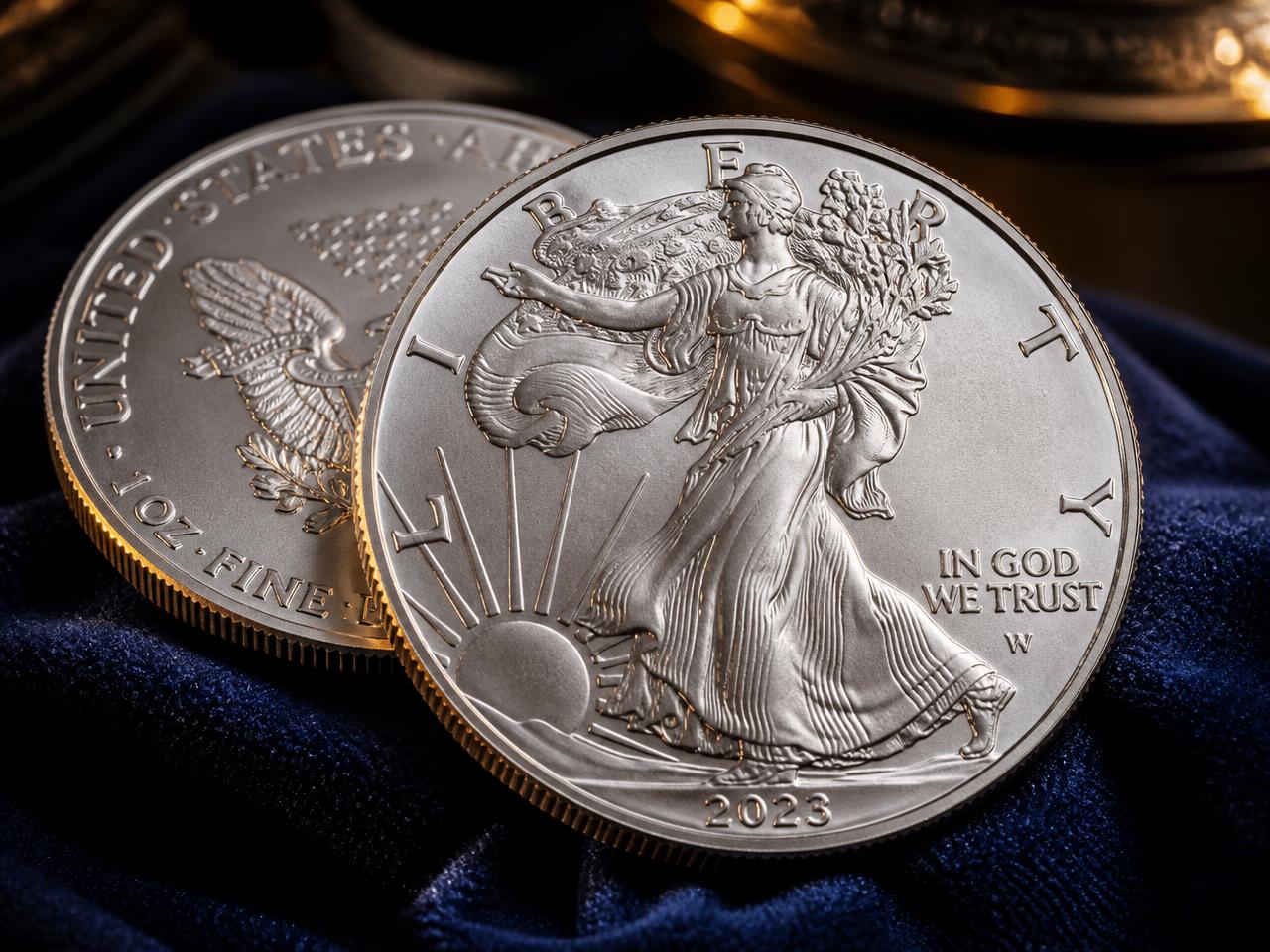
American Silver Eagle

Bar sizes

10, 100, 1,000 oz

Excluded

90% junk silver

Eligible silver products

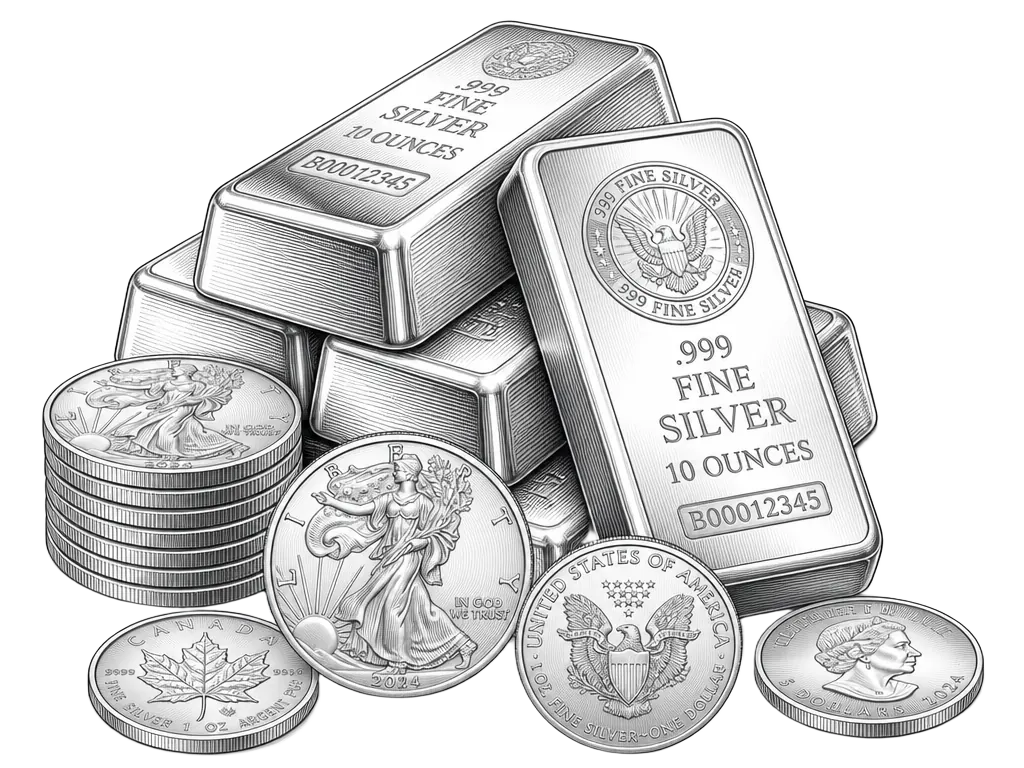
Recognised sovereign coins carry a premium but trade tightly on the way out. Larger bars carry lower premiums and suit bigger allocations.

  • American Silver Eagle
  • Canadian Silver Maple Leaf and Austrian Philharmonic
  • 10 oz, 100 oz and 1,000 oz accredited bars
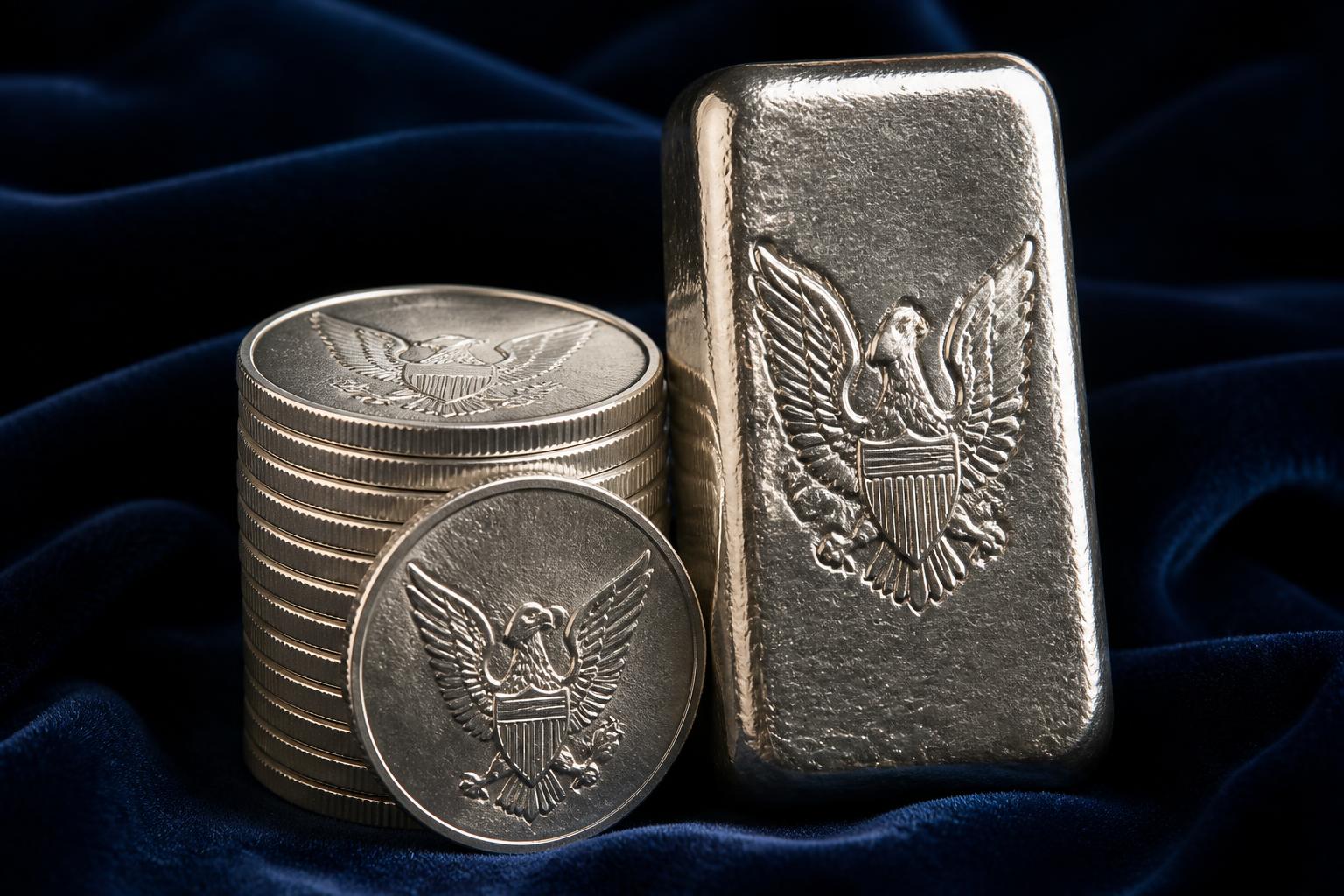
Stack of American Silver Eagle coins beside a hallmarked 10 oz poured silver bullion bar
Buy silver bullion for delivery or a Silver IRA: American Silver Eagles and hallmarked poured bars, priced off live spot plus a published premium — never a phone-only quote.
Describe this illustration: Stack of American Silver Eagle coins beside a hallmarked 10 oz poured silver bullion bar

Silver belongs in a wealth-protection plan because it is real, liquid and affordable to accumulate. The American Silver Eagle is the world's most recognised silver coin; the hallmarked poured bar carries its weight and fineness stamped into the metal itself. Capstone Metals prices both against the live silver spot with the premium published in writing, so a first-time buyer knows precisely what arrives — whether for insured home delivery or inside a self-directed Silver IRA held by a qualified custodian. Named products, live-spot pricing and a disclosed premium are the difference between buying bullion and being sold a story.

Premium versus liquidity

The right mix depends on account size. Below six figures, coins usually make sense. Above it, large bars materially reduce cost per ounce.

Rather just ask someone?

A specialist can answer this in two minutes. Monday – Friday, 7am – 4pm Pacific.

The short answer

Silver reaches an IRA either as the coin specified in 31 U.S.C. §5112(e) and exempted by §408(m)(3)(A), or as bullion meeting the contract-market delivery fineness under §408(m)(3)(B) — 999 fineness for COMEX silver — held in the physical possession of a qualifying trustee.

Key facts

Each fact below is tied to a numbered source at the foot of this page. Follow the numbers and check us.

  1. 01

    The silver bullion standard is 999 fineness, taken from the COMEX contract specification.2,4

    Silver delivered against the CME silver futures contract must assay to a minimum of 999 fineness. §408(m)(3)(B) points to exactly this kind of contract-market delivery minimum, which is why 999 is the working threshold for silver bullion in an IRA.

  2. 02

    The American Silver Eagle qualifies as a named coin, with its specification set by statute.2,3

    31 U.S.C. §5112(e) specifies a coin 40.6 mm in diameter, weighing 31.103 grams, containing .999 fine silver, and §408(m)(3)(A)(ii) exempts silver coins described in that subsection from collectible treatment.

  3. 03

    Pre-1965 U.S. 90% silver coinage is not eligible.2,4

    At 900 fine it falls short of the 999 contract-market standard, and it is not a coin named in §408(m)(3)(A). Junk silver is a reasonable thing to own personally and is not an IRA asset.

  4. 04

    Private rounds are bullion, not coins, for eligibility purposes.2,4

    A privately minted .999 round is not legal-tender coinage, so route one is unavailable. It must qualify as bullion under route two, and the custodian's willingness to administer generic rounds varies more than for sovereign coins.

  5. 05

    Silver's bulk changes the practical economics of IRA storage.4,5

    The same dollar value of silver occupies far more vault space than gold. Where storage is charged on value the effect is limited; where it is charged on volume or weight, or where shipping is involved, silver costs meaningfully more to hold and to move.

  6. 06

    Trustee possession is a condition of the silver bullion exception too.2

    The possession requirement in §408(m)(3)(B) applies to gold, silver, platinum and palladium bullion alike. Eligible silver stored personally is not eligible silver.

  7. 07

    Percentage premiums matter more inside an IRA than outside it.1,4

    Silver's premiums are a larger fraction of value than gold's, and IRA storage and administration fees sit on top. The combined drag on a silver-heavy retirement account is materially higher, which is a cost fact worth modelling before funding.

  8. 08

    Your custodian's list is again the binding practical test.1,2

    Statutory eligibility does not oblige a custodian to administer an item. Confirm the specific product in writing before funds move.

The vocabulary

999 fine
99.9% silver. The COMEX delivery minimum and the working IRA bullion threshold for silver.
900 fine
90% silver, the composition of pre-1965 U.S. circulating coinage. Below the IRA bullion standard.
Round
A privately minted bullion disc. Not legal tender, so it must qualify as bullion rather than as a named coin.
Named coin
A coin exempted by cross-reference in §408(m)(3)(A), such as the silver coin specified in 31 U.S.C. §5112(e).
Segregated storage
Your specific items held separately and identifiably, rather than as a claim on a pool.
Approved product list
The custodian's operational list, applied on top of the statutory tests.

What qualifies and what does not

ProductIRA statusWhy
Silver coin per 31 U.S.C. §5112(e)EligibleNamed coin under §408(m)(3)(A)(ii)
999 fine bars from a credible refinerGenerally eligibleMeets the contract-market bullion standard
999 fine private roundsOften eligible, custodian-dependentBullion route only; not legal-tender coinage
Pre-1965 90% silverNot eligible900 fine, below the standard, and not a named coin
Graded or proof silverGenerally not eligiblePriced on condition; treated as a collectible

How to verify silver eligibility

  • Establish whether the product is a named coin or generic bullion.
  • Confirm the stated fineness is 999 or better for the bullion route.
  • Check the refiner or mint and that documentation is intact.
  • Obtain the custodian's written confirmation for the exact product.
  • Model storage cost against the bulk of the position, not only its value.
  • Compare all-in cost per ounce of fine silver, not headline premium percentages.

Risks and limitations

Anyone who only tells you the upside is selling, not explaining.

  • Buying 90% silver for an IRA.

    It is not eligible, and an ineligible acquisition is treated as a distribution equal to its cost.

  • Combined premium and fee drag.

    Silver's higher percentage premiums plus IRA storage and administration compound against a silver-heavy account.

  • Volatility.

    Silver's industrial demand component makes it move further than gold in both directions.

  • Custodian refusal of generic rounds.

    Meeting the fineness route in statute does not oblige a custodian to hold the item. Confirm with the custodian in writing before you buy.

Common misconceptions

All real silver can go into an IRA.

Fineness and statutory route both matter. 90% coinage is real silver and is not eligible.

The IRS sets a .999 silver rule.

The statute points to a contract-market delivery minimum. COMEX silver requires 999 fineness — an exchange specification.

Rounds and coins are interchangeable for eligibility.

Coins can qualify by name; rounds must qualify as bullion, and custodian policies differ.

Silver is the cheap way into a metals IRA.

The metal is cheaper per ounce, but percentage premiums and storage bulk make the total cost of holding proportionally higher.

Mistakes worth avoiding

  • Assuming junk silver qualifies because it is genuine silver.
  • Buying generic rounds before confirming the custodian accepts them.
  • Ignoring the storage implications of silver's bulk.
  • Comparing premiums in percent without converting to dollars per ounce of fine silver.

Take this with you

IRA silver eligibility checklist

  1. 1.Named coin or bullion — which route applies?
  2. 2.Is the stated fineness 999 or better?
  3. 3.Who minted or refined it, and is documentation intact?
  4. 4.Has the custodian confirmed this exact product in writing?
  5. 5.Which depository, and segregated or commingled?
  6. 6.What does storage cost annually for this volume of metal?
  7. 7.What is the all-in cost per troy ounce of fine silver?
  8. 8.What is the dealer's buy-back price today?

What people ask next

Sources and references

Everything factual on this page traces to one of the following. Law and government publications come first, then exchange specifications and standards bodies.

  1. 1.
    Publication 590-A — Contributions to Individual Retirement Arrangements (IRAs)

    Internal Revenue Service · Tier 1 Primary / government · checked 2026-09-02

    The IRS's own annual guide to IRA contribution limits, eligibility, deduction phase-outs, transfers and rollover mechanics.

  2. 2.
    26 U.S.C. § 408(m) — Investment in collectibles treated as distributions

    Legal Information Institute, Cornell Law School · Tier 1 Primary / government · checked 2026-09-02

    §408(m)(1) treats an IRA's acquisition of a collectible as a distribution equal to its cost. §408(m)(2) lists 'any metal or gem' and 'any stamp or coin' as collectibles. §408(m)(3) carves out specific U.S. coins and gold, silver, platinum or palladium bullion meeting a contract-market delivery fineness, and only where that bullion is in the physical possession of a trustee described in §408(a).

  3. 3.
    31 U.S.C. § 5112 — Denominations, specifications, and design of coins

    Legal Information Institute, Cornell Law School · Tier 1 Primary / government · checked 2026-09-02

    §5112(a)(7) specifies a fifty dollar gold coin 32.7 mm in diameter weighing 33.931 grams and containing one troy ounce of fine gold; (a)(8)–(a)(10) specify the half-ounce, quarter-ounce and tenth-ounce sizes. §5112(e) specifies a silver coin 40.6 mm in diameter weighing 31.103 grams containing .999 fine silver. §5112(k) authorises the platinum bullion coin.

  4. 4.
    Silver futures contract specifications (COMEX)

    CME Group · Tier 2 Industry / authoritative · checked 2026-09-02

    Under 'Grade and Quality': silver delivered under the COMEX silver futures contract must assay to a minimum of 999 fineness.

  5. 5.
    Gold futures contract specifications (COMEX)

    CME Group · Tier 2 Industry / authoritative · checked 2026-09-02

    Under 'Grade and Quality': gold delivered under the COMEX gold futures contract must assay to a minimum of 995 fineness. This is the contract-market delivery standard that §408(m)(3)(B) points to for gold bullion.

Who wrote and reviewed this

Written by
Travis Bugli
Chief Executive Officer and licensed agent, Capstone Metals
Reviewed by
Mark Bugli
Senior Advisory Partner, licensed since 1970
First published
2026-09-02
Last reviewed
2026-09-02
Change log (1)
  • 2026-09-02

    Added the eligibility table, the explicit 90% junk-silver exclusion with its reasoning, and the round-versus-coin route distinction.

    Why: Junk silver and generic rounds are the two products buyers most often assume qualify.

This page explains general rules and mechanics. It is not individualised tax, legal or investment advice, and Capstone Metals is a precious-metals dealer rather than a custodian, trustee or depository. Confirm eligibility for any specific product with your IRA custodian, and discuss suitability with your own advisers.

Would a short, no-pressure conversation help?

Leave your name and number. A Capstone specialist will answer your questions during business hours.

Most gold and silver firms can only talk to you about gold and silver. We have licensed advisors on staff, so the same conversation can cover your retirement accounts, your market holdings, insurance and estate structure alongside a completely private metals purchase — one fiduciary review of everything you own, not a sales call about one product.

What would you like help understanding? (optional)

By submitting your name and phone number you are asking us to follow up, and you agree that Capstone Metals may contact you by phone, text, or email to clarify what you are looking for and make sure you receive it. Message and data rates may apply. You can ask us to stop at any time by replying STOP or telling us on the phone, and we never sell or share your information. This is a request for information and a conversation — not a purchase, an application, or advice. SMS Opt-In Policy · Privacy Policy · Terms & Conditions · How pricing works · Disclosures · Due diligence & financial risks

Licensed and insuredFiduciary advisory since 1970Independent IRA custodiansPrices quoted, never card-charged

Common questions

Is 90% junk silver IRA eligible?
No. Pre-1965 US coinage is .900 fine and falls below the IRS threshold.
What makes silver IRA eligible?
Either being the silver coin specified in 31 U.S.C. §5112(e) and exempted by §408(m)(3)(A)(ii), or being bullion meeting the contract-market delivery fineness under §408(m)(3)(B). Both require the trustee's physical possession.
What purity does IRA silver require?
Under the bullion route, at least the contract-market minimum — 999 fineness for COMEX silver. The named silver coin route carries its own statutory specification of .999 fine.
Are all silver coins IRA eligible?
No. Pre-1965 90% U.S. coinage is not, and graded or proof silver generally is not. Sovereign .999 bullion coins commonly are.
Are silver bars eligible?
Bars at 999 fineness or better can qualify under the bullion route. Bars from recognised refiners with intact documentation are easiest to place with a custodian and to resell.
Are collectible or proof silver coins eligible?
Generally no. Products priced on condition and rarity are the collectibles §408(m) restricts, and acquiring one in an IRA is treated as a distribution equal to its cost.
Is junk silver IRA eligible?
No. Pre-1965 dimes, quarters and half dollars are 900 fine — below the 999 contract-market standard — and are not coins named in §408(m)(3)(A). They are fine to own personally.
Who determines eligibility?
The statute sets the tests, and your custodian decides in practice whether it will administer a specific item. Both have to be satisfied.
How is IRA silver stored?
In a depository, in the trustee's physical possession, on either a segregated or commingled basis. Because silver is bulky, ask how storage is priced — by value, weight or volume.
How can I verify eligibility?
Identify the route, confirm fineness against the contract-market minimum, check the mint or refiner, and get your custodian's written confirmation for the exact product before funds move.
What should I compare before purchasing?
All-in cost per troy ounce of fine silver, the dealer's buy-back price, whether you need sovereign recognition, the custodian's acceptance of the product, and annual storage cost for that physical volume.
Can I hold both gold and silver in the same IRA?
Yes. A single self-directed precious-metals IRA can hold gold, silver, platinum and palladium, provided each item satisfies §408(m)(3) and your custodian administers it.
Is a silver IRA cheaper than a gold IRA?
The metal costs less per ounce, but percentage premiums are higher and the same value takes far more vault space. Once premiums, storage and administration are counted, a silver-heavy account usually costs proportionally more to hold.
Compare silver premiums side by side

We publish spreads so you can see the real cost per ounce.

Licensed and insuredFiduciary advisory since 1970Independent IRA custodiansPrices quoted, never card-charged
Call (800) 200-9553 Text Email