Capstone Metals — gold and silver IRA dealer
Speak with a specialist: (800) 200-9553Monday – Friday, 7am – 4pm Pacific

Insurance & storage proof

Every vaulting claim we make, with the paperwork behind it

We tell clients their metal sits in a military-grade vault under all-risk specie coverage underwritten at Lloyd's of London. That is a strong claim, so this page shows the receipts: what specie coverage is, what it does and does not cover, who underwrites it, how allocated storage and audits are verified, and how it differs from FDIC insurance on a bank deposit. 12 primary sources are listed at the bottom, and every numbered marker on the site links back to one of them. Every source was last checked on .

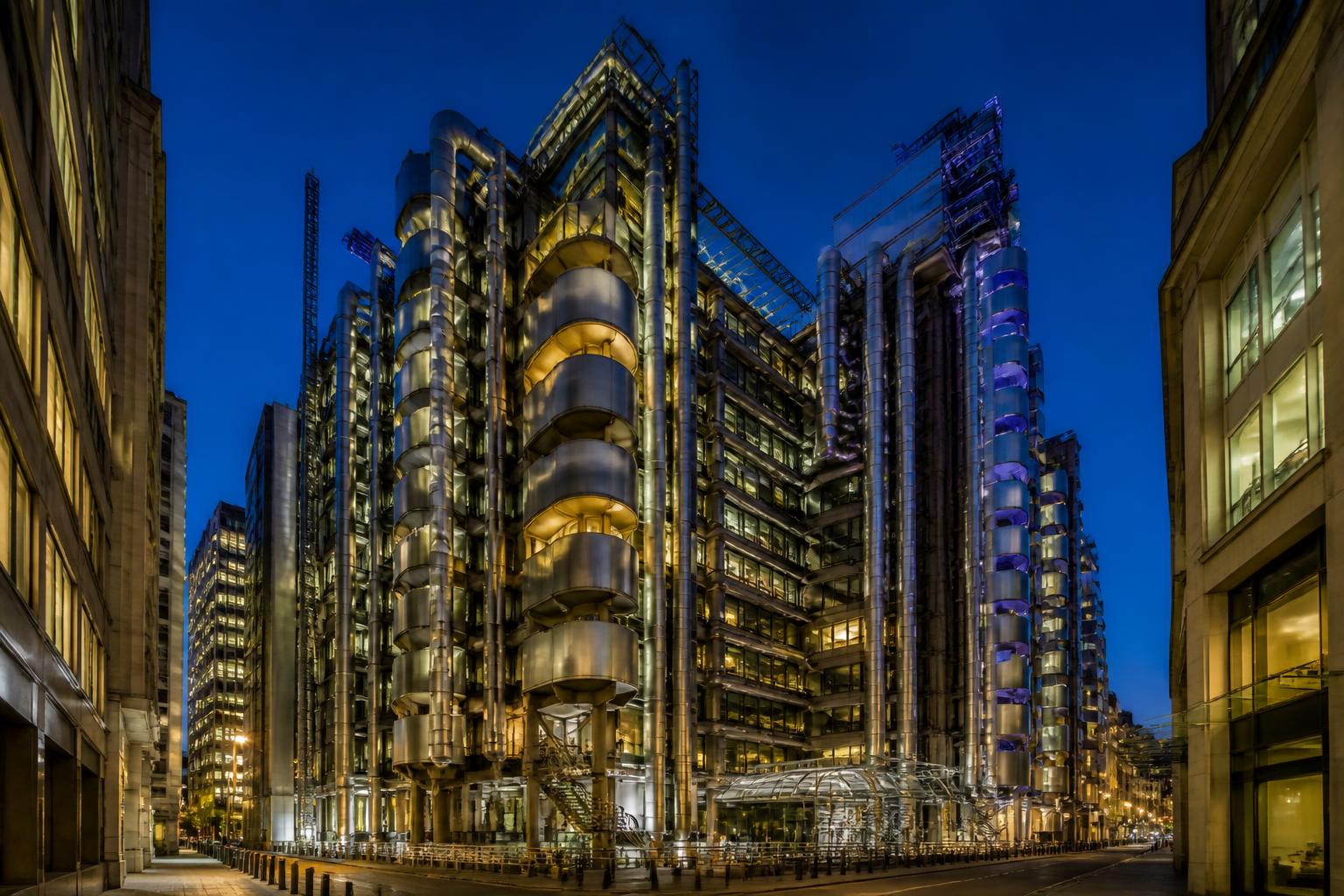
The Lloyd's of London building at One Lime Street in the City of London, lit at dusk
One Lime Street, the City of London — home of the Lloyd's market where all-risk specie coverage on vaulted bullion is underwritten.
Describe this illustration: The Lloyd's of London building at One Lime Street in the City of London, lit at dusk

An evening editorial photograph of the Lloyd's of London building — the 'inside-out' stainless-steel tower at One Lime Street in the City of London, its external ducts and lifts rising against a twilight sky. This illustration opens the insurance proof page because it shows the reader exactly where their vaulted bullion coverage is born: the Lloyd's market, the world's specialist insurance market for risks ordinary insurers will not write. Its significance is credibility you can verify — all-risk specie coverage on gold and silver in a rated depository is underwritten in this market, which is the standard this page documents line by line.

Listen to this pageabout 10 min

Underwriting

Specie is a defined Lloyd's class of business written for bullion, coin and high-value property. Lloyd's is a market of more than a hundred syndicates rather than a single carrier, rated A+ (Superior) by AM Best and AA- by S&P Global Ratings. The depository places the policy; we hand you the certificate of insurance.

Allocated storage

Segregated holdings are recorded to you by serial or lot and identified as customer property under the Uniform Commercial Code — not assets of the depository, not pooled into a house account, not lent out. Facilities are UL-rated with redundant alarm, monitoring and handling controls.

Audit & documentation

Holdings are verified by independent auditors, and IRA metal must sit with a qualified trustee or custodian under IRS rules. Before you fund, you receive the depository agreement, the storage fee schedule and the certificate of insurance — plus the latest audit confirmation on request.

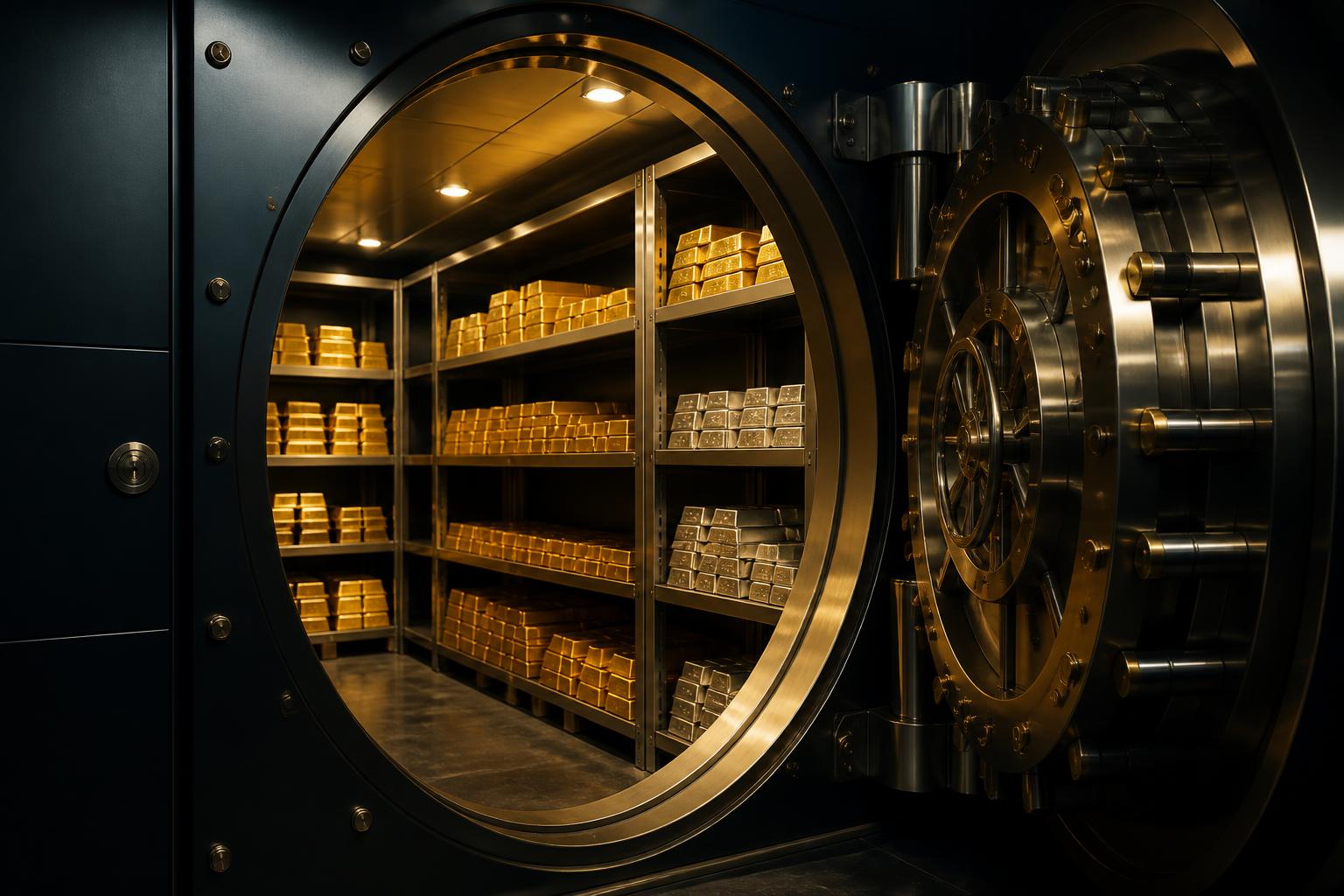
Gold and silver bullion bars stacked on steel shelving inside a high-security vault behind an open circular vault door
Specie is the Lloyd's class of business written for exactly this: bullion, coin and high-value property sitting in a rated vault.
Describe this illustration: Gold and silver bullion bars stacked on steel shelving inside a high-security vault behind an open circular vault door

An editorial photograph inside a high-security precious metals vault: rows of gold and silver bullion bars on steel shelving, seen through the open ring of a massive circular vault door with brass locking bolts. This image illustrates what 'specie' means — the Lloyd's class of business written for exactly this property: bullion, coin and high-value assets sitting in a rated vault. It is significant because it shows why the coverage exists at all: the value density in this frame is what a bank's balance sheet cannot insure and what FDIC coverage never touches — physical metal insured for its full value, all-risk, at the vault itself.

Claim by claim

The same statements we make on the homepage and the storage page, each tied to the source that establishes it.

All-risk, including natural catastrophe

Specie is a defined class of business at Lloyd's, written for bullion, coin and other high-value property. Cover is placed on an all-risk basis, which typically includes fire, flood, earthquake, windstorm, theft, armed robbery, employee dishonesty, transit loss and mysterious disappearance. Natural catastrophe — the 'act of God' most ordinary policies argue about — is normally a covered peril rather than a carve-out. The named perils, sublimits and exclusions live in the depository's policy, and you get to read them.

Insured to replacement value, not a statutory cap

Depository specie programs are written to the replacement value of the metal held, not to a government coverage limit. That is a structurally different thing from a bank deposit, which is insured to at least $250,000 per depositor, per insured bank, per ownership category.

Allocated in your name, audited

In segregated storage your specific bars and coins are recorded to you by serial or lot. Depository holdings are identified as customer property under the Uniform Commercial Code — not assets of the depository — and independent auditors verify holdings. Ask us for the audit letter and the certificate of insurance; we will send both.

A vault is not a bank

Money in a bank is a loan you made to that bank: you hold a claim, and FDIC insurance responds if the bank fails. Metal in an allocated, insured vault is property you already own; the depository is a custodian, not a borrower. For IRA metal, that custody is not optional — the IRS requires a qualified trustee or custodian.

Underwriters you can look up

Lloyd's is a marketplace of more than a hundred syndicates rather than a single carrier, and its financial strength is rated independently — A+ (Superior) by AM Best and AA- by S&P Global Ratings. You do not have to take our word for any of it; the rating agency publishes its own disclosure.

Nearly 350 years of paying claims

Lloyd's traces to Edward Lloyd's coffee house in the 1680s and has underwritten war, earthquake, hurricane and maritime catastrophe ever since. Longevity is not a guarantee, but a market that has settled claims through three centuries of crises is a different counterparty from one founded last decade.

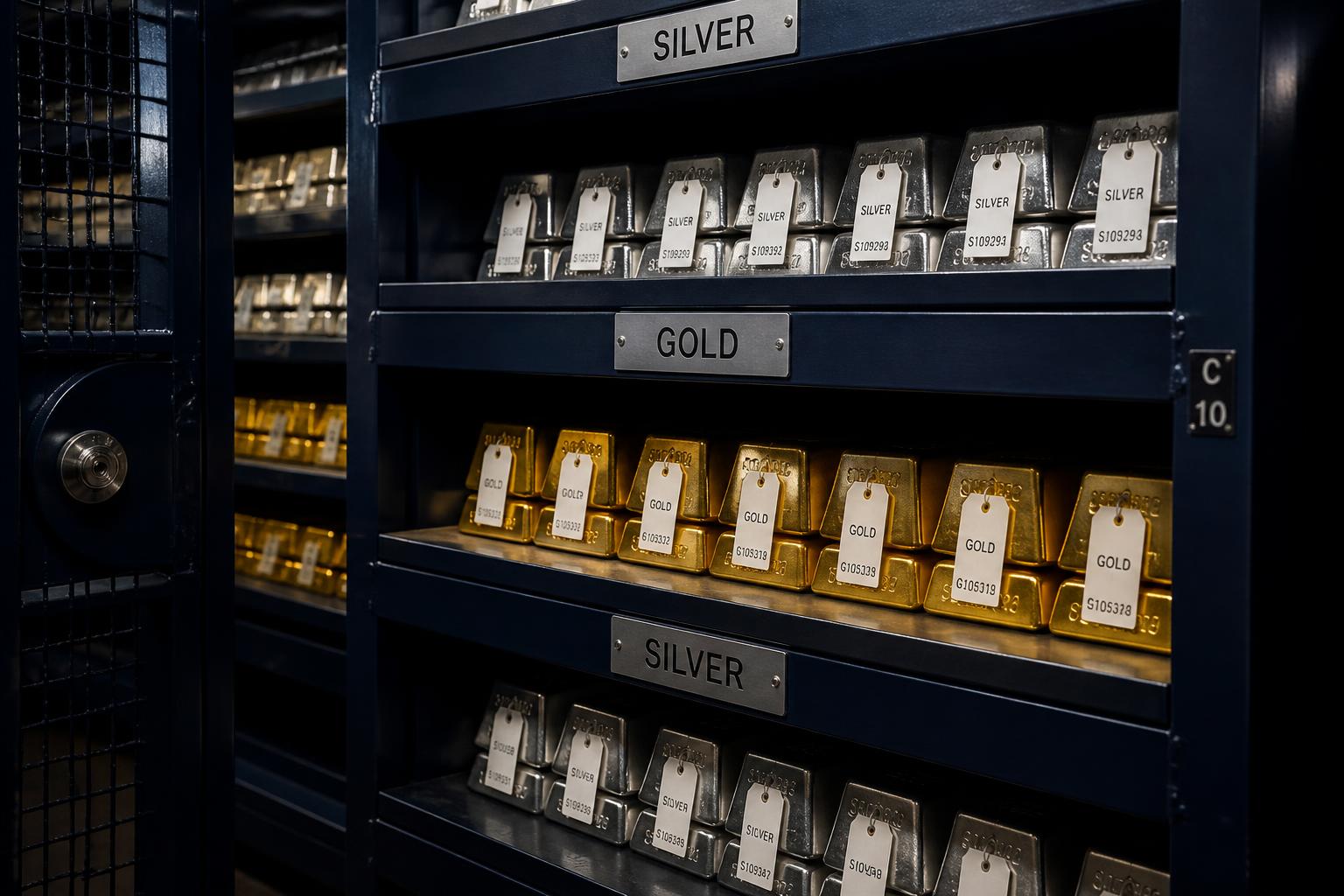
Serial-numbered silver and gold bars tagged and stored in separate labelled compartments at a secure depository
Allocated, segregated storage: each bar recorded to you by serial or lot — identified as customer property, never pooled into a house account.
Describe this illustration: Serial-numbered silver and gold bars tagged and stored in separate labelled compartments at a secure depository

An editorial photograph of segregated bullion storage inside a secure depository: individual silver and gold bars, each tagged with a serial or lot number, resting in separately labelled compartments on steel racks. This illustration demonstrates the difference this page insists on — allocated, segregated storage means your bars are recorded to you by serial number and identified as customer property, never pooled into a house account. Its significance is legal as much as practical: if a depository or dealer ever failed, tagged and segregated metal is your property, while unallocated metal is merely your claim — the same creditor-queue distinction the education center teaches for banks.

What insurance does not do

One caveat we would rather you hear from us: no policy insures you against the price of gold or silver falling. Insurance protects the metal, not its market value. And Lloyd's is not the only market that will cover catastrophe risk — it is simply the oldest, one of the most independently scrutinised, and the one under which specie cover is most commonly placed.

An independent auditor in white gloves verifying gold bars against a ledger at a precious metals depository
Holdings are verified by independent auditors — physical bars reconciled against the depository's records, lot by lot.
Describe this illustration: An independent auditor in white gloves verifying gold bars against a ledger at a precious metals depository

An editorial photograph of an independent audit in progress at a precious metals depository: a white-gloved auditor lifting a gold bar over a counting table stacked with more bars, clipboard and ledger in hand. This image illustrates the third layer of proof on this page — holdings are not merely stored and insured, they are physically verified by independent auditors reconciled against the depository's records, lot by lot. Its significance is that a client never has to take anyone's word, including ours: insurance underwritten at Lloyd's, storage at a rated depository, and existence confirmed by someone who works for neither.

See also our risk disclosures and terms and conditions.

Coverage FAQ

Acts of God, replacement value, and what is not covered

Answers and sources last reviewed .

Does the vault insurance really cover acts of God?
Yes — natural catastrophe is normally a covered peril rather than an exclusion under all-risk specie coverage, which is the Lloyd's class of business written for bullion and coin. Fire, flood, earthquake and windstorm sit inside the covered perils on a typical depository program. What we will not tell you is that any policy covers everything: the named perils, exclusions, sublimits and conditions are set out in the depository's own policy, and we give you that documentation before you fund.
What does 'insured to replacement value' actually mean?
It means the program is written against the value of the metal held rather than against a fixed government cap. If insured metal is physically lost or destroyed in a covered event, the claim is settled on the basis the policy specifies for replacing that metal, subject to the policy's valuation clause, deductible and limits. It does not mean you are made whole if the silver price drops.
What is not covered?
Market loss is not covered — a fall in the price of gold or silver is not an insurable event. Beyond that, specie policies carry standard exclusions and conditions that vary by program: war and nuclear perils, wear and inherent vice, unreported or unallocated metal, breaches of the reporting or security warranties, and losses outside the covered locations or transit legs. Deductibles and sublimits apply. Read the certificate of insurance and the depository agreement for the exact terms that govern your holdings.
Who is actually insuring my metal — Capstone Metals?
No. We are a dealer, not an insurer and not a custodian. The insurance is placed by the depository with underwriters, commonly syndicates at Lloyd's of London, which is a marketplace of more than a hundred syndicates rather than a single carrier. Our job is to place your metal at a depository that carries that coverage and to hand you the paperwork proving it.
How is this different from FDIC insurance on my bank account?
FDIC insurance responds when an insured bank fails, and it protects your deposit claim to at least $250,000 per depositor, per bank, per ownership category. Specie insurance responds when physical metal is lost or damaged, and it is written to the value of the metal held. One protects a claim against an institution; the other protects property you already own. They are different products for different events, and neither is a substitute for the other.
Is Lloyd's financially strong enough to matter?
Its financial strength is rated independently rather than self-reported: A+ (Superior) from AM Best and AA- from S&P Global Ratings, among four agencies that publish on the market. You can pull AM Best's own disclosure document without going through us.
Can I see the insurance documents before I buy?
Yes, and you should insist on it anywhere you shop. Before funding we provide the depository agreement, the storage fee schedule and the certificate of insurance, plus the most recent independent audit confirmation on request. If a dealer will not put coverage in writing, that is your answer.
Why can't I just keep IRA metal in my own safe?
Because the IRS requires IRA assets to be held by a qualified trustee or custodian. Home storage of IRA metal risks the account being treated as distributed. Metal you buy outside an IRA is yours to store however you like — insured vaulting is simply the option that comes with all-risk coverage and an audit trail.

Sources & method

How we pick a source — and how you can check us

What earns a footnote

  • Every sentence on this site that a reasonable person could check — a rating, a coverage limit, a legal characterisation, a date — carries a numbered marker.
  • We cite the party that owns the fact: the insurance market for how the market works, the rating agency for the rating, each depository for its own coverage, and the FDIC and IRS for the rules they write.
  • No dealer marketing, no aggregator articles, no press releases about ourselves. If the only support we can find is another seller's page, the claim comes off the site.
  • Where a fact belongs to a depository rather than to us, the sentence says so. We do not restate another firm's coverage as our own.

How to verify a claim

  1. 1. Hover or tap any superscript number. A card shows the document title, publisher, the review date and what that source supports.
  2. 2. Click it to jump to the numbered entry below, then follow the link to the publisher's own document — never a copy hosted by us.
  3. 3. Compare the wording. If our sentence says more than the source does, tell us and we will correct it.
  4. 4. Before you fund anything, ask us for the depository agreement, fee schedule and certificate of insurance. The policy language controls, not this page.
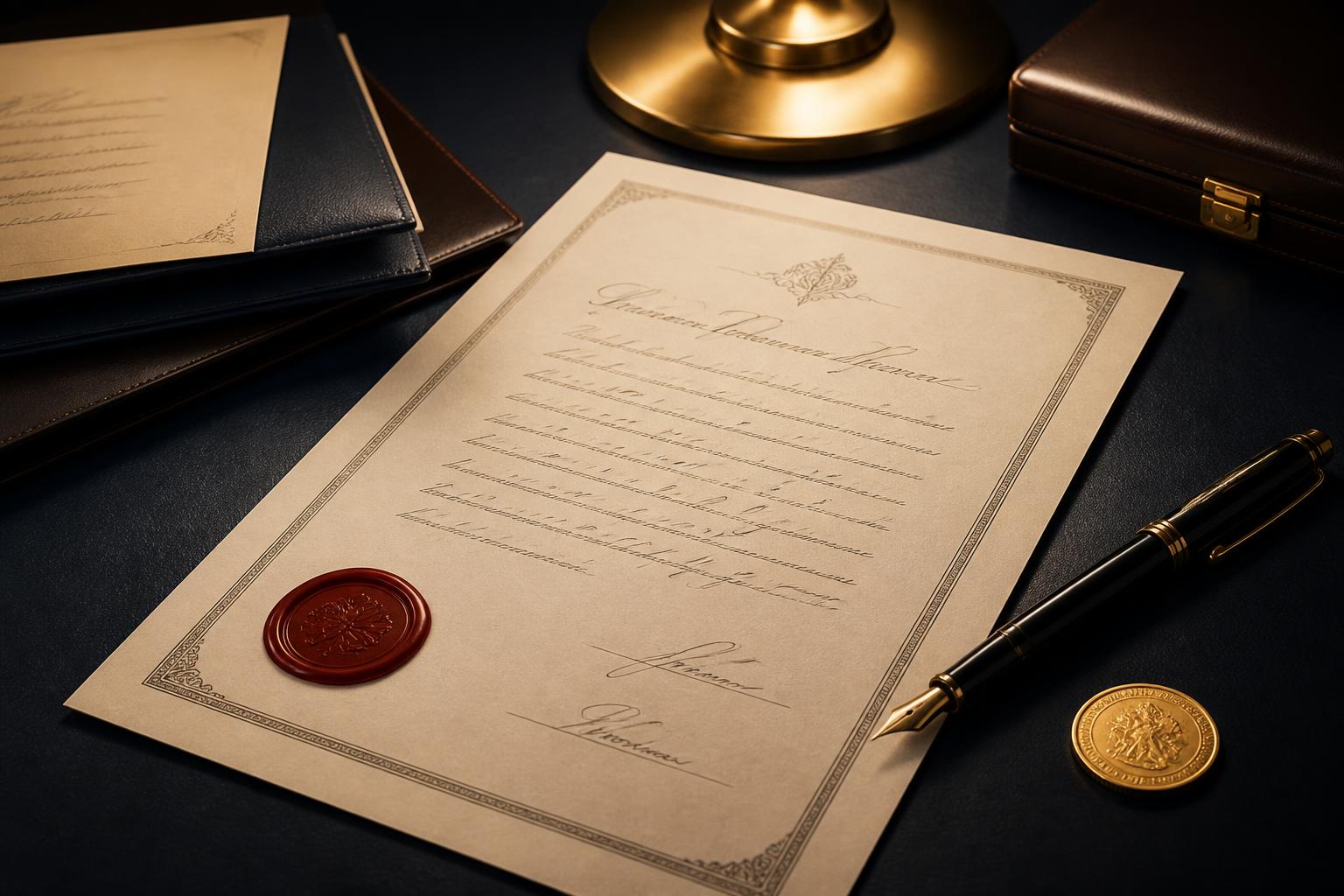
A certificate of insurance and depository agreement with a fountain pen, wax seal and gold coin on a desk
Before you fund, you read the paperwork yourself: the depository agreement, the storage fee schedule and the certificate of insurance.
Describe this illustration: A certificate of insurance and depository agreement with a fountain pen, wax seal and gold coin on a desk

An editorial still-life on a dark navy leather desk: a formal certificate of insurance with an engraved border and wax seal, a depository agreement, a fountain pen and a single gold coin. This plate illustrates the page's core discipline — before you fund, you read the paperwork yourself: the depository agreement, the storage fee schedule and the certificate of insurance. Its significance is the firm's standard made visible: the strongest insurance in the world is only worth what the document says, so this page exists to put the documents in front of you — with sources cited — rather than ask you to trust a slogan.

All 12 sources were last re-read on . One data file feeds this page, the FAQ structured data and the downloadable proof pack, and an automated check re-fetches every URL and every footnote anchor before each release — so a moved or renamed document is caught here rather than by a reader.

Source pack v2026.08.25-1 — the same version stamped on the downloadable proof pack, so you can tell whether a PDF in your inbox matches what this page says today.

Check us in real time

Don't take the review date on faith

This runs the same sweep our release gate runs: every publisher URL is re-fetched, any redirect or changed domain is reported, and every numbered anchor on this page is confirmed. Source pack v2026.08.25-1, last re-read .

Sources

Primary documents only — the insurance market itself, an independent rating agency, two depositories describing their own coverage, the FDIC and the IRS. No dealer marketing.

  1. 1.
    Our history

    Lloyd's of London

    Last reviewed

    Lloyd's traces to Edward Lloyd's coffee house by the Thames in the 1680s and describes itself as having nearly 350 years of history — the oldest continuously operating insurance market in the world.

  2. 2.
    Coffee and commerce, 1652–1811

    Lloyd's of London

    Last reviewed

    Lloyd's own timeline of how a coffee house became the centre of marine intelligence and founded the modern insurance industry.

  3. 3.
    About Lloyd's — the market and its syndicates

    Lloyd's of London

    Last reviewed

    Lloyd's is a marketplace of more than a hundred syndicates, not a single insurance company. Policies are underwritten by syndicates at Lloyd's.

  4. 4.
    Financial strength ratings

    Lloyd's of London

    Last reviewed

    Four rating agencies publish Lloyd's financial strength, including A+ (Superior) from AM Best and AA- from S&P Global Ratings.

  5. 5.
    AM Best credit rating disclosure — Lloyd's (AMB #085202)

    AM Best

    Last reviewed

    Independent confirmation of the A+ (Superior) financial strength rating and size category, straight from the rating agency rather than from a dealer.

  6. 6.
    Fine Art, Specie and Exhibitions — class of business guidance

    Lloyd's of London

    Last reviewed

    'Specie' is a defined Lloyd's class of business covering bullion, coin and other high-value property — the class under which depository vault cover is written.

  7. 7.
    Storage insurance

    International Depository Services Group

    Last reviewed

    A depository stating in its own words that client holdings carry insurance protection underwritten by Lloyd's of London.

  8. 8.
    Precious metals security & UL-rated facilities

    International Depository Services Group

    Last reviewed

    Physical controls at an IRA-eligible depository: UL-rated vaults, multi-redundant alarm and monitoring systems, documented handling procedures.

  9. 9.
    Is my bullion insured?

    Delaware Depository

    Last reviewed

    Depository holdings are identified as customer property under the Uniform Commercial Code — not depository assets — and are covered by the depository's insurance program.

  10. 10.
    Understanding Deposit Insurance

    Federal Deposit Insurance Corporation

    Last reviewed

    FDIC insurance protects deposit accounts in the event of a bank failure — it is failure coverage on a claim against the bank, not property coverage.

  11. 11.
    Deposit Insurance — standard coverage limit

    Federal Deposit Insurance Corporation

    Last reviewed

    Deposits are insured to at least $250,000 per depositor, per FDIC-insured bank, per ownership category.

  12. 12.
    Publication 590-A, Contributions to Individual Retirement Arrangements

    Internal Revenue Service

    Last reviewed

    IRA metals must be held by a qualified trustee or custodian, which is why IRA bullion sits at an approved depository rather than in a home safe.

Download the proof pack (PDF) to keep the same numbered sources, underwriting notes and audit detail offline.

Coverage terms change and depositories renew policies. If a source above no longer supports a statement on this site, we correct the page — call or text (800) 200-9553 or email info@capstonemetals.com.

Want the actual certificate of insurance and depository agreement before you decide? Ask and we will send them — no purchase required.

See the coverage documents before you buy

We will send the depository agreement, the storage fee schedule and the certificate of insurance so you can read the terms yourself. Call or text and ask.

Licensed and insuredFiduciary advisory since 1970Independent IRA custodiansPrices quoted, never card-charged
Call (800) 200-9553 Text Email