Capstone Metals — gold and silver IRA dealer
Speak with a specialist: (800) 200-9553Monday – Friday, 7am – 4pm Pacific

Eligibility

Which gold the IRS actually allows

IRA gold must be at least .995 fine and produced by a national mint or an accredited refiner, assayer or manufacturer. The American Gold Eagle is the one statutory exception at .9167.

Monday – Friday, 7am – 4pm Pacific

  • Licensed and insured since 2014
  • Fiduciary advisory — licensed since 1970
  • Preferred Trust & GoldStar custodians
  • No card payments, no pressure, no commissions-first pitch

Minimum fineness

.995

Eagle exception

.9167 allowed

Excluded

Rare and graded coins

Bars

LBMA / COMEX accredited

Eligible coins

Sovereign bullion coins dominate IRA holdings because they are instantly recognisable and easy to liquidate.

  • American Gold Eagle (1 oz, ½, ¼, 1/10)
  • American Gold Buffalo (.9999)
  • Canadian Gold Maple Leaf (.9999)
  • Austrian Philharmonic, Australian Kangaroo, British Britannia
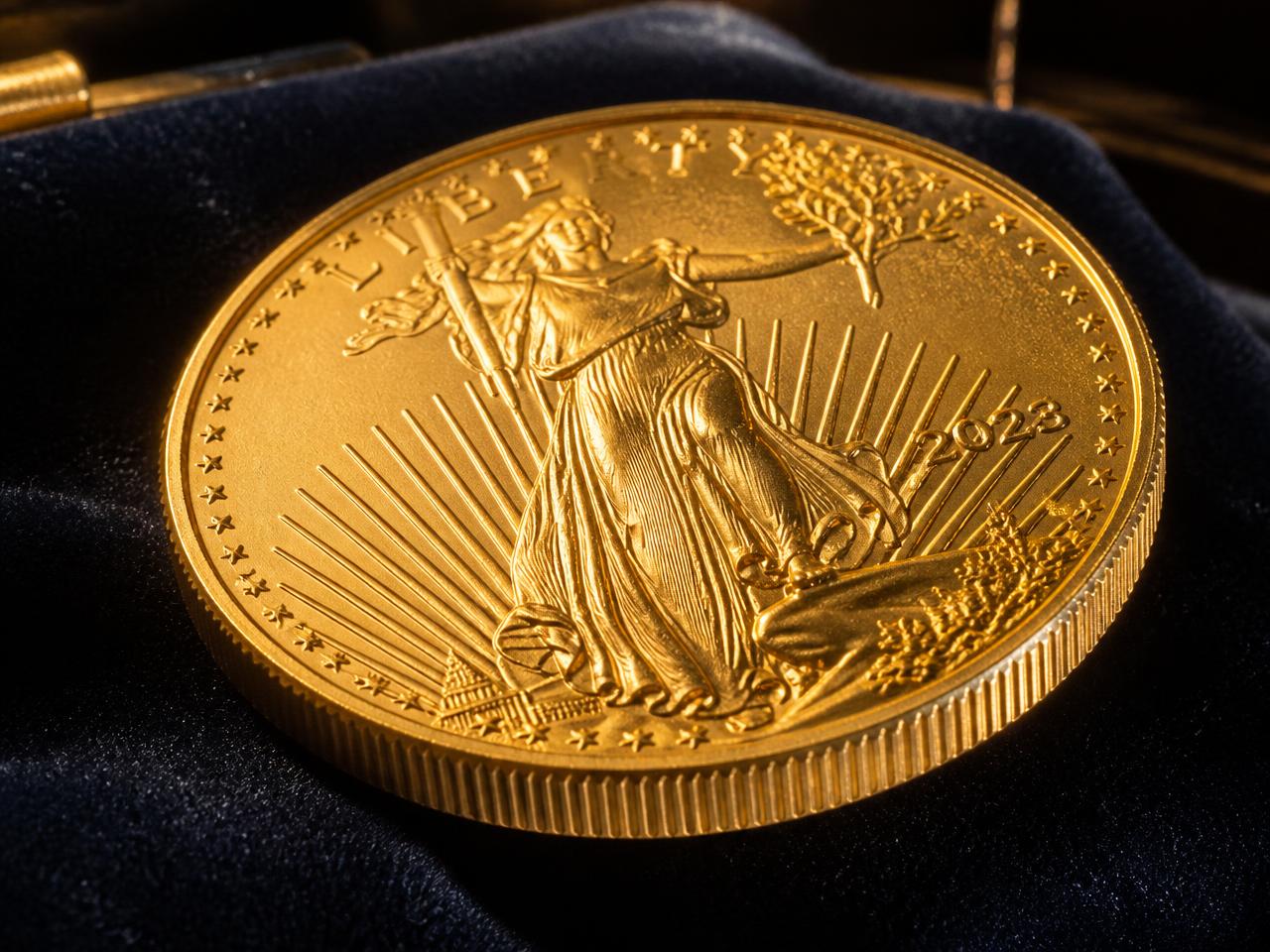
American Gold Eagle and Gold Buffalo bullion coins beside a 1 oz gold bar in an assay card on navy velvet
IRA-approved gold bullion for direct delivery or a self-directed Gold IRA — American Gold Eagles, Gold Buffaloes and serialised assay bars, priced off live spot with the premium disclosed.
Describe this illustration: American Gold Eagle and Gold Buffalo bullion coins beside a 1 oz gold bar in an assay card on navy velvet

Buy physical gold the way it should be done — named, IRA-approved bullion you can identify and verify, not a paper ticker. The American Gold Eagle, Gold Buffalo and serialised one-ounce bar shown here are exactly the products Capstone Metals stocks, prices against the live gold spot market with the premium stated up front, and ships fully insured to your door or places directly into a self-directed Gold IRA. Every purchase starts with the metal in front of you and the number in writing — the standard a precious metals buyer should expect and rarely gets.

Eligible bars and rounds

Bars must come from an accredited refiner and carry a serial number and assay where applicable. Common IRA sizes are 1 oz, 10 oz and 1 kilo.

What is not allowed

Collectible, numismatic and graded coins, pre-1933 US gold, jewellery, and any product sold primarily on rarity rather than metal content.

Rather just ask someone?

A specialist can answer this in two minutes. Monday – Friday, 7am – 4pm Pacific.

The short answer

Gold reaches an IRA by one of exactly two statutory routes: it is a coin named through 26 U.S.C. §408(m)(3)(A), or it is bullion meeting the fineness a contract market requires for futures delivery under §408(m)(3)(B) — and in either case it must be in the physical possession of a qualifying trustee.

Key facts

Each fact below is tied to a numbered source at the foot of this page. Follow the numbers and check us.

  1. 01

    There is no official government list of 'IRA-approved gold'.2

    The statute sets tests, not a catalogue. Any list you see — including any list a dealer shows you — is someone's application of §408(m)(3) plus a custodian's operational policy. Treat lists as summaries and verify the specific item with your custodian.

  2. 02

    Default treatment is unfavourable: metals and coins are collectibles unless an exception applies.2

    §408(m)(2) lists 'any metal or gem' and 'any stamp or coin' as collectibles, and §408(m)(1) treats an IRA's acquisition of a collectible as a distribution equal to its cost. Eligibility is therefore an exception you must land inside, not a default you fall back on.

  3. 03

    Route one: specified coins, named by cross-reference.2,3

    §408(m)(3)(A) excludes from collectible treatment gold coins described in paragraphs (7) through (10) of 31 U.S.C. §5112(a) — the one-ounce, half-ounce, quarter-ounce and tenth-ounce coins — as well as silver coins under §5112(e), platinum coins under §5112(k), and any coin issued under the laws of any State.

  4. 04

    Route two: bullion at the contract-market delivery fineness.2,4

    §408(m)(3)(B) covers gold, silver, platinum or palladium bullion at a fineness at least equal to the minimum a contract market requires for delivery against a regulated futures contract. For COMEX gold that standard is 995 fineness — which is where the widely quoted '.995 for gold' figure actually comes from.

  5. 05

    The Gold Eagle is eligible despite being about 91.67% gold, and that is not an inconsistency.2,3

    It qualifies as a named coin under route one, so the route-two fineness test never applies to it. Federal law specifies it as a 33.931-gram coin containing one troy ounce of fine gold. Dealers who claim it qualifies 'because the IRS made an exception to the purity rule' have the right conclusion by the wrong mechanism.

  6. 06

    Trustee possession is part of the eligibility test for bullion, not a separate rule.2

    The route-two exception applies only 'if such bullion is in the physical possession of a trustee described under subsection (a)'. Eligible metal stored in the wrong place is not eligible metal.

  7. 07

    Proof, graded and commemorative gold is normally outside both routes.2

    Products priced on condition, rarity or collector appeal are the collectibles §408(m) was written about. A proof version of an otherwise eligible coin may fall within route one on the statutory text, but custodians frequently decline them, and the premium makes them a poor way to own gold regardless.

  8. 08

    Your custodian's approved list is the binding practical test.1,2

    A product can be statutorily eligible and still be declined for operational reasons. Eligibility is a two-part question every time: does the statute permit it, and will this custodian administer it?

The vocabulary

Collectible (§408(m)(2))
Categories including any metal or gem and any stamp or coin, whose acquisition by an IRA is treated as a distribution.
Contract market
A regulated futures exchange. Its delivery specification supplies the fineness standard §408(m)(3)(B) points to.
Fineness
Purity in parts per thousand. 995 fine gold is 99.5% pure.
Named coin
A coin exempted by cross-reference in §408(m)(3)(A) rather than by meeting a purity test.
Physical possession of a trustee
The statutory condition attached to the bullion exception. Satisfied by depository custody under the trustee, not by personal storage.
Approved product list
A custodian's own operational list, applied in addition to the statutory tests.

The two eligibility routes

Route 1 — named coins §408(m)(3)(A)Route 2 — bullion §408(m)(3)(B)
What it coversSpecific U.S. coins by statutory cross-reference, plus State-issued coinsGold, silver, platinum, palladium bullion generally
Purity testNone applied by this routeAt least the contract-market delivery minimum — 995 for COMEX gold
Classic exampleThe four American Gold Eagle sizesA 1 oz .9999 bar from an accredited refiner
Trustee possession requiredYes, as an IRA asset generallyYes, expressly written into the exception

How to verify eligibility yourself

  • Identify which of the two routes the product is supposed to travel.
  • For route one, check the coin is actually one of those cross-referenced in §408(m)(3)(A).
  • For route two, confirm the stated fineness meets or exceeds the contract-market minimum, and that the refiner is credible.
  • Get the custodian's written confirmation that it will administer this exact product.
  • Confirm the depository and that the metal will be in the trustee's possession.
  • Keep the invoice, the assay documentation and the custodian's confirmation together.

Risks and limitations

Anyone who only tells you the upside is selling, not explaining.

  • An ineligible purchase is treated as a distribution.

    §408(m)(1) measures it at the cost to the account, with the ordinary tax consequences of a distribution.

  • Dealer eligibility claims are not authority.

    A brochure is not a custodian confirmation. Get the confirmation.

  • High-premium 'eligible' products.

    Eligibility says nothing about value. A qualifying coin sold at a heavy premium is still a poor way to buy an ounce.

  • Rules and custodian policies change.

    Contract specifications and custodian lists are both revisable. Verify at the time of purchase rather than relying on old research.

Common misconceptions

The IRS publishes a list of approved gold products.

It publishes tests in §408(m)(3). Product lists are third-party interpretations layered with custodian policy.

The IRS sets a .995 purity rule for gold.

The statute points to the minimum fineness a contract market requires for futures delivery. COMEX gold requires 995 fineness, which is where the number comes from — an exchange specification rather than a Treasury rule.

Any .9999 coin is automatically fine.

It must still travel a statutory route and be accepted by your custodian. Fineness is one element of one route.

Gold Eagles are an exception to the purity requirement.

They are exempted as named coins, so the purity route never applies to them. Same outcome, different and more defensible reasoning.

Mistakes worth avoiding

  • Relying on a dealer's 'IRA approved' label without custodian confirmation.
  • Buying proof or graded versions of eligible coins for an IRA.
  • Assuming an eligible product is a well-priced product.
  • Overlooking that the possession requirement is part of the eligibility test.
  • Researching once and buying two years later without re-verifying.

Take this with you

IRA gold eligibility checklist

  1. 1.Which statutory route makes this product eligible — named coin or bullion fineness?
  2. 2.If bullion: what is the stated fineness, and does it meet the contract-market minimum?
  3. 3.Who refined or minted it, and is the documentation intact?
  4. 4.Has my custodian confirmed in writing that it will administer this exact item?
  5. 5.Which depository will hold it, and on what storage basis?
  6. 6.What is the all-in price per troy ounce of fine gold?
  7. 7.What is the dealer's buy-back price for this product today?
  8. 8.Do I have the invoice, assay and custodian confirmation on file together?

What people ask next

Sources and references

Everything factual on this page traces to one of the following. Law and government publications come first, then exchange specifications and standards bodies.

  1. 1.
    Publication 590-A — Contributions to Individual Retirement Arrangements (IRAs)

    Internal Revenue Service · Tier 1 Primary / government · checked 2026-09-02

    The IRS's own annual guide to IRA contribution limits, eligibility, deduction phase-outs, transfers and rollover mechanics.

  2. 2.
    26 U.S.C. § 408(m) — Investment in collectibles treated as distributions

    Legal Information Institute, Cornell Law School · Tier 1 Primary / government · checked 2026-09-02

    §408(m)(1) treats an IRA's acquisition of a collectible as a distribution equal to its cost. §408(m)(2) lists 'any metal or gem' and 'any stamp or coin' as collectibles. §408(m)(3) carves out specific U.S. coins and gold, silver, platinum or palladium bullion meeting a contract-market delivery fineness, and only where that bullion is in the physical possession of a trustee described in §408(a).

  3. 3.
    31 U.S.C. § 5112 — Denominations, specifications, and design of coins

    Legal Information Institute, Cornell Law School · Tier 1 Primary / government · checked 2026-09-02

    §5112(a)(7) specifies a fifty dollar gold coin 32.7 mm in diameter weighing 33.931 grams and containing one troy ounce of fine gold; (a)(8)–(a)(10) specify the half-ounce, quarter-ounce and tenth-ounce sizes. §5112(e) specifies a silver coin 40.6 mm in diameter weighing 31.103 grams containing .999 fine silver. §5112(k) authorises the platinum bullion coin.

  4. 4.
    Gold futures contract specifications (COMEX)

    CME Group · Tier 2 Industry / authoritative · checked 2026-09-02

    Under 'Grade and Quality': gold delivered under the COMEX gold futures contract must assay to a minimum of 995 fineness. This is the contract-market delivery standard that §408(m)(3)(B) points to for gold bullion.

Who wrote and reviewed this

Written by
Travis Bugli
Chief Executive Officer and licensed agent, Capstone Metals
Reviewed by
Mark Bugli
Senior Advisory Partner, licensed since 1970
First published
2026-09-02
Last reviewed
2026-09-02
Change log (1)
  • 2026-09-02

    Rewrote eligibility around the two statutory routes and traced the '.995' figure to the COMEX contract specification rather than attributing it to an IRS rule.

    Why: Attributing the fineness standard to the IRS is factually wrong and everywhere in this industry; the statute points at a contract market.

This page explains general rules and mechanics. It is not individualised tax, legal or investment advice, and Capstone Metals is a precious-metals dealer rather than a custodian, trustee or depository. Confirm eligibility for any specific product with your IRA custodian, and discuss suitability with your own advisers.

Would a short, no-pressure conversation help?

Leave your name and number. A Capstone specialist will answer your questions during business hours.

Most gold and silver firms can only talk to you about gold and silver. We have licensed advisors on staff, so the same conversation can cover your retirement accounts, your market holdings, insurance and estate structure alongside a completely private metals purchase — one fiduciary review of everything you own, not a sales call about one product.

What would you like help understanding? (optional)

By submitting your name and phone number you are asking us to follow up, and you agree that Capstone Metals may contact you by phone, text, or email to clarify what you are looking for and make sure you receive it. Message and data rates may apply. You can ask us to stop at any time by replying STOP or telling us on the phone, and we never sell or share your information. This is a request for information and a conversation — not a purchase, an application, or advice. SMS Opt-In Policy · Privacy Policy · Terms & Conditions · How pricing works · Disclosures · Due diligence & financial risks

Licensed and insuredFiduciary advisory since 1970Independent IRA custodiansPrices quoted, never card-charged

Want a number rather than a conversation first? Request current gold pricing — itemized spot reference and premium, with the research and its limits sent afterwards.

Common questions

Are proof coins allowed?
Some proof bullion coins qualify, but they carry high premiums. We generally steer IRA money toward standard bullion.
What makes gold IRA eligible?
One of two routes in §408(m)(3): being a coin named there by cross-reference to 31 U.S.C. §5112, or being bullion at a fineness at least equal to the minimum a contract market requires for futures delivery. Both also require the metal to be in the physical possession of a qualifying trustee.
What purity does IRA gold need?
Under the bullion route, at least the contract-market delivery minimum — 995 fineness for COMEX gold. Under the named-coin route, no purity test applies, which is how the roughly 91.67% American Gold Eagle qualifies.
Are all gold coins IRA eligible?
No. Most are not. Eligibility requires landing inside §408(m)(3), and graded, proof and collectible coins generally remain collectibles under §408(m)(2)(D).
Are gold bars IRA eligible?
Bars can qualify under the bullion route if their fineness meets the contract-market minimum. In practice, bars from LBMA-accredited refiners with intact serial numbers and assay documentation are far easier to place with a custodian and to resell.
Are collectible or graded gold coins eligible?
Generally no. Collectibles are the specific thing §408(m) restricts, and acquiring one in an IRA is treated as a distribution equal to its cost.
Does the custodian need to approve the product?
Yes, in practice. Custodians maintain approved-product lists on top of the statutory tests, and a statutorily eligible item can still be declined for operational reasons.
Where is IRA gold stored?
In a depository, in the physical possession of the trustee, for the benefit of your account. For bullion under §408(m)(3)(B) that possession is written into the eligibility test itself.
How can I verify eligibility for a specific product?
Identify the intended route, check the coin against the §408(m)(3)(A) cross-references or the bullion fineness against the contract-market minimum, then obtain your custodian's written confirmation for that exact item before funds move.
Is there an official IRS list of approved coins and bars?
No. The IRS sets tests rather than publishing a catalogue. Any list is an interpretation, and the operative practical authority for your account is your custodian.
What should I check before purchasing?
The statutory route, the stated fineness and refiner, the custodian's written approval, the depository and storage basis, the all-in price per ounce of fine gold, and the dealer's current buy-back price.
Can I add gold I already own to my IRA?
No. IRA contributions are generally required to be in cash, and the account itself must purchase the metal. Existing personal holdings cannot simply be moved in.
Do these rules change?
The statute changes rarely, but the fineness standard it points to is an exchange specification, and custodian policies are revised more often. Verify at the time you buy rather than relying on older research — including ours, which carries a review date at the foot of this page.

See the current eligible inventory

Live pricing on every IRA-approved gold product we carry.

Licensed and insuredFiduciary advisory since 1970Independent IRA custodiansPrices quoted, never card-charged
Call (800) 200-9553 Text Email