


Capstone Metals — gold and silver IRA dealer
Speak with a specialist: (800) 200-9553Monday – Friday, 7am – 4pm Pacific

Risk disclosure

The risks of investing in gold, stated in full

A dealer writing a full risk page is unusual, which is itself a comment on the industry. We would rather lose an order than complete one a household regrets, so this page is deliberately the least flattering on the site. Read it before the sales material, not after.

Monday – Friday, 7am – 4pm Pacific

  • Licensed and insured since 2014
  • Fiduciary advisory — licensed since 1970
  • Preferred Trust & GoldStar custodians
  • No card payments, no pressure, no commissions-first pitch

Income

None — no interest, no dividend

Drawdowns

Multi-year declines have happened

Costs

Premium, spread, storage, insurance

Guarantees

None, from anyone, ever

It produces nothing while you hold it

FACT. Gold pays no interest and no dividend, so its entire return depends on the price when you sell. A share can pay you while you wait and a bond pays a coupon; metal does not. Over a long flat stretch, the opportunity cost is real money, and it is the risk most often left out of gold marketing entirely.
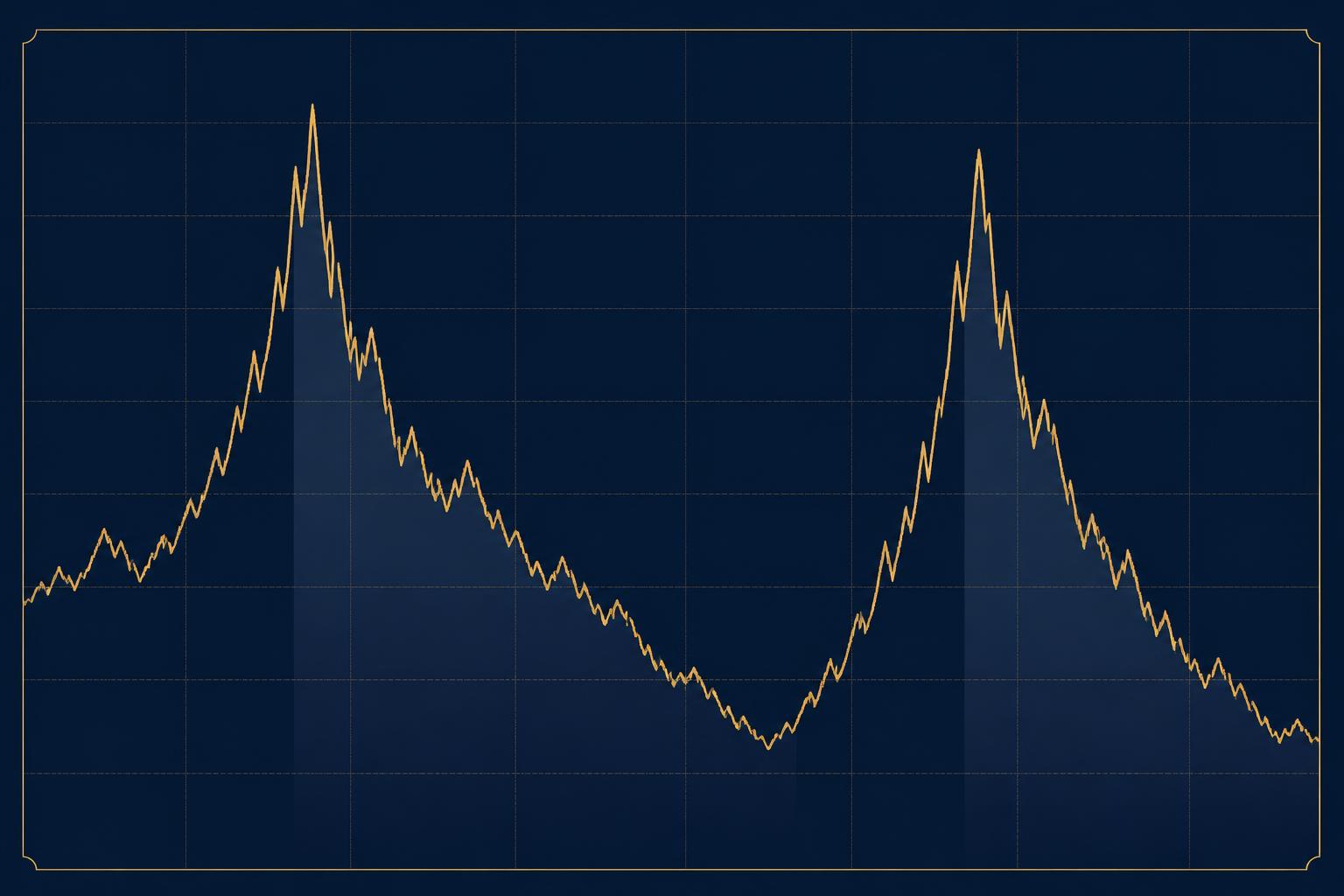
A single gold price line with two tall peaks, each followed by a long shaded decline stretching across most of the chart before the line recovers
Gold has twice peaked and then fallen for years. Any honest risk page shows the stretches that marketing charts crop out.
Describe this illustration: A single gold price line with two tall peaks, each followed by a long shaded decline stretching across most of the chart before the line recovers

An original Capstone Metals illustration of the risk a dealer is least likely to show you: extended declines. After its historic peaks, gold spent long periods well below them, and a household that bought at a top and needed the money in the interval realised a real loss. The picture carries no dates or figures because its purpose is the shape, not a data series — and the shape is the reason we describe metal as a minority holding for money that will not be needed soon, never as a short-term trade.
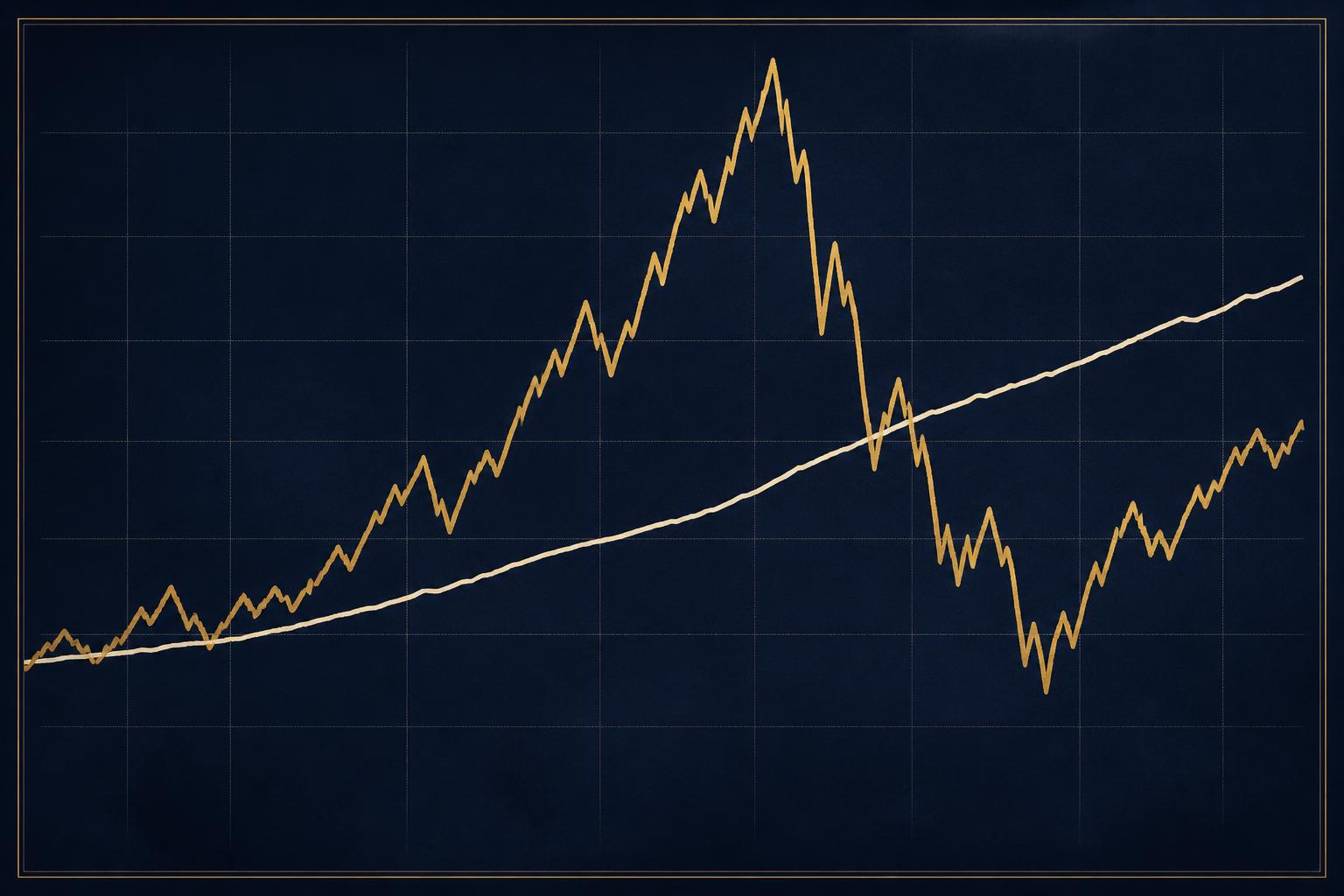
Chart overlaying annual consumer price changes against annual gold price changes, showing years where they diverge
The honest half of the inflation-hedge claim: the two lines often disagree.
Describe this illustration: Chart overlaying annual consumer price changes against annual gold price changes, showing years where they diverge

The honest half of the inflation-hedge claim: the two lines often disagree. This original Capstone Metals chart illustrates chart overlaying annual consumer price changes against annual gold price changes, showing years where they diverge. It is educational artwork, not a price forecast, performance record or recommendation.


The price falls, sometimes for years

FACT. Gold fell sharply from its 1980 peak and stayed weak through much of the following two decades, and it declined for several years after 2011. Fidelity's own educational material states plainly that price movements are unpredictable. Anyone who shows you only the rising stretch of the chart is choosing what to show you.

  • Multi-year declines have occurred, including while inflation continued
  • Short-term movements are unpredictable — the research says so directly
  • A long holding period is part of the case, which means patience is required
Two-panel illustration contrasting a price that recovers with a claim that defaults permanently
Volatility and permanent loss are different risks. Confusing them leads to selling at the wrong moment.
Describe this illustration: Two-panel illustration contrasting a price that recovers with a claim that defaults permanently

Volatility and permanent loss are different risks. Confusing them leads to selling at the wrong moment. This original Capstone Metals illustration illustrates two-panel illustration contrasting a price that recovers with a claim that defaults permanently. It is educational artwork, not a price forecast, performance record or recommendation.
Costs that reduce what you keep

There is a premium over the spot price when you buy, a spread between buy and sell prices, storage and insurance if you hold it privately, and custodian plus depository fees inside an IRA. Every one of those is disclosed in writing before a Capstone order, because a cost discovered later is the same thing as a loss.

  • Premium over spot on purchase
  • Buy/sell spread on exit
  • Storage, insurance or depository fees while held
  • Custodian account fees inside a self-directed IRA
Illustration of a home safe crossed through beside an approved depository marked as required for IRA metal
IRA metal cannot be kept at home. A firm offering it is describing something the rules do not allow.
Describe this illustration: Illustration of a home safe crossed through beside an approved depository marked as required for IRA metal

IRA metal cannot be kept at home. A firm offering it is describing something the rules do not allow. This original Capstone Metals illustration illustrates illustration of a home safe crossed through beside an approved depository marked as required for ira metal. It is educational artwork, not a price forecast, performance record or recommendation.

Concentration, liquidity and the human risks

Too much of anything in one asset is its own risk, however sound the asset. Physical metal is liquid but not instant — selling means a dealer, a price and a settlement. And the industry itself carries risk: overpriced “rare” or proof coins sold at large markups, home-storage IRA schemes that are not permitted, and pressure tactics dressed as urgency. Those are the losses we see most often, and none of them are price risk.

  • Over-concentration in one asset class
  • Collectible and proof coins sold at inflated premiums
  • So-called home-storage IRA arrangements, which the rules do not permit
  • Fear-based selling and manufactured deadlines
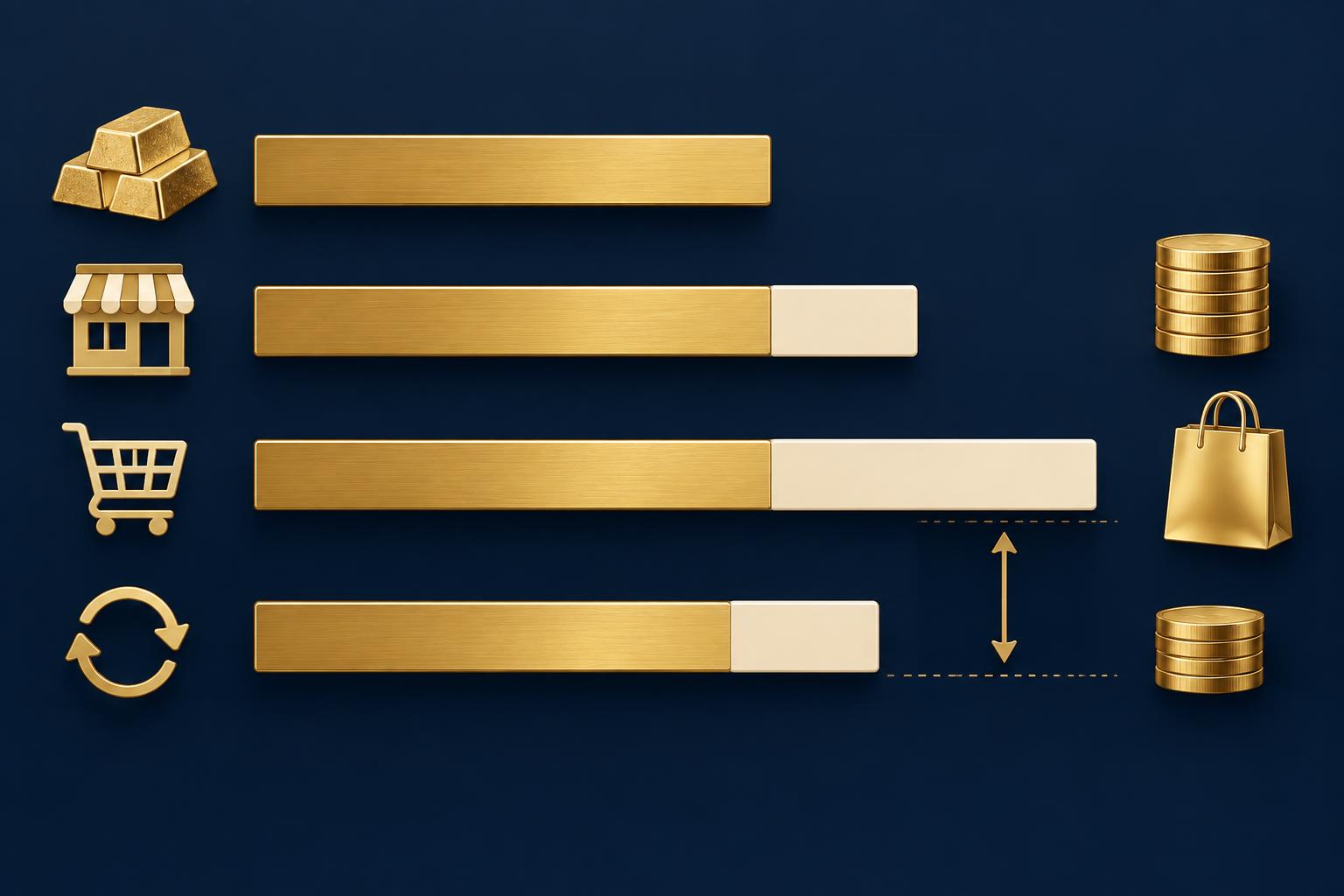
Horizontal bar breaking a retail bullion price into spot value, dealer premium and the buy-back price beneath it
The spread is the distance between what you pay and what it sells back for. Ask for both numbers.
Describe this illustration: Horizontal bar breaking a retail bullion price into spot value, dealer premium and the buy-back price beneath it

The spread is the distance between what you pay and what it sells back for. Ask for both numbers. This original Capstone Metals diagram illustrates horizontal bar breaking a retail bullion price into spot value, dealer premium and the buy-back price beneath it. It is educational artwork, not a price forecast, performance record or recommendation.
Who should probably not buy metal

Someone carrying high-interest debt, someone without an emergency reserve, someone who may need the money within a few years, and someone who would lose sleep watching the price fall. We say this on calls and we will say it to you. If that describes your situation, the honest recommendation is to fix those first — and there is no charge for hearing it.

Stacked diagram of custodian account fee, annual depository storage fee and the premium paid on purchase
Three costs, itemised. A cost discovered later is the same thing as a loss.
Describe this illustration: Stacked diagram of custodian account fee, annual depository storage fee and the premium paid on purchase

Three costs, itemised. A cost discovered later is the same thing as a loss. This original Capstone Metals diagram illustrates stacked diagram of custodian account fee, annual depository storage fee and the premium paid on purchase. It is educational artwork, not a price forecast, performance record or recommendation.

What the research does NOT say

No source we cite says gold is safe, guaranteed, or right for everyone. Even the most favourable — the World Gold Council's strategic-asset case, an industry position — discusses risk. Where a bank publishes an optimistic forecast, that is an expectation from a firm that trades commodities, not a promise to you.

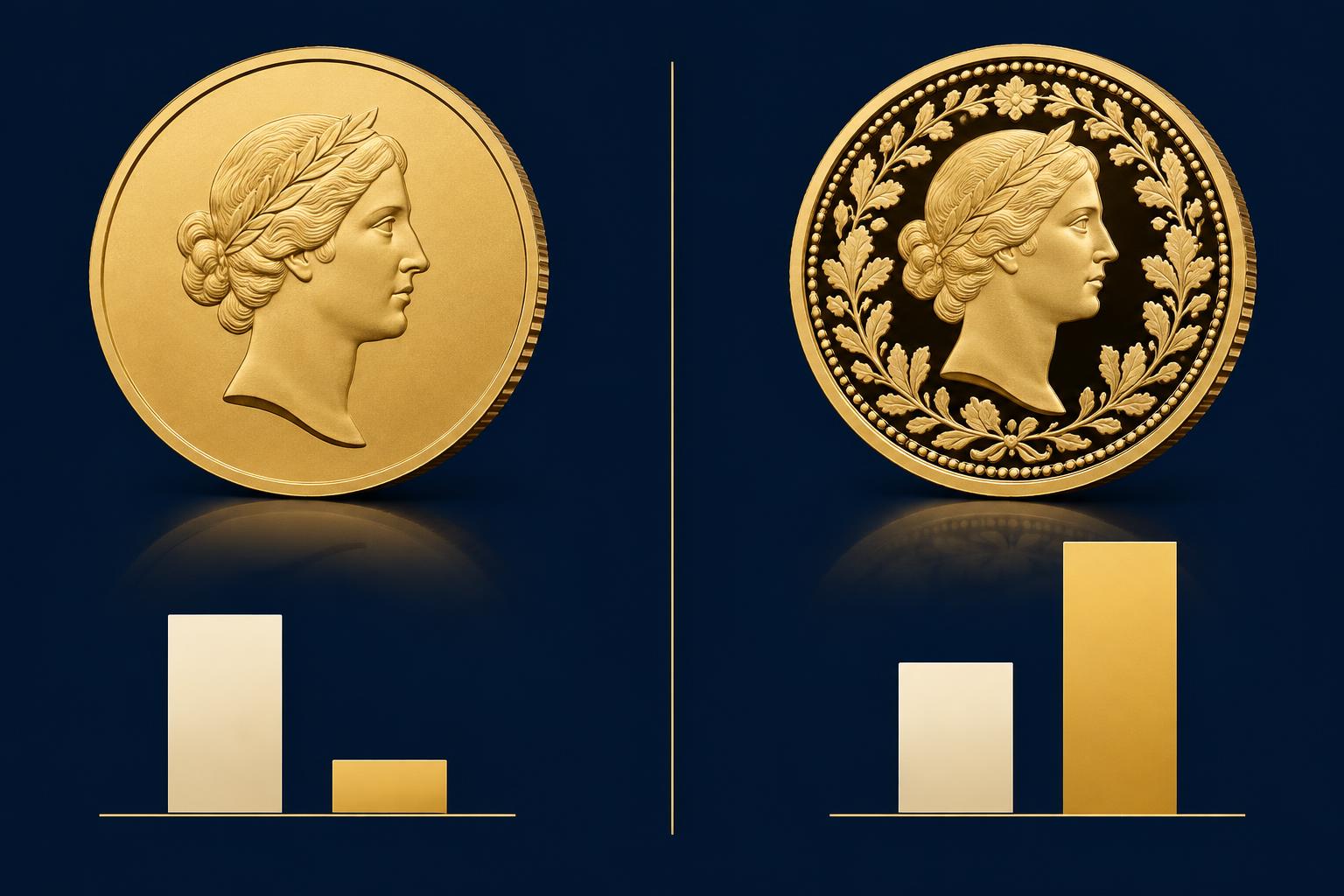
Comparison chart of bullion premium against a much larger proof or collectible premium over the same metal content
The same metal, sold for far more. This is where most retail losses in this industry actually happen.
Describe this illustration: Comparison chart of bullion premium against a much larger proof or collectible premium over the same metal content

The same metal, sold for far more. This is where most retail losses in this industry actually happen. This original Capstone Metals chart illustrates comparison chart of bullion premium against a much larger proof or collectible premium over the same metal content. It is educational artwork, not a price forecast, performance record or recommendation.

Visual research library

More visual explanations

Side-by-side illustration of a dividend cheque and a bond coupon beside a coin producing nothing
Shares can pay you while you wait. Bonds pay a coupon. Metal pays nothing.
Describe this illustration: Side-by-side illustration of a dividend cheque and a bond coupon beside a coin producing nothing

Shares can pay you while you wait. Bonds pay a coupon. Metal pays nothing. This original Capstone Metals illustration illustrates side-by-side illustration of a dividend cheque and a bond coupon beside a coin producing nothing. It is educational artwork, not a price forecast, performance record or recommendation.

Illustration of a portfolio ring almost entirely filled by one asset segment, visibly unbalanced
Too much of anything in one asset is its own risk, however sound the asset.
Describe this illustration: Illustration of a portfolio ring almost entirely filled by one asset segment, visibly unbalanced

Too much of anything in one asset is its own risk, however sound the asset. This original Capstone Metals illustration illustrates illustration of a portfolio ring almost entirely filled by one asset segment, visibly unbalanced. It is educational artwork, not a price forecast, performance record or recommendation.

Checklist illustration of refused tactics including manufactured deadlines, fear appeals and undisclosed premiums
Four questions and one refusal remove most of the risk in this industry.
Describe this illustration: Checklist illustration of refused tactics including manufactured deadlines, fear appeals and undisclosed premiums

Four questions and one refusal remove most of the risk in this industry. This original Capstone Metals illustration illustrates checklist illustration of refused tactics including manufactured deadlines, fear appeals and undisclosed premiums. It is educational artwork, not a price forecast, performance record or recommendation.

Illustration of a printed question list beside a telephone, with premium, buy-back and storage questions legible
Bring these to any dealer, including us. A firm that dodges them has answered you.
Describe this illustration: Illustration of a printed question list beside a telephone, with premium, buy-back and storage questions legible

Bring these to any dealer, including us. A firm that dodges them has answered you. This original Capstone Metals illustration illustrates illustration of a printed question list beside a telephone, with premium, buy-back and storage questions legible. It is educational artwork, not a price forecast, performance record or recommendation.

Illustration listing circumstances where metal is the wrong purchase, including high-interest debt and no cash reserve
The page a dealer is not supposed to publish. High-interest debt and no reserve come first.
Describe this illustration: Illustration listing circumstances where metal is the wrong purchase, including high-interest debt and no cash reserve

The page a dealer is not supposed to publish. High-interest debt and no reserve come first. This original Capstone Metals illustration illustrates illustration listing circumstances where metal is the wrong purchase, including high-interest debt and no cash reserve. It is educational artwork, not a price forecast, performance record or recommendation.

Rather just ask someone?

A specialist can answer this in two minutes. Monday – Friday, 7am – 4pm Pacific.

The short answer

The material risks are no income while held, price declines that have lasted years, the premium, spread and storage or custody costs that reduce what you keep, over-concentration, and dealer practices such as inflated collectible premiums and impermissible home-storage IRA schemes.

Key facts

Each fact below is tied to a numbered source at the foot of this page. Follow the numbers and check us.

  1. 01

    The IMF states that gold carries no credit risk but is volatile, and that its hedging and diversification benefits are conditional rather than automatic.1

    The Fund's July 2026 note on gold in central bank reserves is the most useful counterweight to industry advocacy: it accepts why reserve managers hold gold and then sets out plainly where the protection does not hold.

  2. 02

    The U.S. Geological Survey describes gold as a long-term store of value with a historical monetary role.3

    A government minerals agency with no commercial interest in the gold trade states the physical and historical facts: durable, divisible, scarce, and used as money long before it was an investment.

  3. 03

    Gold pays no interest and no dividend.4,6

    The entire return depends on the price when it is sold, so a long flat period has a genuine opportunity cost on top of storage or depository fees.

  4. 04

    Short-term gold price movements are unpredictable, as the brokers' own education states.4

    Fidelity says so directly. Any firm presenting a near-term price path as knowable is overstating what anyone can know.

  5. 05

    IRA-held metal must sit with an approved custodian and depository, not at home.1,2,3

    Taking personal possession of IRA metal can be treated as a distribution. Marketing that promises a home-storage gold IRA is describing something the rules do not permit.

  6. 06

    The World Gold Council's case for gold as a strategic asset is an industry position, not independent research.7

    It is funded by gold mining companies. The work is substantial and worth reading; it is also advocacy from a body that benefits when gold sells, and this site labels it that way every time.

The vocabulary

Drawdown
The fall from a previous peak to a later low, and how long it lasts. It matters more than average returns to anyone who might need the money during it.
Bid-ask spread
The gap between the price at which a dealer sells and the price at which it buys back. It is a real cost paid on the round trip, whatever the metal price does.
Premium over spot
The amount a retail buyer pays above the wholesale metal value, covering minting, distribution and the dealer's margin. It should always be quoted in writing.
Premium over spot
The amount charged above the metal's market price to buy a specific coin or bar.
Spread
The gap between the price a dealer sells at and buys back at. The metal must move in your favour by at least this much before you break even.

Risks and limitations

Anyone who only tells you the upside is selling, not explaining.

  • Multi-year drawdowns

    Gold fell for years after 1980 and after 2011, including while inflation continued.

  • Costs at every stage

    Premium on entry, spread on exit, storage or depository fees throughout.

  • Industry practices

    Inflated collectible and proof premiums, impermissible storage arrangements and manufactured urgency cause losses unrelated to the price of gold.

Common misconceptions

Central banks are buying, so the price must rise.

Official demand is one input among many, and it is already known to the market. Reserve managers buy for reserve-management reasons on multi-decade horizons, which says nothing reliable about the next year's price.

Gold is a safe investment.

It removes counterparty risk, not price risk. It can and does fall, and no source cited here calls it safe.

These institutions recommend gold IRAs, or recommend Capstone.

None of them has any relationship with Capstone Metals and none comments on any dealer. Citing a public document is not an endorsement, and no page here may imply it is.

Mistakes worth avoiding

  • Buying before clearing high-interest debt or building a cash reserve
  • Accepting a price without the premium over spot stated in writing
  • Not asking the buy-back price before buying

What people ask next

Sources and references

Everything factual on this page traces to one of the following. Law and government publications come first, then exchange specifications and standards bodies.

  1. 1.
    Gold in central bank reserves: strategic considerations, market risks, and practical guidance

    International Monetary Fund · Tier 1 Primary / government · Expert analysis · published 2026-07 · checked 2026-09-15

    An IMF note written for reserve managers. It records that gold features prominently in official reserves and carries no credit risk, and it is equally direct that gold is volatile and that its hedging and diversification benefits depend on conditions rather than holding in all circumstances. It is the central counterweight to industry advocacy in this cluster.

  2. 2.
    26 U.S.C. § 408(m) — Investment in collectibles treated as distributions

    Legal Information Institute, Cornell Law School · Tier 1 Primary / government · checked 2026-09-02

    §408(m)(1) treats an IRA's acquisition of a collectible as a distribution equal to its cost. §408(m)(2) lists 'any metal or gem' and 'any stamp or coin' as collectibles. §408(m)(3) carves out specific U.S. coins and gold, silver, platinum or palladium bullion meeting a contract-market delivery fineness, and only where that bullion is in the physical possession of a trustee described in §408(a).

  3. 3.
    Gold statistics and information

    U.S. Geological Survey · Tier 1 Primary / government · Reported data · checked 2026-09-15

    The federal minerals agency's gold page: physical properties, industrial and investment uses, and production and supply statistics, alongside a description of gold's historical monetary role. Government data with no commercial interest in the metal.

  4. 4.
    Is it too late to invest in gold and silver?

    Fidelity · Tier 2 Industry / authoritative · Expert analysis · published 2026-03-25 · checked 2026-09-15

    Fidelity's educational piece on precious-metals exposure, covering the different ways an investor can obtain it and the volatility involved. It states directly that short-term price movements are unpredictable, a caution worth carrying into any decision.

  5. 5.
    Gold is forecast to climb as central banks buy the precious metal

    Goldman Sachs Research · Tier 2 Industry / authoritative · Forecast — not a fact · published 2026-08-28 · checked 2026-09-15

    Goldman Sachs Research argues that continued central bank buying is the main driver behind its higher gold price forecast. A forecast is a stated expectation, not an outcome; investment bank commodity forecasts are revised regularly and have been wrong in both directions.

  6. 6.
    How to use gold in your portfolio

    Morningstar · Tier 2 Industry / authoritative · Expert analysis · published 2026-05-19 · checked 2026-09-15

    Independent investment research on what gold has and has not done inside a portfolio, including its diversification behaviour, its volatility and the long holding periods over which its record is measured. Notably, it states the counterpoints as plainly as the case for holding it.

  7. 7.
    The relevance of gold as a strategic asset

    World Gold Council · Tier 2 Industry / authoritative · Industry position — has a commercial interest · checked 2026-09-15

    The gold industry's own annual argument for holding gold as a strategic portfolio asset, resting on diversification, deep liquidity and long-run return history. The World Gold Council is funded by gold mining companies, so this is an industry position rather than independent research, and it should be read alongside sources that state gold's limitations.

Who wrote and reviewed this

Written by
Travis Bugli
Chief Executive Officer and licensed agent, Capstone Metals
Reviewed by
Mark Bugli
Senior Advisory Partner, licensed since 1970
First published
2026-09-15
Last reviewed
2026-09-15
Change log (1)
  • 2026-09-15

    Published a full risk page including industry practices, not only price risk.

    Why: The losses we see most often come from premiums and pressure, not from the gold price.

This page explains general rules and mechanics. It is not individualised tax, legal or investment advice, and Capstone Metals is a precious-metals dealer rather than a custodian, trustee or depository. Confirm eligibility for any specific product with your IRA custodian, and discuss suitability with your own advisers.

Would a short, no-pressure conversation help?

Leave your name and number. A Capstone specialist will answer your questions during business hours.

Most gold and silver firms can only talk to you about gold and silver. We have licensed advisors on staff, so the same conversation can cover your retirement accounts, your market holdings, insurance and estate structure alongside a completely private metals purchase — one fiduciary review of everything you own, not a sales call about one product.

What would you like help understanding? (optional)

By submitting your name and phone number you are asking us to follow up, and you agree that Capstone Metals may contact you by phone, text, or email to clarify what you are looking for and make sure you receive it. Message and data rates may apply. You can ask us to stop at any time by replying STOP or telling us on the phone, and we never sell or share your information. This is a request for information and a conversation — not a purchase, an application, or advice. SMS Opt-In Policy · Privacy Policy · Terms & Conditions · How pricing works · Disclosures · Due diligence & financial risks

Licensed and insuredFiduciary advisory since 1970Independent IRA custodiansPrices quoted, never card-charged

Want a number rather than a conversation first? Request current gold pricing — itemized spot reference and premium, with the research and its limits sent afterwards.

Common questions

What are the biggest risks of investing in gold?
No income while you hold it, price declines that have lasted years, and costs that reduce what you keep — premium, spread, storage and IRA fees. Concentration and dealer practices are real risks too, and often larger than the price itself.
Can I lose money on gold?
Yes. The price can be lower when you sell than when you bought, and the buy/sell spread means it must move in your favour before you break even. Nobody can promise otherwise and any firm that does is telling you something about itself.
Does gold pay dividends or interest?
No. That is a structural feature, not a temporary condition, and it is the main cost of holding metal through a long flat period.
Is a gold IRA riskier than holding gold directly?
It carries the same price risk plus account-level costs and rules — an approved custodian, an approved depository, and no personal possession of IRA metal. Holding privately avoids those fees but puts storage, insurance and security on you.
Gold IRA versus physical gold
How do I avoid being overcharged?
Ask for the premium over spot in writing, ask for the buy-back price before you buy, decline anything described as rare or proof unless you genuinely want collectibles, and walk away from a deadline. Those four questions remove most of the risk in this industry.
The tactics to refuse
Is gold right for everyone?
No. Anyone carrying high-interest debt, without an emergency reserve, or likely to need the money within a few years is usually better served by fixing those things first. Gold is a minority holding for money that can sit still, and we will say so on the phone.
What single question protects a first-time buyer most?
“What will you buy this back for today?” The answer reveals the spread immediately, and a firm reluctant to give it has told you what you needed to know.
Is there any circumstance where you would tell someone not to buy?
Several, and we do. High-interest debt, no emergency reserve, a horizon under a few years, or an amount that would leave the household short. None of those are situations metal improves.

Ask us the uncomfortable question

Leave your name and a phone number. Ask what it costs, what the buy-back is, and whether you should be doing this at all — those are the calls we prefer.

Licensed and insuredFiduciary advisory since 1970Independent IRA custodiansPrices quoted, never card-charged
Call (800) 200-9553 Text Email