Capstone Metals — gold and silver IRA dealer
Speak with a specialist: (800) 200-9553Monday – Friday, 7am – 4pm Pacific

Evidence

Does gold hold its value? What the long record shows, including the bad stretches

The claim that gold holds its value is usually made without a time frame, which is what makes it slippery. Over centuries, the record is genuinely strong. Over any particular decade you might live through, it is not dependable at all. This page gives both, because the second half is what actually determines whether someone regrets a purchase.

Monday – Friday, 7am – 4pm Pacific

  • Licensed and insured since 2014
  • Fiduciary advisory — licensed since 1970
  • Preferred Trust & GoldStar custodians
  • No card payments, no pressure, no commissions-first pitch

Very long run

Purchasing power broadly retained

Decade by decade

Unreliable — including losses

Income while waiting

None

Worst case

Years of decline, with costs

The case, stated fairly

DATA. Gold is chemically durable, cannot be issued or diluted by decree, and has retained purchasing power across very long periods and across the failure of individual currencies and states — which is the sense in which “holds its value” is defensible. The US Geological Survey, a government agency with no commercial interest in the metal, describes gold's long-term store-of-value use and historical monetary status. Long-run compilations of gold records, including the industry's own series reaching back to about 1600, are consistent with a long-horizon reading.
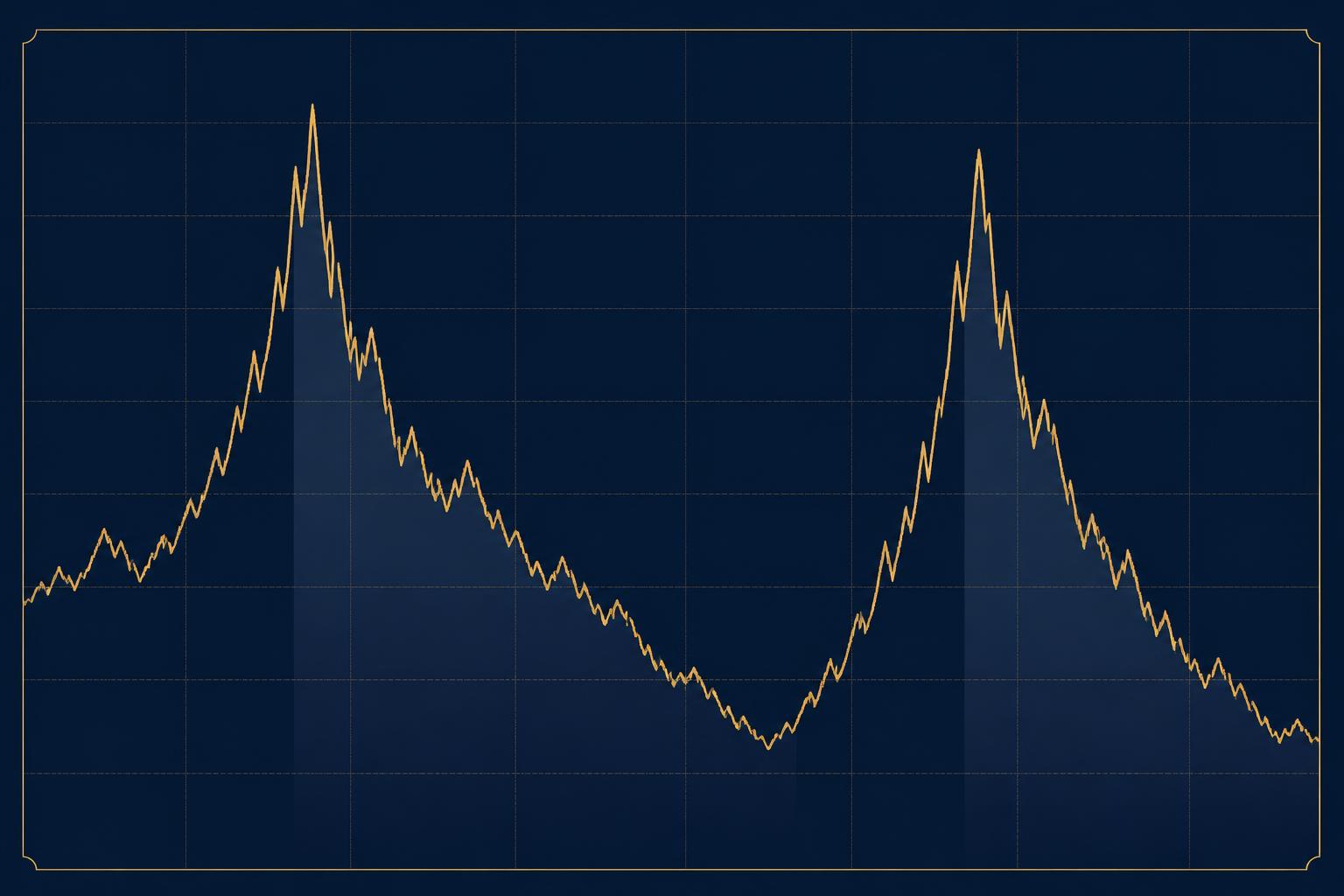
A single gold price line with two tall peaks, each followed by a long shaded decline stretching across most of the chart before the line recovers
Gold has twice peaked and then fallen for years. Any honest risk page shows the stretches that marketing charts crop out.
Describe this illustration: A single gold price line with two tall peaks, each followed by a long shaded decline stretching across most of the chart before the line recovers

An original Capstone Metals illustration of the risk a dealer is least likely to show you: extended declines. After its historic peaks, gold spent long periods well below them, and a household that bought at a top and needed the money in the interval realised a real loss. The picture carries no dates or figures because its purpose is the shape, not a data series — and the shape is the reason we describe metal as a minority holding for money that will not be needed soon, never as a short-term trade.

The counterexamples, stated just as fairly

DATA. Gold fell for years after its 1980 peak and again after its 2011 peak, in stretches during which consumer prices continued rising — so it did not preserve purchasing power over those windows. It pays no interest or dividend, so a flat decade has a real opportunity cost against assets that pay something. And it costs money to hold: premium over spot when buying, a spread when selling, and storage or depository fees each year. EXPERT ANALYSIS. Morningstar's framework accepts a diversification role while stressing volatility and the absence of income, and recommends limited rather than unlimited exposure. Fidelity's education states that short-term price movements are unpredictable.

  • Multi-year declines after 1980 and after 2011
  • No income while holding, so waiting has a cost
  • Premium, spread and storage reduce what you keep
  • Timing risk: an entry near a peak can take many years to recover

The honest formulation

Gold has a strong very-long-run record of retaining purchasing power and no reliability over the horizons most households actually plan around. That is a narrower claim than the marketing version and it is the one the evidence supports. It also implies something practical: gold suits money you can genuinely leave alone, held in an amount that does not force a sale at a bad moment.

What the record does NOT establish

It does not establish a floor under the price, a guaranteed hedge against inflation in any given decade, or a case for holding a large share of savings in one asset. The IMF's 2026 note states that gold's hedging and diversification benefits are conditional. Nobody — including us — can tell you what an ounce is worth in ten years.

Rather just ask someone?

A specialist can answer this in two minutes. Monday – Friday, 7am – 4pm Pacific.

Would a short, no-pressure conversation help?

Leave your name and number. A Capstone specialist will answer your questions during business hours.

Most gold and silver firms can only talk to you about gold and silver. We have licensed advisors on staff, so the same conversation can cover your retirement accounts, your market holdings, insurance and estate structure alongside a completely private metals purchase — one fiduciary review of everything you own, not a sales call about one product.

What would you like help understanding? (optional)

By submitting your name and phone number you are asking us to follow up, and you agree that Capstone Metals may contact you by phone, text, or email to clarify what you are looking for and make sure you receive it. Message and data rates may apply. You can ask us to stop at any time by replying STOP or telling us on the phone, and we never sell or share your information. This is a request for information and a conversation — not a purchase, an application, or advice. SMS Opt-In Policy · Privacy Policy · Terms & Conditions · How pricing works · Disclosures · Due diligence & financial risks

Licensed and insuredFiduciary advisory since 1970Independent IRA custodiansPrices quoted, never card-charged

Want a number rather than a conversation first? Request current gold pricing — itemized spot reference and premium, with the research and its limits sent afterwards.

Common questions

Does gold hold its value over time?
Over very long periods, broadly yes — it cannot be issued or diluted and has outlasted individual currencies. Over any specific decade, no: it fell for years after 1980 and after 2011, including while prices rose.
Is gold a safe investment?
It is not a safe investment in the sense of protected principal. It has no issuer that can default, which is a different kind of safety, and its price can fall substantially and stay down for years.
The risks, in full
Has gold beaten inflation?
Over long spans it has broadly kept pace; over specific stretches it has fallen while inflation continued. The hedge is real over decades and unreliable over years.
Gold and inflation
What is the worst realistic outcome?
Buying near a peak, holding through a long decline with no income, paying storage the whole time, and selling below the purchase price. That has happened to real people and any honest dealer will say so before taking an order.

Understand the risks

If you want someone to pressure-test the idea before you act — including telling you not to buy — leave a name and number. Capstone has licensed advisors on staff, so the conversation can cover your whole position rather than metals alone.

Licensed and insuredFiduciary advisory since 1970Independent IRA custodiansPrices quoted, never card-charged
Call (800) 200-9553 Text Email