
Capstone Metals — gold and silver IRA dealer
Speak with a specialist: (800) 200-9553Monday – Friday, 7am – 4pm Pacific

Purchasing power

Is gold an inflation hedge? What the long-run record actually supports

“Inflation hedge” is used so loosely that it has stopped meaning anything. There is a defensible version of the claim and an indefensible one, and the difference matters to anyone deciding what to do with savings. The defensible version is about decades and purchasing power. The indefensible version is that gold rises whenever the inflation print does — which the record does not support.

Monday – Friday, 7am – 4pm Pacific

  • Licensed and insured since 2014
  • Fiduciary advisory — licensed since 1970
  • Preferred Trust & GoldStar custodians
  • No card payments, no pressure, no commissions-first pitch

Holds over

Long horizons, not single years

Year-to-year

Frequently unrelated to CPI

Notable failure

Fell for years after 1980 and 2011

Pays income?

No — the cost of waiting is real

The claim that holds up

Over long periods, gold has retained purchasing power in a way currency has not — because the quantity of gold cannot be expanded by decision, and the quantity of currency can. That is a structural difference, not a market view. EXPERT ANALYSIS. Independent research such as Morningstar's treatment of gold frames it exactly this way: a long-horizon store of value with meaningful volatility along the route, measured over holding periods longer than most people imagine when they buy.
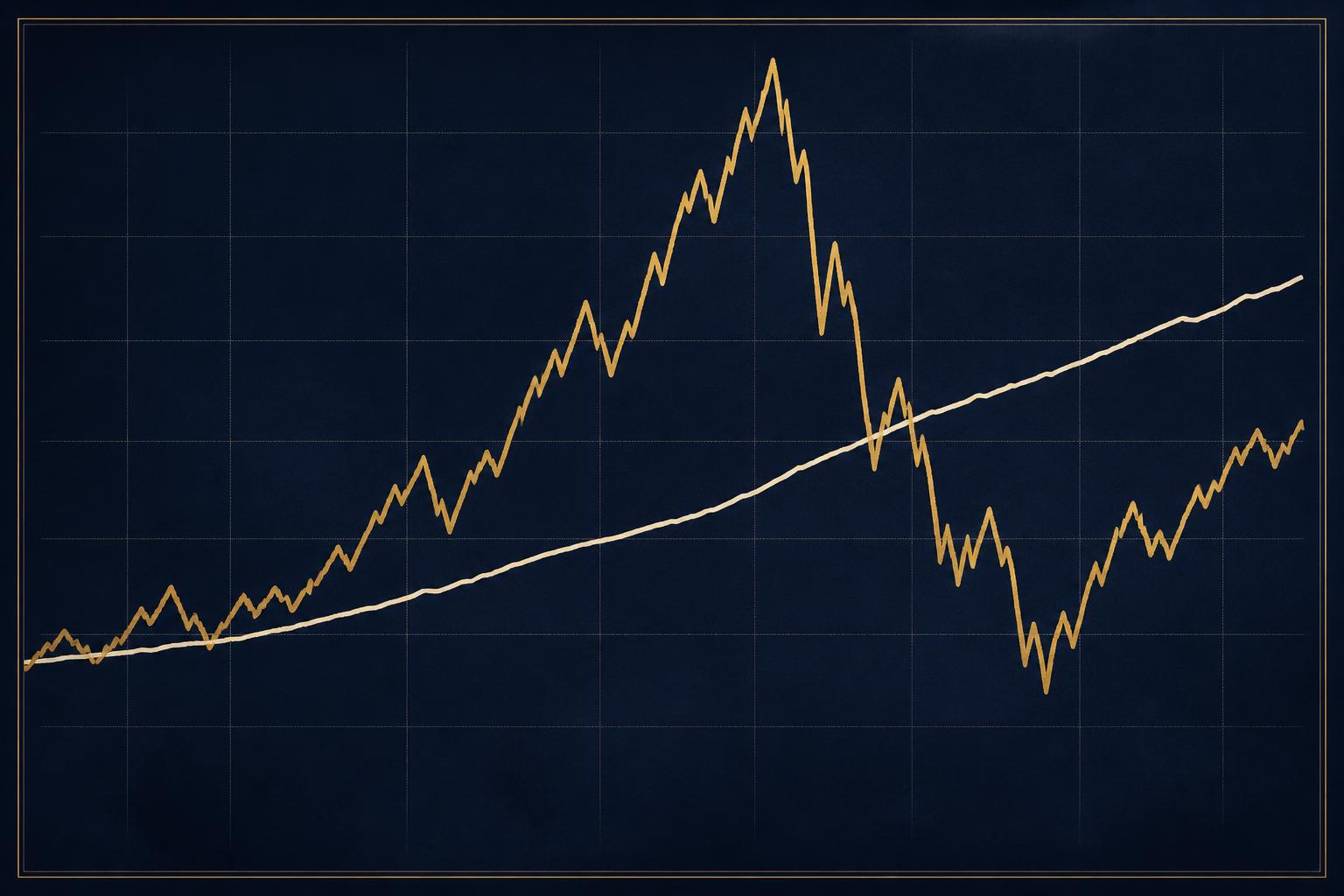
Two lines across a navy grid: a smooth pale line climbing steadily, and a jagged gold line that surges far above it, collapses well below it, and only meets it occasionally
The steady line is the way prices grind higher. The jagged line is gold. Over decades they converge; over any given year they frequently do not.
Describe this illustration: Two lines across a navy grid: a smooth pale line climbing steadily, and a jagged gold line that surges far above it, collapses well below it, and only meets it occasionally

An original Capstone Metals illustration of the honest version of the inflation-hedge argument. Gold has held purchasing power across long periods, which is the defensible claim. It has also spent years far ahead of consumer prices and years far behind them, which is why the claim that gold rises whenever inflation rises does not survive the record. Anyone whose plan depends on gold tracking inflation month to month has misread the evidence. The illustration carries no figures because it is a shape, not a data series.

Three panels contrasting a bond certificate, a bank deposit slip and a plain gold coin, with the coin panel showing no signature line
A bond and a deposit are promises from someone. A coin is not — the distinction the whole case rests on.
Describe this illustration: Three panels contrasting a bond certificate, a bank deposit slip and a plain gold coin, with the coin panel showing no signature line

A bond and a deposit are promises from someone. A coin is not — the distinction the whole case rests on. This original Capstone Metals illustration illustrates three panels contrasting a bond certificate, a bank deposit slip and a plain gold coin, with the coin panel showing no signature line. It is educational artwork, not a price forecast, performance record or recommendation.

The claim that does not hold up

Gold does not reliably rise when inflation rises. It fell heavily through the 1980s and 1990s, and fell for several years after its 2011 peak, including periods when consumer prices kept climbing. Real interest rates, the dollar and investor positioning all influence the price at least as much as the inflation rate itself. FACT: anyone telling you gold tracks CPI is describing something that has not happened consistently.

  • Multi-year declines have occurred while prices in shops kept rising
  • Real rates and the dollar often dominate the inflation signal
  • A hedge that works over decades can hurt over a five-year window
Descending step chart showing what one dollar bought across successive decades
The slow loss most households feel before they can name it.
Describe this illustration: Descending step chart showing what one dollar bought across successive decades

The slow loss most households feel before they can name it. This original Capstone Metals chart illustrates descending step chart showing what one dollar bought across successive decades. It is educational artwork, not a price forecast, performance record or recommendation.

Purchasing power is the more useful frame

Instead of asking whether gold beats CPI this year, ask what a dollar of savings will buy in fifteen years and what you hold that is not denominated in dollars. That reframing is why households look at metal at all, and it also explains why metal is normally a minority position: you still need income, liquidity and reserves in the currency you actually spend.

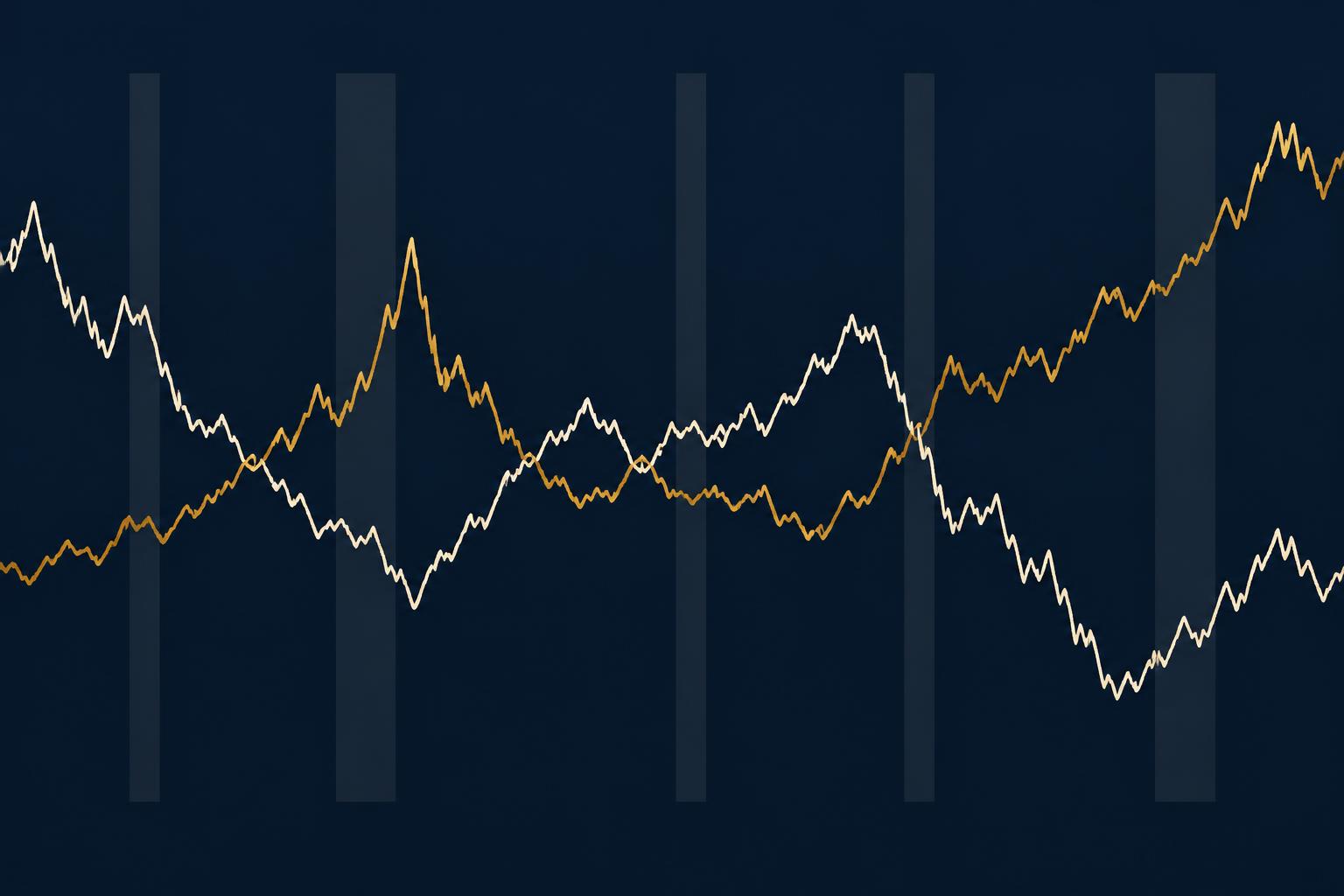
Two-line chart pairing real interest rates with the gold price, annotated where they move inversely
Real rates often matter more to gold than the inflation print itself.
Describe this illustration: Two-line chart pairing real interest rates with the gold price, annotated where they move inversely

Real rates often matter more to gold than the inflation print itself. This original Capstone Metals chart illustrates two-line chart pairing real interest rates with the gold price, annotated where they move inversely. It is educational artwork, not a price forecast, performance record or recommendation.

What it costs to hold the hedge

Gold pays no interest and no dividend, so during a long flat stretch you are paying an opportunity cost as well as storage or depository fees, plus the spread between the buy and sell price. Fidelity's own educational material is direct about the unpredictability involved. None of this makes gold a poor holding; it makes it a holding with a bill attached, which should be known in advance.

Illustration of the same shopping basket priced in three different decades
Purchasing power in the only terms that matter — what the money buys.
Describe this illustration: Illustration of the same shopping basket priced in three different decades

Purchasing power in the only terms that matter — what the money buys. This original Capstone Metals illustration illustrates illustration of the same shopping basket priced in three different decades. It is educational artwork, not a price forecast, performance record or recommendation.

What the research does NOT say

No source cited here says gold matches inflation year by year, that it protects against every form of monetary loss, or that a specific allocation is correct for a specific household. Nor does any of them promise a return. Where research is optimistic — BlackRock's house view, for instance — it is a forward-looking view from a firm managing gold-linked funds, and we label it that way.

Illustration of a redemption window closing, with a dated note marking the end of dollar convertibility into gold
The day the dollar stopped being redeemable in metal — the fact under most modern monetary argument.
Describe this illustration: Illustration of a redemption window closing, with a dated note marking the end of dollar convertibility into gold

The day the dollar stopped being redeemable in metal — the fact under most modern monetary argument. This original Capstone Metals illustration illustrates illustration of a redemption window closing, with a dated note marking the end of dollar convertibility into gold. It is educational artwork, not a price forecast, performance record or recommendation.

Rather just ask someone?

A specialist can answer this in two minutes. Monday – Friday, 7am – 4pm Pacific.

The short answer

Gold has preserved purchasing power over long periods better than currency has, but it does not track inflation year to year and has fallen for years at a time while prices kept rising.

Key facts

Each fact below is tied to a numbered source at the foot of this page. Follow the numbers and check us.

  1. 01

    The IMF states that gold carries no credit risk but is volatile, and that its hedging and diversification benefits are conditional rather than automatic.2

    The Fund's July 2026 note on gold in central bank reserves is the most useful counterweight to industry advocacy: it accepts why reserve managers hold gold and then sets out plainly where the protection does not hold.

  2. 02

    The United States ended the dollar's convertibility into gold in 1971, and no major currency has been redeemable in metal since.1

    The Federal Reserve's own historical material records the gold standard as a former nominal anchor and the Bretton Woods link as closed. That is a historical record, not an argument about what any currency will do next.

  3. 03

    Independent research supports gold as a diversifier while stating its limitations in the same breath.5

    Morningstar sets out its behaviour during equity stress alongside the long holding periods involved, its volatility, and the absence of income.

  4. 04

    Short-term gold price movements are unpredictable, as the brokers' own education states.4

    Fidelity says so directly. Any firm presenting a near-term price path as knowable is overstating what anyone can know.

  5. 05

    Gold pays no interest and no dividend.4,5

    The entire return depends on the price when it is sold, so a long flat period has a genuine opportunity cost on top of storage or depository fees.

  6. 06

    The favourable long-run case for gold as a store of value is most fully argued by the gold industry itself.1,2,5,6

    The World Gold Council's strategic-asset research makes that case. It is an industry position, and independent research states the limitations more prominently.

The vocabulary

Real interest rate
The interest rate after inflation. When it is deeply negative, holding a non-yielding asset costs less in relative terms; when it is high, the opportunity cost of gold rises.
Drawdown
The fall from a previous peak to a later low, and how long it lasts. It matters more than average returns to anyone who might need the money during it.
Primary source
The original document — a statute, an official statistic, a central bank publication — rather than an article describing it. Every claim on this site is meant to trace back to one.
Purchasing power
What a unit of money will actually buy, as distinct from its face value.
Real interest rate
The interest rate after inflation. When real rates rise, assets paying no income — gold included — have historically struggled.

Risks and limitations

Anyone who only tells you the upside is selling, not explaining.

  • The hedge can fail for years

    Gold fell through much of the 1980s and 1990s and for several years after 2011, including while consumer prices rose.

  • Holding cost during flat periods

    No income accrues, while storage or depository fees continue.

  • Wrong time horizon

    If the money may be needed within a few years, volatility is likely to matter more than any long-run hedge.

Common misconceptions

Central banks are buying, so the price must rise.

Official demand is one input among many, and it is already known to the market. Reserve managers buy for reserve-management reasons on multi-decade horizons, which says nothing reliable about the next year's price.

Gold rises whenever inflation rises.

It has not, consistently. Real rates, the dollar and positioning frequently dominate the inflation rate itself.

These institutions recommend gold IRAs, or recommend Capstone.

None of them has any relationship with Capstone Metals and none comments on any dealer. Citing a public document is not an endorsement, and no page here may imply it is.

Mistakes worth avoiding

  • Judging a decades-long claim over a two-year window
  • Ignoring the opportunity cost of an asset that pays nothing
  • Assuming gold covers every monetary risk rather than counterparty risk specifically

What people ask next

Sources and references

Everything factual on this page traces to one of the following. Law and government publications come first, then exchange specifications and standards bodies.

  1. 1.
    Historical approaches to monetary policy

    Federal Reserve Board · Tier 1 Primary / government · Expert analysis · checked 2026-09-15

    The Federal Reserve's description of the monetary frameworks the United States has used, including the gold standard as a historical nominal anchor and the Bretton Woods period. It is an official historical account and explicitly describes these arrangements as past, not current, policy.

  2. 2.
    Gold in central bank reserves: strategic considerations, market risks, and practical guidance

    International Monetary Fund · Tier 1 Primary / government · Expert analysis · published 2026-07 · checked 2026-09-15

    An IMF note written for reserve managers. It records that gold features prominently in official reserves and carries no credit risk, and it is equally direct that gold is volatile and that its hedging and diversification benefits depend on conditions rather than holding in all circumstances. It is the central counterweight to industry advocacy in this cluster.

  3. 3.
    Taking stock of the gold rally

    Bridgewater Associates · Tier 2 Industry / authoritative · Expert analysis · checked 2026-09-15

    Institutional analysis of the recent gold rally, examining gold's role in portfolios and what its repricing against fiat currencies may indicate about the monetary regime. It is argued analysis about causes, not a measurement and not a forecast of what happens next.

  4. 4.
    Is it too late to invest in gold and silver?

    Fidelity · Tier 2 Industry / authoritative · Expert analysis · published 2026-03-25 · checked 2026-09-15

    Fidelity's educational piece on precious-metals exposure, covering the different ways an investor can obtain it and the volatility involved. It states directly that short-term price movements are unpredictable, a caution worth carrying into any decision.

  5. 5.
    How to use gold in your portfolio

    Morningstar · Tier 2 Industry / authoritative · Expert analysis · published 2026-05-19 · checked 2026-09-15

    Independent investment research on what gold has and has not done inside a portfolio, including its diversification behaviour, its volatility and the long holding periods over which its record is measured. Notably, it states the counterpoints as plainly as the case for holding it.

  6. 6.
    The relevance of gold as a strategic asset

    World Gold Council · Tier 2 Industry / authoritative · Industry position — has a commercial interest · checked 2026-09-15

    The gold industry's own annual argument for holding gold as a strategic portfolio asset, resting on diversification, deep liquidity and long-run return history. The World Gold Council is funded by gold mining companies, so this is an industry position rather than independent research, and it should be read alongside sources that state gold's limitations.

  7. 7.
    The concept and mechanics of an All Weather portfolio

    Ray Dalio · Tier 3 Reputable secondary · Opinion · published 2026-03-23 · checked 2026-09-15

    Ray Dalio describes how he thinks about balancing risk across assets that behave differently in different economic environments, identifying gold among the inflation-hedging assets in that framework. It is one investor's stated method, written by him, not a study.

Who wrote and reviewed this

Written by
Travis Bugli
Chief Executive Officer and licensed agent, Capstone Metals
Reviewed by
Mark Bugli
Senior Advisory Partner, licensed since 1970
First published
2026-09-15
Last reviewed
2026-09-15
Change log (1)
  • 2026-09-15

    Published separating the defensible long-run claim from the year-to-year claim the record does not support.

    Why: The loose version of this claim is the one that gets households into positions they later regret.

This page explains general rules and mechanics. It is not individualised tax, legal or investment advice, and Capstone Metals is a precious-metals dealer rather than a custodian, trustee or depository. Confirm eligibility for any specific product with your IRA custodian, and discuss suitability with your own advisers.

Would a short, no-pressure conversation help?

Leave your name and number. A Capstone specialist will answer your questions during business hours.

Most gold and silver firms can only talk to you about gold and silver. We have licensed advisors on staff, so the same conversation can cover your retirement accounts, your market holdings, insurance and estate structure alongside a completely private metals purchase — one fiduciary review of everything you own, not a sales call about one product.

What would you like help understanding? (optional)

By submitting your name and phone number you are asking us to follow up, and you agree that Capstone Metals may contact you by phone, text, or email to clarify what you are looking for and make sure you receive it. Message and data rates may apply. You can ask us to stop at any time by replying STOP or telling us on the phone, and we never sell or share your information. This is a request for information and a conversation — not a purchase, an application, or advice. SMS Opt-In Policy · Privacy Policy · Terms & Conditions · How pricing works · Disclosures · Due diligence & financial risks

Licensed and insuredFiduciary advisory since 1970Independent IRA custodiansPrices quoted, never card-charged

Want a number rather than a conversation first? Request current gold pricing — itemized spot reference and premium, with the research and its limits sent afterwards.

Common questions

Is gold a good hedge against inflation?
Over long periods it has preserved purchasing power better than currency, which is the defensible version of the claim. Year to year it often does not track inflation at all, and it has fallen for years at a time while prices rose.
Why did gold fall when inflation was high?
Because real interest rates, the dollar and positioning can matter more than the inflation rate. When rates rise faster than inflation, a non-income asset becomes relatively less attractive, and gold has fallen in exactly those conditions.
What does gold protect against, then?
Its structural property is that it is nobody's liability — no issuer, no default, no counterparty. That is protection against a different category of risk than a monthly inflation print.
The full case, with counterpoints
Is gold better than TIPS or I bonds for inflation?
They do different jobs. Inflation-linked government bonds adjust to a measured index and pay income while carrying government credit; gold has no issuer and no income. Which fits depends on the risk you are actually trying to cover — a question for a licensed advisor looking at your whole picture.
How long should gold be held to see the effect?
The research that supports the purchasing-power claim measures decades, not quarters. If the money may be needed within a few years, the volatility is likely to matter more than the hedge.
The long-run price record
Is gold right for everyone?
No. Anyone carrying high-interest debt, without an emergency reserve, or likely to need the money within a few years is usually better served by fixing those things first. Gold is a minority holding for money that can sit still, and we will say so on the phone.
What is the defensible version of the inflation-hedge claim?
That the supply of gold cannot be expanded by decision while the supply of currency can, so over long horizons gold has held purchasing power better. That is a structural argument, not a prediction about next year.
Is gold or an inflation-linked bond the better hedge?
They cover different risks. An inflation-linked government bond adjusts to a measured index and pays income while carrying government credit; gold has no issuer and no income. Which fits depends on the risk you are trying to cover.

Work out what your savings actually buy

Leave your name and a phone number. We will walk the purchasing-power arithmetic with you and say plainly whether a change is warranted — including when it is not.

Licensed and insuredFiduciary advisory since 1970Independent IRA custodiansPrices quoted, never card-charged
Call (800) 200-9553 Text Email