
Early use and coinage
HISTORICAL RECORD. Gold was worked, hoarded and used in exchange long before coinage, and struck gold coinage appears in the ancient world as issuing authorities began to certify weight and purity with a stamp. What a coin actually solved was verification: a merchant could accept it without assaying it. That function — a trusted certification of metal content — is the ancestor of everything that followed, including paper claims on metal and, eventually, currency with no metal behind it at all.
- Struck coinage standardised weight and fineness, reducing the cost of verifying value
- Different societies used gold, silver, copper or combinations, in parallel and at different times
- Debasement — reducing metal content while keeping the face value — is as old as coinage itself
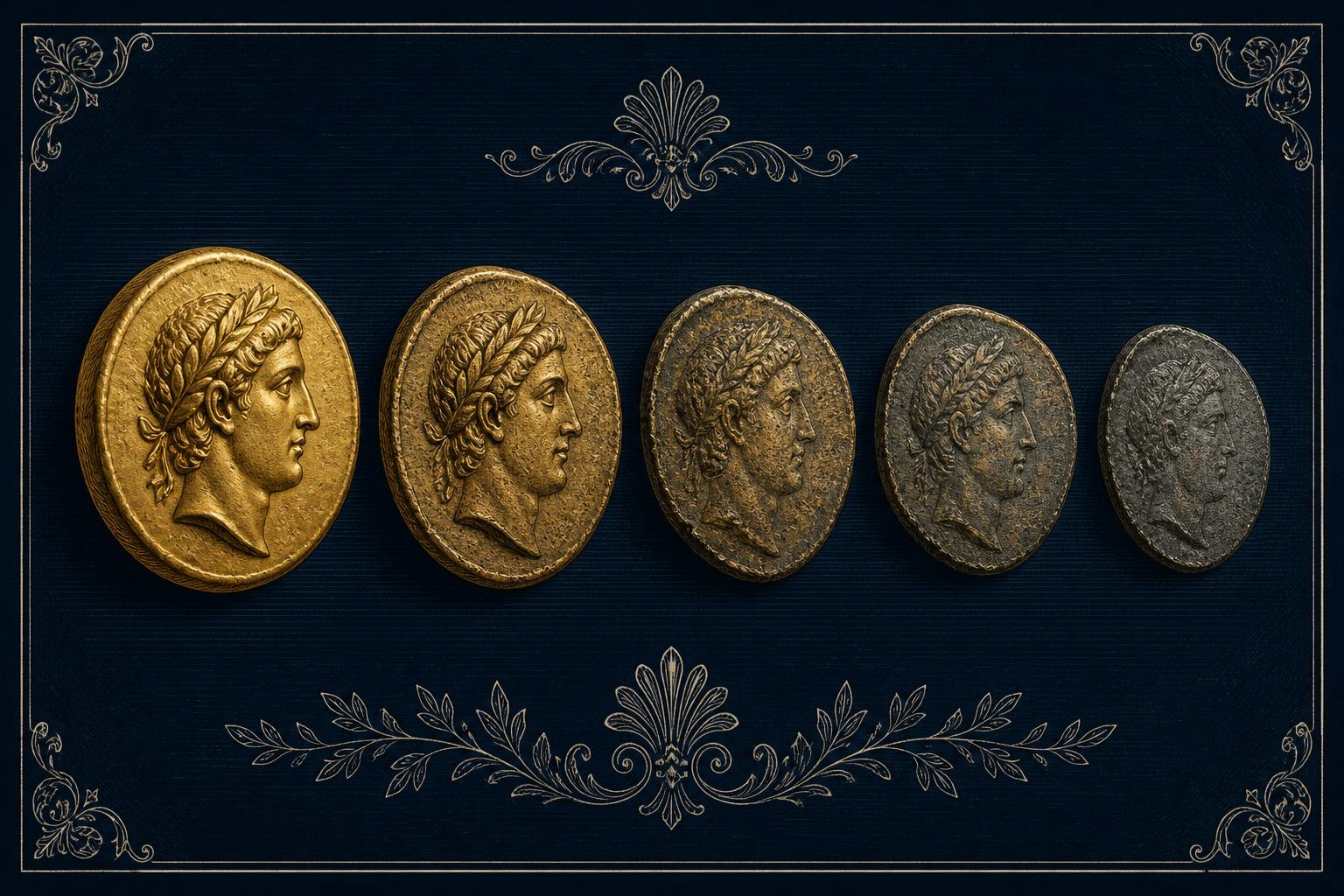
Describe this illustration: Five ancient profile-portrait coins in a row on navy, the first bright and thick gold and each successive one thinner, duller and greyer until the last is base metalHide description: Five ancient profile-portrait coins in a row on navy, the first bright and thick gold and each successive one thinner, duller and greyer until the last is base metal
An original Capstone Metals illustration of currency debasement, a pattern documented across successive empires by surviving coinage and by the historical record rather than by any modern argument. Rulers who needed to spend more than they collected repeatedly cut the precious metal content while keeping the coin's stated value, and the purchasing power of the coin fell accordingly. The pattern is real and repeated. It is not a forecast about any particular currency or any particular year, and we do not present it as one.