Capstone Metals — gold and silver IRA dealer
Speak with a specialist: (800) 200-9553Monday – Friday, 7am – 4pm Pacific

Strategic Materials

Silver: from precious metal to strategic industrial material

For five thousand years silver was money. In the twenty-first century it became something else as well: the most electrically conductive metal on earth, embedded in solar panels, electric vehicles, medical devices and the data centers behind artificial intelligence. In 2025 the United States formally added silver to its List of Critical Minerals. This is the complete picture — properties, applications, supply chain, policy and what it means for people who own physical metal.

Monday – Friday, 7am – 4pm Pacific

U.S. status
Critical mineral (2025 list)
Conductivity
Highest of all metals
Industrial share
Over half of demand
Mined supply
Mostly a byproduct

The properties nothing else quite matches

Silver has the highest electrical conductivity and the highest thermal conductivity of any metal, and it reflects visible light better than any other element. It is ductile enough to draw into wire finer than a hair and malleable enough to beat into foil. Copper comes close on conductivity and is far cheaper, which is why silver is used only where failure is not an option or where a tiny amount does an outsized job — a typical application uses grams, not kilograms.

  • Electrical conductivity: the benchmark against which all other metals are measured
  • Thermal conductivity: superior to copper and gold
  • Reflectivity: the reason silver lines high-performance mirrors and solar glass
  • Antibacterial: silver ions disrupt microbial cells, hence wound dressings and water purification

Where industry actually uses it

According to the Silver Institute's World Silver Survey, industrial fabrication now accounts for over half of total silver demand — a record share driven by photovoltaics, electronics and electrification. Solar panels are the fastest-growing single use; electric vehicles carry more silver than conventional cars; every data center rack, 5G antenna and medical device adds a little more.

  • Solar photovoltaics — the largest and fastest-growing industrial use
  • Electronics — contacts, switches, solder and conductive paste in nearly every device
  • Electric vehicles and charging infrastructure
  • Medical — wound care, coatings on instruments, water purification
  • AI and data centers — high-reliability connectors, power distribution, cooling hardware

A supply chain that cannot simply turn up the tap

Roughly seven in ten ounces of newly mined silver arrive as a byproduct of mining something else — copper, lead, zinc or gold. Primary silver mines are the minority. That means silver supply responds slowly to silver's own price: a copper miner does not open a new pit because silver rose. Recycling recovers a meaningful but minority share, and substitution (using less silver per device, or copper in its place) proceeds slowly because performance losses are real. The U.S. Geological Survey tracks this tightness in its annual Mineral Commodity Summaries.

Why governments now call it critical

In its 2025 final List of Critical Minerals, the U.S. Department of the Interior — acting on the USGS assessment — added silver, citing its role in the energy transition, electronics and defense supply chains, and the concentration of refining and production outside the United States. Critical-mineral status does not guarantee any price outcome; it signals that the government considers dependable supply a matter of national interest, which can influence permitting, stockpiling research, and trade policy. Other governments treat silver differently — our country-by-country comparison lays out exactly who lists it and who does not.

What this means for the person holding physical silver

Monetary demand and industrial demand now pull on the same finite above-ground stock. That dual character is precisely why silver behaves differently from gold: more volatile, more tied to the business cycle, and more exposed to genuine physical shortages when industry and investors compete for the same ounces. None of that is a promise of appreciation — it is context for understanding what you own. Sources for this page include the U.S. Geological Survey Mineral Commodity Summaries, the Department of the Interior's 2025 final List of Critical Minerals, the Silver Institute's World Silver Survey, and the International Energy Agency's critical-minerals analysis.

Which governments classify silver as critical?

Original Capstone reference table, compiled from each government's published list. Classifications change on regular review cycles — every entry below names its list and year so you can verify the current state at the source. As of the most recent lists, the United States is the only government here that formally includes silver.

GovernmentStatusList (year)Notes
United StatesIncluded2025 final List of Critical Minerals (Dept. of the Interior / USGS)Added 2025, alongside copper, on electrification essentiality and import reliance.
European UnionNot on current listCritical Raw Materials Act list (2023)Silver not designated; copper was added as a strategic raw material — a closely watched precedent.
United KingdomNot on current listUK criticality assessment (2024 refresh)Silver not designated critical; assessment targets the UK's specific import exposures.
CanadaNot on current listCritical Minerals List (2021, expanded 2024)Not listed — Canada is a producer; its list reflects domestic vulnerability, not global importance.
AustraliaNot on current listCritical Minerals List / Strategic Materials List (2023–24)Silver not designated on either list.
JapanNo formal designationResource-security framework for rare metalsNo formal critical-mineral designation for silver; policy focuses on rarest import concentrations.
ChinaNo formal designationDomestic resource-management policyManaged through resource and trade policy rather than a critical-mineral list designation.
IndiaNot on current listList of 30 Critical Minerals (2023)Silver not included in the 2023 list.

Sources: U.S. Federal Register / USGS; EU Critical Raw Materials Act (2023); UK criticality assessment; Critical Minerals Strategies of Canada, Australia, Japan and India. Government classification is a policy signal — it does not guarantee investment performance. Read the full country-by-country analysis.

Common questions

Is silver officially a critical mineral now?

In the United States, yes — silver was added to the Department of the Interior's 2025 final List of Critical Minerals. Other countries maintain their own lists and most do not currently list silver; classifications change, so we date every claim we make.

Compare country by country
Does critical-mineral status make silver a better investment?

It is a policy signal, not a performance guarantee. It can affect permitting, research funding and trade policy over time. What you pay, when you buy and how much you allocate matter more than any designation.

How much silver does industry use versus investors?

The Silver Institute estimates industrial fabrication at over half of total demand in recent years — a record share — with investment, jewelry and silverware making up the rest.

See the demand breakdown
Can I hold this strategic metal in a retirement account?

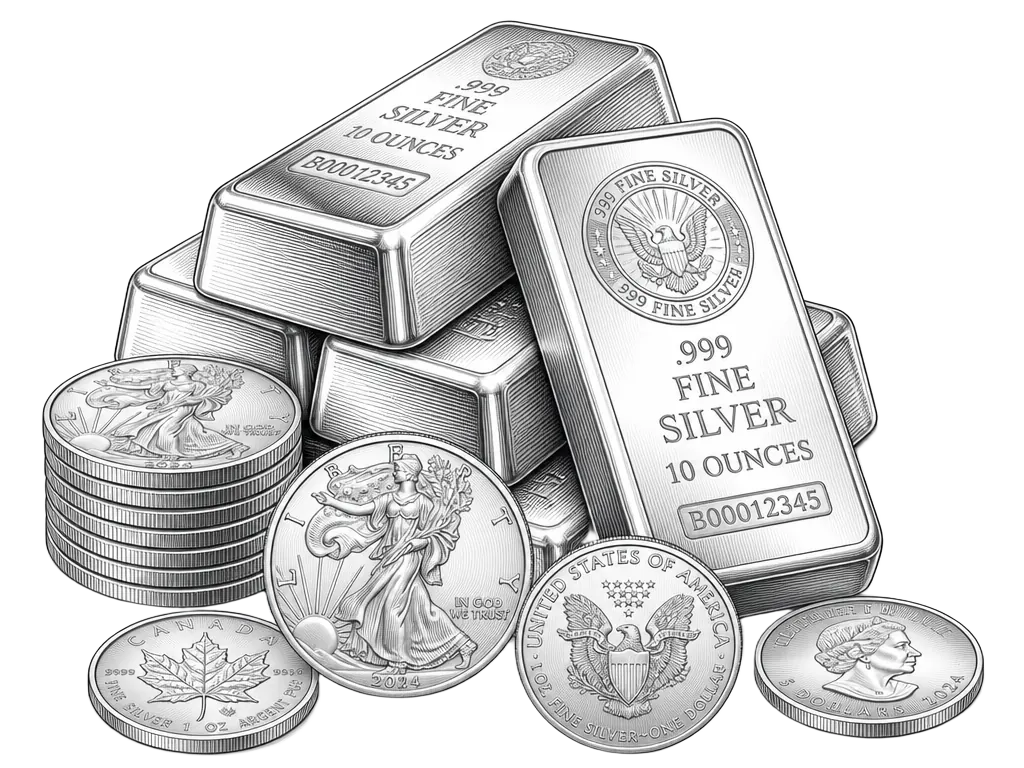
Yes. IRS-approved .999 fine silver coins and bars can be held in a self-directed Silver IRA with an approved custodian and depository.

How a Silver IRA works

Learn what physical silver ownership actually involves

Talk with our education desk about coins, bars, storage and IRA options — no pressure, just the mechanics.

Licensed and insuredFiduciary advisory since 1970Independent IRA custodiansPrices quoted, never card-charged
Call (800) 200-9553 Text Email