Capstone Metals — gold and silver IRA dealer
Speak with a specialist: (800) 200-9553Monday – Friday, 7am – 4pm Pacific

Money & Risk

What would you do if you logged in and every account read zero?

It is a fair question, and it deserves a factual answer rather than a frightening one. Almost everything you own is a database entry: your retirement account, your brokerage positions, your bank balance, even most gold held through a fund. None of it is a thing you possess — it is a record that an institution maintains on your behalf, secured by encryption, reachable only while the system is reachable. That arrangement has worked well for decades and there is no reason to assume it fails. What follows is what the record actually shows about the risks to it, which parts are documented, which parts are speculation, and what a household can reasonably do without betting on any single outcome.

Monday – Friday, 7am – 4pm Pacific

  • Licensed and insured since 2014
  • Fiduciary advisory — licensed since 1970
  • Preferred Trust & GoldStar custodians
  • No card payments, no pressure, no commissions-first pitch

Replacement encryption standards

Approved 13 Aug 2024

Federal transition plan

NIST IR 8547, draft Nov 2024

Date any of this breaks

UNKNOWN — nobody can say

Counterparty on owned metal

None

Start with what almost nobody notices: you hold records, not assets

FACT. Your 401(k), IRA, brokerage account and bank balance are entries in ledgers maintained by custodians, transfer agents and banks. The dollars in a bank are a liability of that bank to you, insured within limits. Shares are typically held in street name. An ETF share is a claim on a trust, not on the metal itself. This is ordinary, legal and efficient — and it is also the reason a single question is worth answering deliberately: which of the things you own would still exist if you could not log in to anything for a month? For most households the answer is almost nothing, and most households have never checked.

  • A bank deposit is a bank liability to you, insured to FDIC limits per depositor, per bank, per ownership category
  • Brokerage holdings are usually held in street name by the broker
  • A metals ETF share is a claim on a trust and its custodian, not metal in your possession
  • Owned physical metal in your name has no counterparty and does not depend on a login
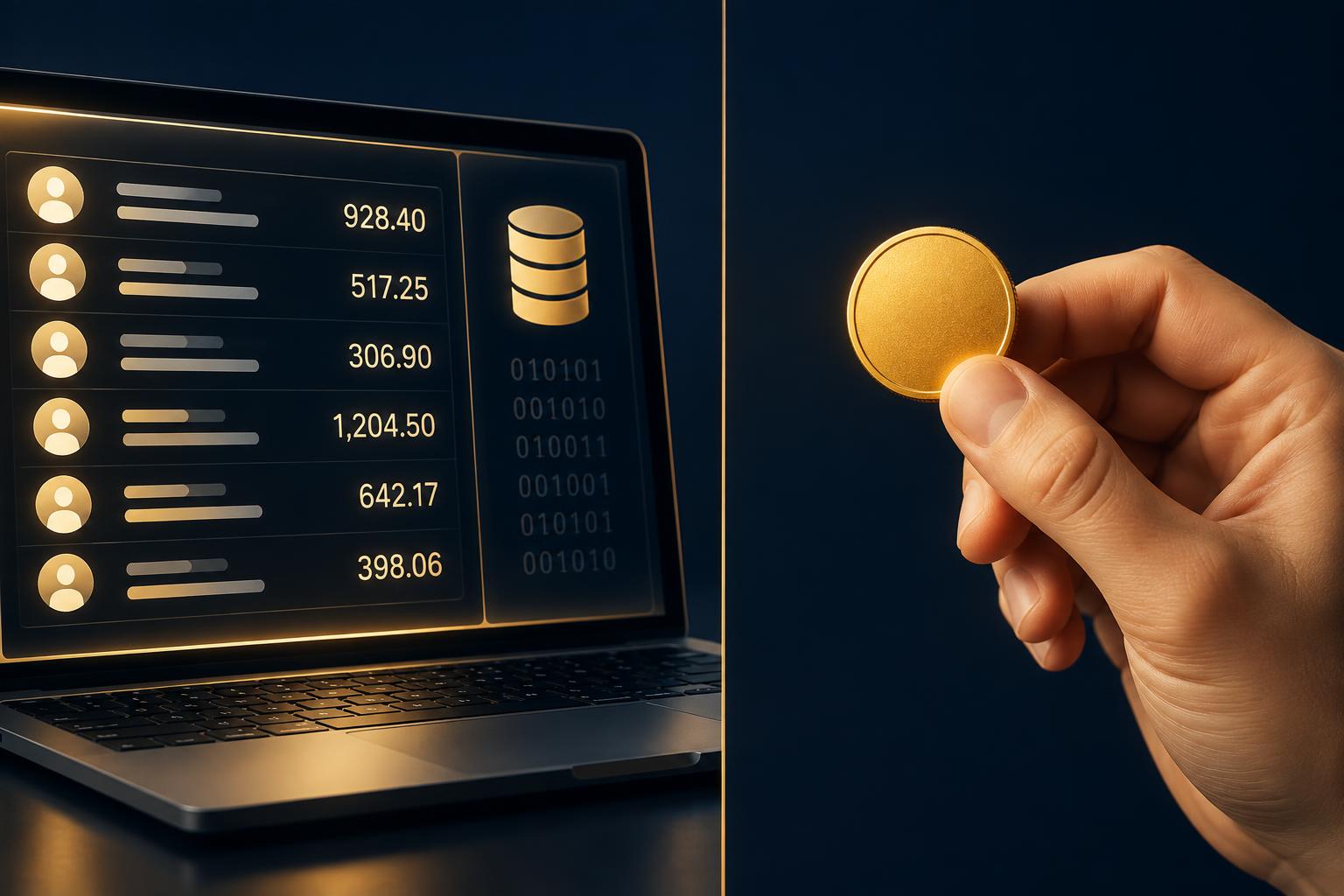
Split illustration of a screen showing an account balance beside a coin held in a hand
Nearly everything a household owns is a record in someone's database. Metal is the exception.
Describe this illustration: Split illustration of a screen showing an account balance beside a coin held in a hand

Nearly everything a household owns is a record in someone's database. Metal is the exception. This original Capstone Metals illustration illustrates split illustration of a screen showing an account balance beside a coin held in a hand. It is educational artwork, not a price forecast, performance record or recommendation.

The quantum question, answered from the documents

FACT. This is the part usually told badly, so here is the record. On 13 August 2024 the U.S. Secretary of Commerce approved three post-quantum cryptography standards — FIPS 203, 204 and 205 — designed to resist attack by future quantum computers. In November 2024 NIST published the initial public draft of IR 8547, "Transition to Post-Quantum Cryptography Standards," setting out how federal agencies and industry are expected to migrate away from today's quantum-vulnerable algorithms. INFERENCE, and it is the honest reading: governments do not standardise replacement encryption and publish migration plans for a problem they consider imaginary. That is a far stronger basis for taking the subject seriously than any claim circulating online.

  • FIPS 203, 204 and 205 approved 13 August 2024 (NIST)
  • NIST IR 8547 initial public draft, 12 November 2024 — the federal transition plan
  • The concern includes captured data decrypted later, once capable machines exist
  • UNKNOWN: when a machine capable of breaking today's public-key encryption exists, or whether one ever does at useful scale

What is not known — and we will not pretend otherwise

UNKNOWN. No one can tell you the year today's encryption fails, and anyone who names a date is guessing. Estimates from serious researchers span from later this decade to never at practical scale. Nor can anyone tell you that a break would zero out account balances rather than being absorbed by patched systems, ledger reconciliation and insurance. It is entirely possible the migration finishes quietly and nothing visible ever happens. If we told you otherwise we would be selling fear, and you should not buy anything from someone who does that.

  • SCENARIO, not forecast: accounts unreachable or disputed for a period while systems are reconciled
  • SCENARIO: a prolonged regional outage or a successful attack on one institution, not the whole system
  • FACT: neither scenario is a prediction, and neither is priced or dated by us
  • FACT: gold and silver can fall in value, and holding them protects against nothing automatically

The reason the concern feels bigger than one headline

INFERENCE. What people describe as a feeling that something is coming is usually not about one story — it is the accumulation. Federal debt has passed $40 trillion. Long-dated Treasury yields have spent an extended period above 5%. Central banks have bought gold at record levels for three consecutive years, which is a checkable fact about what large institutions are doing with their own reserves. Wars are active in more than one theatre. AI is displacing work faster than institutions are adapting. Any one of these is manageable. Together they raise a legitimate question about concentration — and concentration, not catastrophe, is the risk most households can actually do something about.

  • FACT: gross federal debt above $40 trillion (U.S. Treasury, Debt to the Penny)
  • FACT: foreign investors hold roughly a quarter of Treasury debt — not most of it, despite the common claim
  • FACT: central banks have been net buyers of gold at record levels for three consecutive years
  • INFERENCE: the risk worth acting on is having everything in one form, not any single event

What holding something outside the system actually does

It removes a dependency. Physical metal in your own name, or in insured allocated storage titled to you, does not require a login, a counterparty's solvency, or a working payment network to remain yours. That is the whole claim, and it is a modest one. It does not make you richer, it does not rise on schedule, it does not replace an emergency fund, and it is not a substitute for a properly diversified retirement plan. It is an umbrella. Nobody buys an umbrella because they can forecast the weather.

  • No counterparty, no login dependency, no platform to fail
  • Portable and privately held, or insured and allocated in your name
  • Does not pay income and can fall in price
  • Sized as a portion of savings, never the whole of it

The five questions worth answering this week

None of these require buying anything. They require twenty minutes and a piece of paper. If the answers come out fine, you will know that too, which is worth as much.

  • If you could not log in anywhere for thirty days, what would you still have?
  • Which single institution holds the largest share of everything you own?
  • Is any cash balance above the FDIC insured limit at one bank?
  • Would your heirs know what exists, and where, without your passwords?
  • What share of your savings sits in something with no counterparty at all?

Rather just ask someone?

A specialist can answer this in two minutes. Monday – Friday, 7am – 4pm Pacific.

Would a short, no-pressure conversation help?

Leave your name and number. A Capstone specialist will answer your questions during business hours.

Most gold and silver firms can only talk to you about gold and silver. We have licensed advisors on staff, so the same conversation can cover your retirement accounts, your market holdings, insurance and estate structure alongside a completely private metals purchase — one fiduciary review of everything you own, not a sales call about one product.

What would you like help understanding? (optional)

By submitting your name and phone number you are asking us to follow up, and you agree that Capstone Metals may contact you by phone, text, or email to clarify what you are looking for and make sure you receive it. Message and data rates may apply. You can ask us to stop at any time by replying STOP or telling us on the phone, and we never sell or share your information. This is a request for information and a conversation — not a purchase, an application, or advice. SMS Opt-In Policy · Privacy Policy · Terms & Conditions · How pricing works · Disclosures · Due diligence & financial risks

Licensed and insuredFiduciary advisory since 1970Independent IRA custodiansPrices quoted, never card-charged

Common questions

Can quantum computers break encryption today?
FACT: no machine publicly known can break the encryption protecting banking and blockchain systems today. What is documented is that the U.S. government approved replacement post-quantum standards in August 2024 and published a migration plan in November 2024. UNKNOWN: when, or whether, a capable machine exists at practical scale. Anyone naming a year is guessing.
Could my bank or brokerage accounts really be zeroed out?
There is no evidence that a wholesale zeroing of balances is likely, and we will not suggest one. Institutions keep records, backups and reconciliation processes, and deposits are insured within limits. The realistic version of the concern is narrower: an outage, an attack on one institution, or a period where access is disrupted while records are reconciled. That is a reason to hold something that does not depend on access, not a reason to panic.
Is bitcoin safe from a quantum attack?
Contested, and worth being precise about. Bitcoin's signatures rely on elliptic-curve cryptography, which is in the category NIST is moving away from; its mining relies on hashing, which is considered far more resistant. Developers have discussed post-quantum upgrade paths. UNKNOWN: whether an upgrade is adopted in time, and how exposed coins in older address formats would be. Anyone claiming certainty in either direction is overstating the record.
How custody of digital assets actually works
Does gold protect me if the financial system has a crisis?
It removes counterparty dependence, which is a real and specific benefit. It does not guarantee a gain — gold and silver both fall in price at times, sometimes sharply, and no asset is guaranteed to rise. The sensible framing is insurance sized as a portion of savings, not a bet on a bad outcome.
How much of my savings should be outside the digital system?
That depends on what you already own, your income needs, your timeline and your obligations — which is exactly why we will not print a percentage on a web page. Capstone has licensed financial advisors on staff, so the conversation can cover your retirement accounts, market holdings, insurance and estate structure alongside metals, rather than one product in isolation.
What a whole-picture review covers
Is this a reason to move my whole 401(k)?
Almost certainly not, and anyone urging that should worry you. A rollover of part of a retirement account into a self-directed or precious-metals IRA is a documented, reversible decision with real tax and custody mechanics attached. It should be sized deliberately and explained fully before you sign anything.
How a metals IRA is actually opened

Want an honest answer about where your savings actually sit?

No forecast and no pressure. Leave your name and a phone number. A Capstone specialist — or one of our licensed financial advisors, if your question spans retirement accounts, market holdings or insurance — will walk through what you own, who the counterparty is on each piece, and what, if anything, you would want to change. If you are already in good shape, we will tell you so.

Licensed and insuredFiduciary advisory since 1970Independent IRA custodiansPrices quoted, never card-charged
Call (800) 200-9553 Text Email