


What a reserve asset is
EXPERT ANALYSIS. Reserves are the external assets a monetary authority holds and can deploy — typically foreign currency, sovereign securities, positions at the IMF, and gold. The IMF's work on reserve accumulation sets out why countries hold them at all: to meet external obligations, to manage their currency, and to have usable resources in a crisis. Gold sits inside that portfolio as the one component that is not a claim on another institution.
- Foreign currency deposits and sovereign securities — claims on other institutions
- IMF-related positions
- Gold — an asset with no issuer and no counterparty
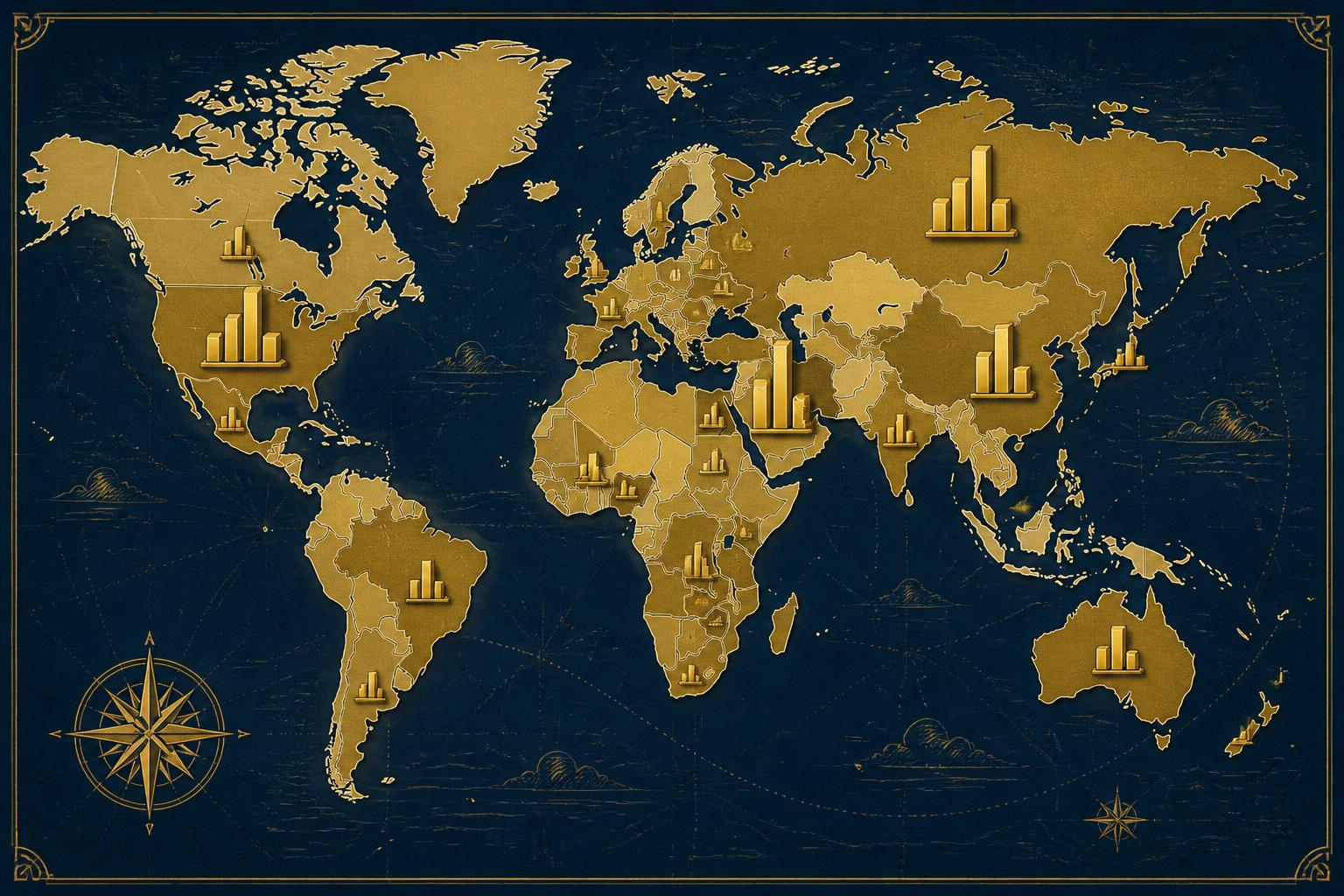
Describe this illustration: Stylised gold-toned world map on navy with countries shaded at different intensities and small gold bar icons of varying size placed over several regionsHide description: Stylised gold-toned world map on navy with countries shaded at different intensities and small gold bar icons of varying size placed over several regions
An original Capstone Metals illustration of a point that needs no conspiracy to make: official gold holdings are disclosed, not hidden. Reserve institutions publish their gold positions, international bodies compile them, and anyone can read them. The map is a schematic of that public picture — deliberately unlabelled, because reported holdings change and the source data should be read directly rather than trusted from an illustration. What it does not show, because public evidence does not establish it, is any secret accumulation by anyone.