Capstone Metals — gold and silver IRA dealer
Speak with a specialist: (800) 200-9553Monday – Friday, 7am – 4pm Pacific

Retirement Guide

What is a Silver IRA? The complete plain-English answer

A Silver IRA is a self-directed individual retirement account that holds physical silver — IRS-approved coins and bullion — instead of only paper assets like stocks, bonds, or mutual funds. It keeps the same tax advantages as any traditional or Roth IRA; what changes is the tangible asset sitting inside it. This guide explains exactly how it works, what qualifies, what it costs, and how to open one without pressure or confusion.

Monday – Friday, 7am – 4pm Pacific

  • Licensed and insured since 2014
  • Fiduciary advisory — licensed since 1970
  • Preferred Trust & GoldStar custodians
  • No card payments, no pressure, no commissions-first pitch

Account type

Self-directed IRA

Minimum fineness

.999 fine silver

Tax treatment

Traditional or Roth IRA rules

Storage

IRS-approved depository

How a Silver IRA works, step by step

A Silver IRA is not a new kind of retirement account — it is a standard IRA with a custodian that allows alternative assets. The mechanics are the same as any IRA; the difference is what the account buys and where it is kept.

  • Open a self-directed IRA with a custodian that supports physical precious metals
  • Fund it by rollover or transfer from a 401(k), 403(b), TSP, or existing IRA — or by annual contribution
  • Direct the custodian to purchase IRS-approved silver on your behalf
  • The silver ships directly to an IRS-approved depository for insured, audited storage

What silver is eligible — and what is not

The IRS sets a clear bar: IRA silver must be at least .999 fine and produced by a government mint or an accredited refiner. That rule protects you — it keeps the account in liquid, fairly priced bullion and out of overpriced collectibles.

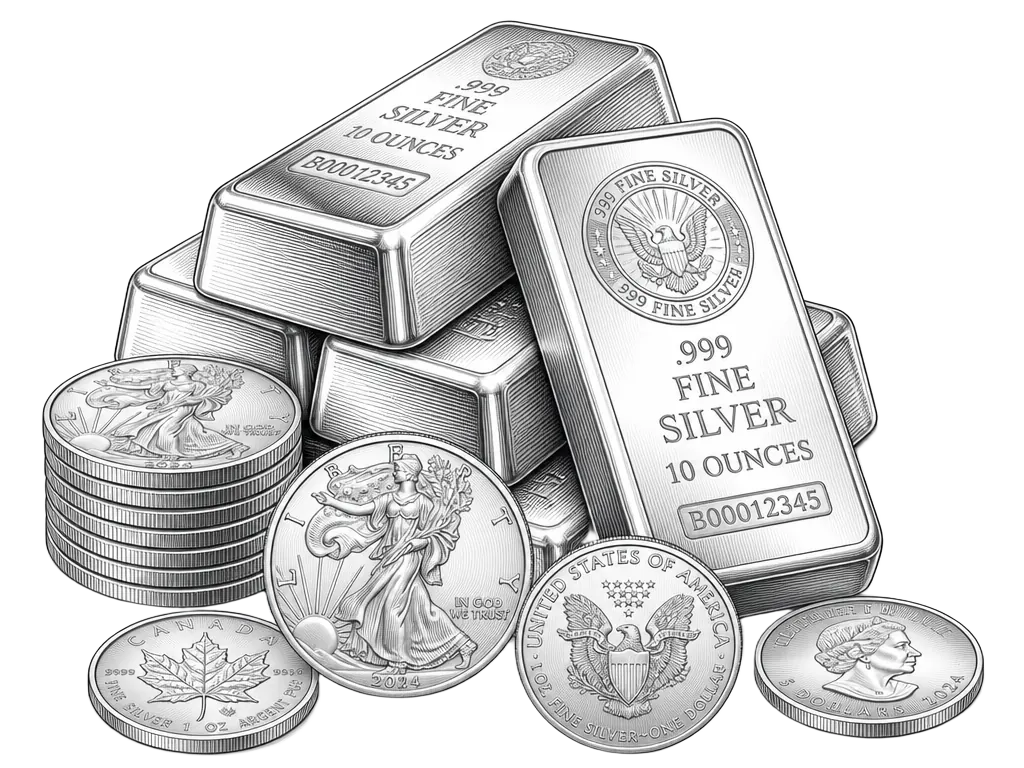
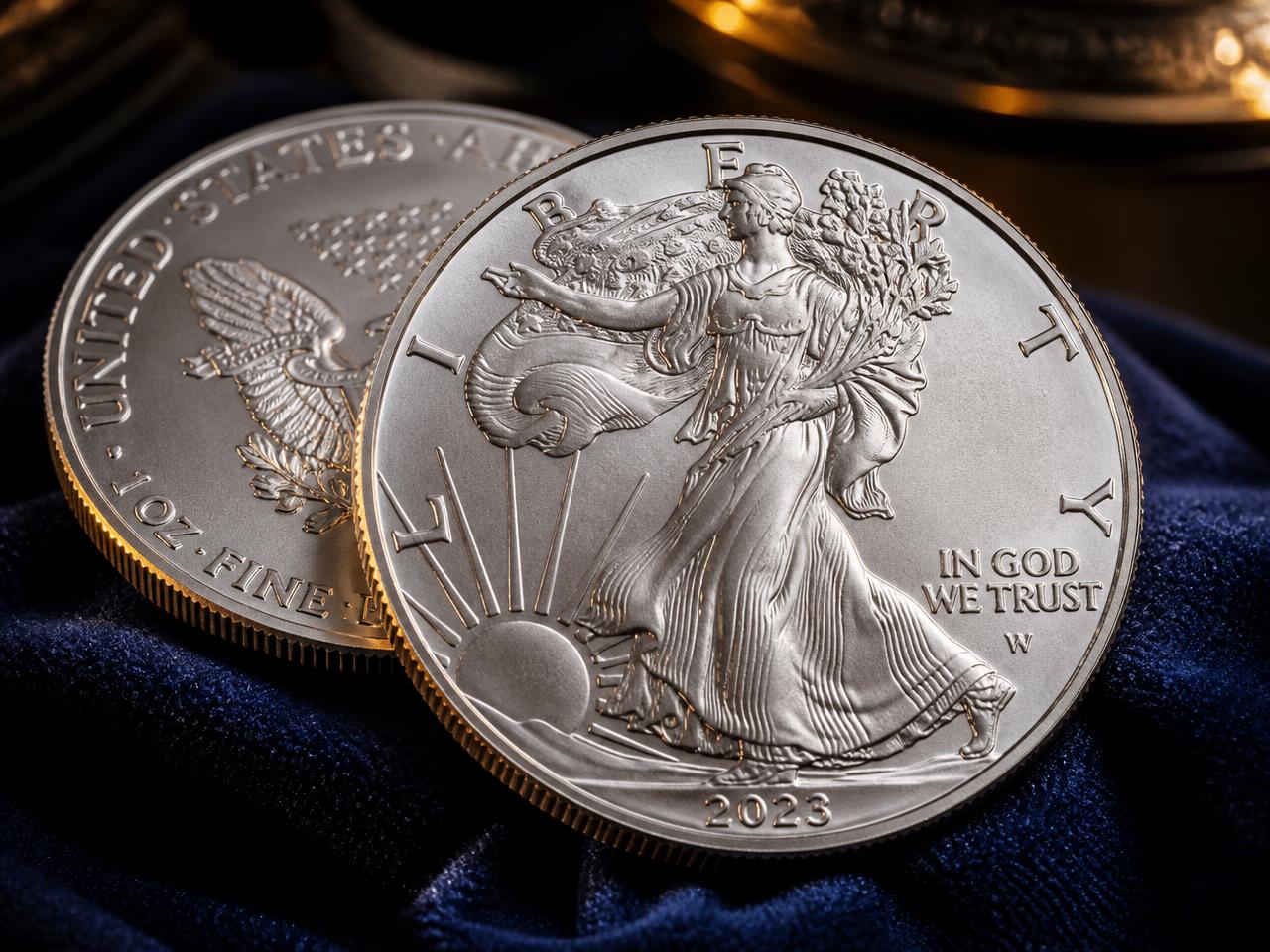
  • Eligible: American Silver Eagle, Canadian Silver Maple Leaf, Austrian Philharmonic
  • Eligible: .999 fine bars and rounds from accredited refiners (1 oz to 1,000 oz)
  • Not eligible: numismatic, graded, or collectible coins — regardless of silver content
  • Not eligible: silver you already own personally; the IRA must buy it through the custodian

Why retirement savers add silver

Silver behaves differently from stocks and bonds, which is precisely the point. It is both a monetary metal and a critical industrial input — solar panels, electronics, and medical devices all consume it — giving it a demand engine that paper assets lack. Historically it has helped preserve purchasing power when currencies weaken. It is also more volatile than gold, so sizing matters: most retirement allocations to precious metals run 5% to 20%, with silver typically the smaller, growth-oriented satellite.

  • Diversification: low correlation to equities and bonds
  • Inflation resistance: hard asset with intrinsic, globally recognized value
  • Industrial demand: solar, electronics, and medical applications consume supply
  • Accessibility: a lower price per ounce than gold lowers the entry point

Silver IRA vs. buying silver directly

Buying silver outside an IRA gives you immediate personal possession but no tax shelter — gains are taxed when you sell, at the collectibles rate of up to 28%. Inside an IRA, gains compound tax-deferred (traditional) or potentially tax-free (Roth), but the metal must stay in approved custody until distribution. Many investors do both: an IRA allocation for retirement, personal holdings for direct control.

What it costs — the honest schedule

A Silver IRA has three cost layers, all of which should be published before you fund anything: a one-time custodian setup fee, a flat annual custodian administration fee, and annual depository storage and insurance (quoted by value or volume — silver takes more space per dollar than gold). Flat fees favor larger accounts. We model the full cost picture, including the buy/sell spread on the metal itself, before any decision is made.

Rollovers, transfers, and contributions

Most Silver IRAs are funded by moving existing retirement money, and done correctly it is not a taxable event. A direct trustee-to-trustee transfer moves IRA funds with no deadline and no withholding. A 401(k) rollover from a former employer works the same way. The one path to avoid unless necessary is the 60-day indirect rollover, where the check comes to you first — miss the deadline and it becomes a taxable distribution. New annual contributions follow normal IRA limits.

  • Direct transfer: IRA to IRA, no tax event, no deadline
  • Rollover from a former employer's 401(k)/403(b)/TSP: direct, no tax event
  • Avoid the 60-day indirect rollover unless there is no alternative
  • Annual contributions follow standard IRS IRA limits for your age

Taxes and distributions

A Silver IRA follows the same tax rules as any IRA of its type. Traditional accounts grow tax-deferred, with required minimum distributions beginning at age 73. Roth accounts can offer tax-free qualified withdrawals. Early distributions before 59½ may incur taxes plus a 10% penalty. At distribution you choose cash — the custodian sells metal back — or in-kind delivery, where the physical silver ships to you.

How to choose a Silver IRA company

The company you work with should educate first and sell second. Ask for the complete fee schedule in writing, confirm they use established custodians and IRS-approved depositories, ask for the buy-back policy, and check that they quote live, verifiable pricing. Be cautious of anyone pushing collectibles, 'exclusive' coins, home-storage schemes, or urgency. A trustworthy firm answers hard questions plainly and lets you decide on your own timeline.

  • Full fee schedule in writing before you fund
  • Established self-directed custodians and approved depositories
  • A clear buy-back policy and live, verifiable pricing
  • Education-first process — no countdown timers, no pressure

Rather just ask someone?

A specialist can answer this in two minutes. Monday – Friday, 7am – 4pm Pacific.

Would a short, no-pressure conversation help?

Leave your name and number. A Capstone specialist will answer your questions during business hours.

Most gold and silver firms can only talk to you about gold and silver. We have licensed advisors on staff, so the same conversation can cover your retirement accounts, your market holdings, insurance and estate structure alongside a completely private metals purchase — one fiduciary review of everything you own, not a sales call about one product.

What would you like help understanding? (optional)

By submitting your name and phone number you are asking us to follow up, and you agree that Capstone Metals may contact you by phone, text, or email to clarify what you are looking for and make sure you receive it. Message and data rates may apply. You can ask us to stop at any time by replying STOP or telling us on the phone, and we never sell or share your information. This is a request for information and a conversation — not a purchase, an application, or advice. SMS Opt-In Policy · Privacy Policy · Terms & Conditions · How pricing works · Disclosures · Due diligence & financial risks

Licensed and insuredFiduciary advisory since 1970Independent IRA custodiansPrices quoted, never card-charged

Common questions

What is a Silver IRA in simple terms?
A retirement account that holds real, physical silver coins and bars instead of (or alongside) paper investments, with the same tax advantages as a regular IRA.
Can I hold the silver myself at home?
No. IRS rules require IRA metals to be held by an approved custodian or depository. Home-storage arrangements risk the entire account being treated as a taxable distribution.
How much does it cost to open a Silver IRA?
Typically a one-time setup fee, a flat annual custodian fee, and annual storage and insurance. We publish the complete schedule before you fund anything.
See how IRA fees work
Can I move my 401(k) or existing IRA into silver?
Yes. A direct rollover or trustee-to-trustee transfer moves funds with no tax event and no 60-day deadline when done correctly.
How rollovers work
Is silver or gold better for an IRA?
Gold is the steadier store of value; silver costs less per ounce, is more volatile, and carries industrial demand. Many clients hold both, sized to their risk tolerance.
Compare silver vs gold

Get the complete Silver IRA picture, in writing

Request the free Wealth Protection Guide — and if you have a question, call or text (800) 200-9553. A specialist answers plainly, and you decide on your own timeline.

Licensed and insuredFiduciary advisory since 1970Independent IRA custodiansPrices quoted, never card-charged
Call (800) 200-9553 Text Email