Why silver, and why that argument cuts both ways
Silver is unusual: it is a monetary metal with a five-thousand-year record and an industrial input with no equal in electrical and thermal conductivity. The Silver Institute reports that industrial applications — solar cells, electrical contacts, brazing alloys, vehicles, electronics — account for more than half of annual demand. The United States added silver to its 2025 final List of Critical Minerals.
The honest consequence of that dual role is volatility. Industrial demand ties silver to the economic cycle in a way gold is not tied, so silver tends to move further in both directions. If your objective is the steadiest of the precious metals, that argues for gold; if it is exposure to industrial demand alongside monetary demand, it argues for silver. Neither answer is universal, and neither is a forecast.
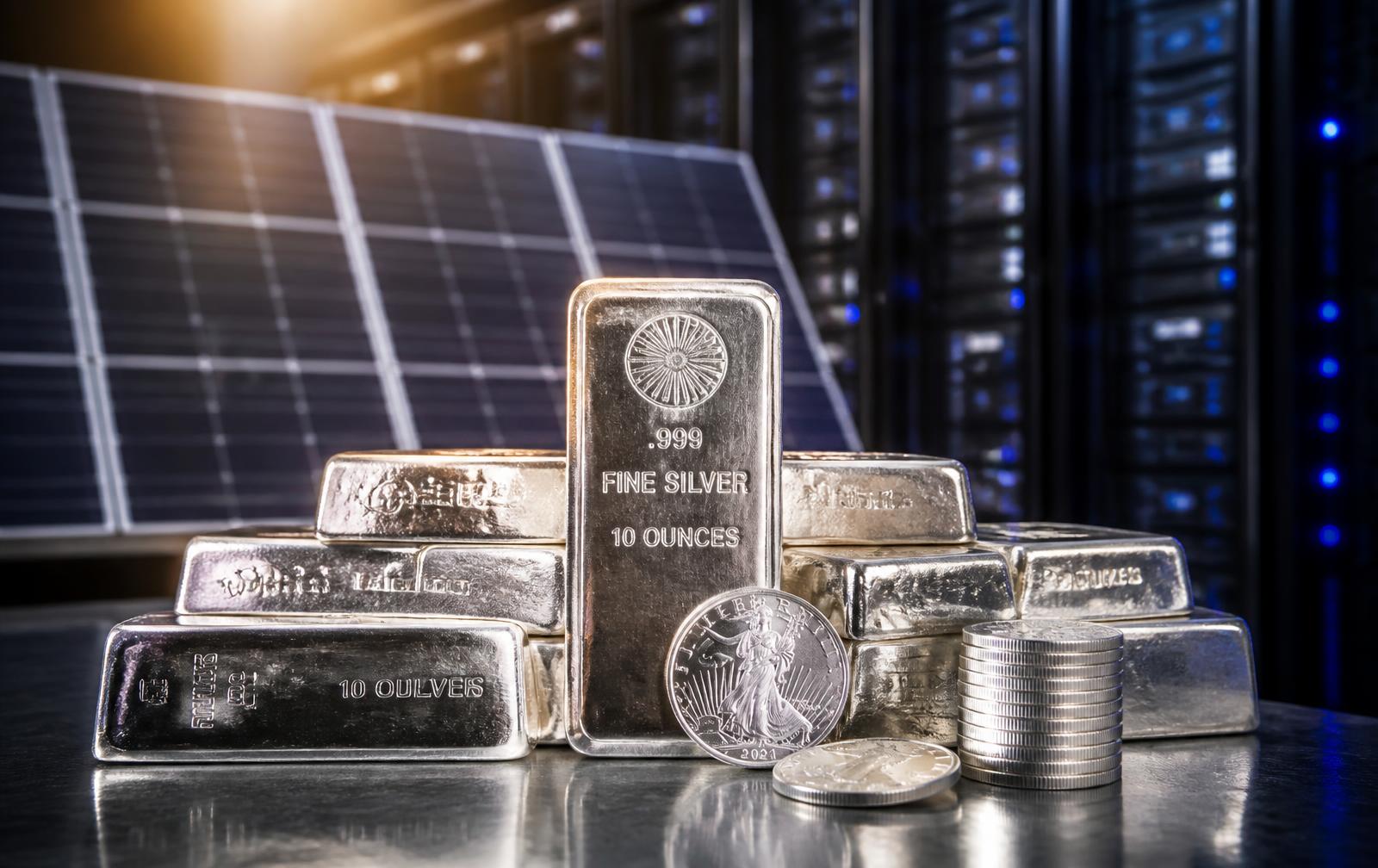
Describe this illustration: Industrial silver applications shown together: solar cells, electrical contacts and data-centre power equipmentHide description: Industrial silver applications shown together: solar cells, electrical contacts and data-centre power equipment
The plate collects the documented industrial uses of silver rather than the speculative ones. Silver has the highest electrical and thermal conductivity of any metal, which is why it appears in photovoltaic paste, switchgear contacts, brazing alloys, and electronics throughout vehicles and computing hardware. Solar and electronics consumption is published by the Silver Institute and the USGS. Per-rack data-centre silver figures are not published, and this page does not invent one.